777 Partners Co-Founder Guilty of $500 Million Fraud Linked to Boeing Orders
Josh Wander, co-founder of 777 Partners, has pleaded guilty to wire and securities fraud, admitting to stealing more than $500 million from lenders and investors.
 By The Aviation Hub
5 min read
By The Aviation Hub
5 min read
Josh Wander, the 45-year-old co-founder of Miami-based investment firm 777 Partners, has pleaded guilty to wire fraud and securities fraud, admitting to defrauding lenders and investors of more than $500 million, with proceeds used to fund purchases including Boeing 737 MAX 8 aircraft for budget airlines across two continents.
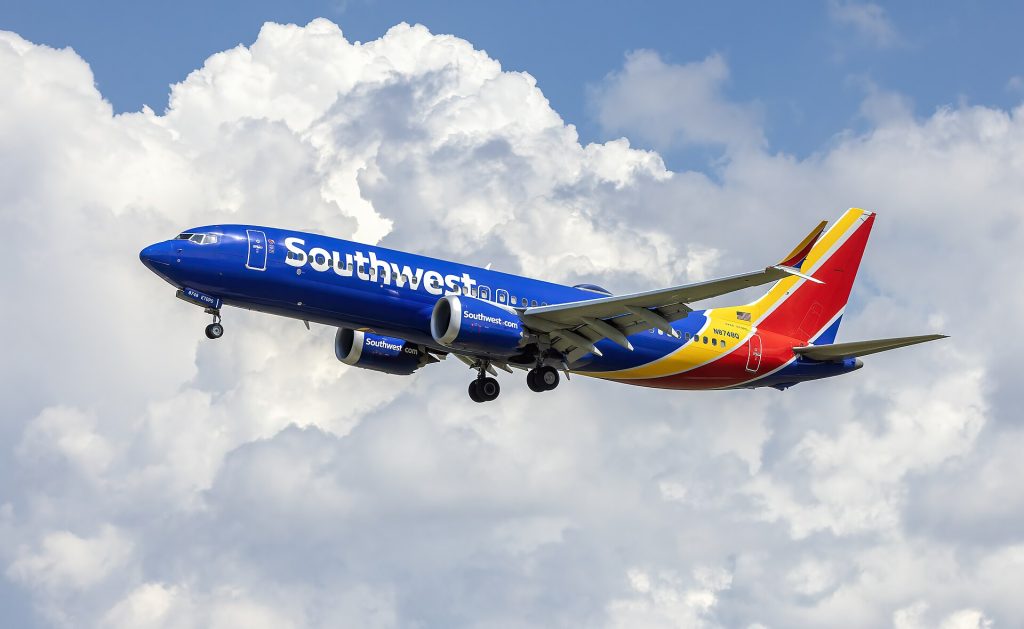
The plea has brought a formal legal conclusion to one of aviation finance's most chaotic collapses in recent years, one that left Australian carrier Bonza grounded and Canadian ultra-low-cost airline Flair severely shaken.
What 777 Partners Was Built to Do
Paddle Your Own Kanoo reports that Wander co-founded 777 Partners in 2015, with the business initially specialising in underwriting and financing structured settlements. The core model involved buying the right to receive future payments from legal settlements, borrowing against those payment streams, and packaging them into securities through a subsidiary called SuttonPark Capital.
From that base, Wander expanded aggressively into airlines, football clubs and entertainment. In 2019, according to Paddle Your Own Kanoo, he invested in Canada's Flair and subsequently ordered new Boeing 737 MAX 8 jets with plans to expand the carrier significantly. He then set about creating Bonza, a new Australian airline intended to challenge the Qantas and Virgin Australia duopoly.
The Boeing Orders at the Heart of the Case
View from the Wing notes that in March 2021 Boeing announced an agreement with 777 Partners for 24 MAX 8s, with purchase rights for a further 60. By the July 2022 Farnborough Airshow, Boeing was announcing orders and commitments reaching up to 134 MAX aircraft. Boeing's then-commercial airplanes chief Stan Deal praised 777's "tremendous success establishing new carriers worldwide."
Prosecutors say that 777 Partners obtained an additional $40 million from a lender to help finance the 2021 Boeing deal by listing structured-settlement assets it claimed to own but had not purchased. You can explore the Boeing 737 MAX 8 and related types further using our Aircraft Search.
How the Fraud Worked
According to Paddle Your Own Kanoo, Leadenhall Life Insurance Linked Investments Fund agreed to provide a credit facility of up to $350 million on the condition that 777 Partners used assets it actually owned as collateral. Wander is accused of double-pledging those assets, effectively turning the facility into what prosecutors described as an "illegal and unsecured personal piggy bank."
The deception extended to falsified bank records. View from the Wing reports that one fake screenshot, prepared using Microsoft Paint, purported to show roughly $8 million in cash when the relevant accounts held less than $500,000. When a lender confronted Wander about double-pledged assets in 2023, he blamed the firm's old computer system and said the discrepancy had been inadvertent.
Paddle Your Own Kanoo adds that the fraud continued until 2024, when Wander was forced to step down as chief executive.
The Investor Losses
View from the Wing reports that the Securities and Exchange Commission alleges a $237 million preferred-equity offering was sold on the claim that profits would support a 10% annual dividend, while a roughly $300 million credit facility overdraw was concealed. About $33 million of offering proceeds allegedly went personally to Wander and co-founder Steven Pasko.
The group's insurance backer, Advantage Capital Holdings, also known as A-CAP, controlled life insurance and annuity companies whose funds became exposed to the fortunes of an investment group buying airlines and sports teams. 777 Partners and related entities filed for Chapter 11 bankruptcy protection in August, with bankruptcy disclosures laying out $2.7 billion in financing obligations.
What Happened to Bonza
Bonza began passenger flights in early 2023. View from the Wing notes that its aircraft were repossessed on 30 April 2024, ending operations entirely. The airline's local managers had believed the business was progressing toward being cash positive later that year, until the planes were taken away.
The administrators' report found recurring losses, insufficient funding from 777 Partners, poor decisions about ticket distribution, costly wet leases and inadequate financial modelling. Some of Bonza's apparent capital had not actually been paid in.
The Guilty Plea and Sentencing
Paddle Your Own Kanoo reports that US Attorney Jamie McDonald said: "As he has now admitted, Josh Wander used his company, 777 Partners, to steal hundreds of millions of dollars from private creditors and investors. Wander double-pledged assets, pledged fictitious assets, lied about the financial condition of his company, and even falsified bank statements, all to gain access to his victims' funds."
Wander has agreed to forfeit at least $500 million. View from the Wing notes that his plea agreement specifies a sentencing range of 27 to 40 years, though the judge will decide the final sentence. His sentencing hearing is scheduled for 1 March 2027.
The Bottom Line
The 777 Partners case is a cautionary illustration of how aggressively leveraged aviation investment can unravel. Two airlines on opposite sides of the world paid the price, with Bonza's passengers and staff bearing the most immediate consequences. Flair's future was also thrown into doubt by its association with the group.
The Boeing 737 MAX 8 orders that once carried the gloss of a bold global expansion have ended up cited in federal fraud proceedings. For anyone tracking the intersection of private equity and low-cost aviation, the outcome of the March 2027 sentencing will be worth watching closely. You can keep track of airlines connected to stories like this one using our Airline Search.
Continue to follow The Aviation Hub for more analysis and insight.
Advertise with us Your brand, in front of an aviation audience Home page and in-article placements, sold directly, one advertiser per slot. From £250 a year. See the rates