

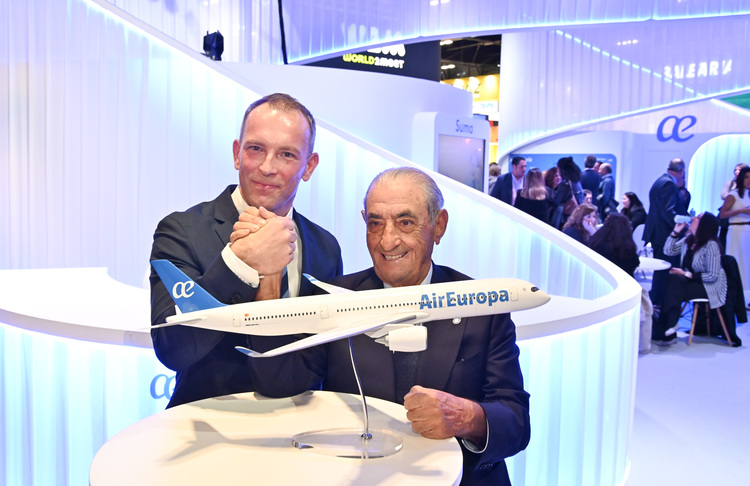
Air Europa has signalled one of the most transformative fleet moves in its history, unveiling plans to incorporate up to 40 Airbus A350‑900 aircraft into its long‑haul operation.
Although publicly available sources describe the agreement as a Memorandum of Understanding (MoU) rather than a final firm order, the scale and intent of the deal mark a decisive shift in the Spanish carrier’s long‑term strategy.
The announcement, made during the Dubai Airshow 2025 and finalised this week, underscores Air Europa’s ambition to modernise its fleet, strengthen its transatlantic network, and enhance its competitive position across key Latin American markets.
A Strategic Reset for Long‑Haul Operations at Air Europa…
For years, Air Europa has relied heavily on the Boeing 787 Dreamliner as the backbone of its long‑haul fleet.
While the Dreamliner has served the airline well, the carrier’s leadership has been exploring ways to boost efficiency, expand capacity, and diversify its fleet portfolio.
The A350‑900, with its advanced aerodynamics, next‑generation materials, and fuel‑efficient Rolls‑Royce Trent XWB engines, offers a compelling solution.
According to reports from the Dubai Airshow previously, the A350‑900 will become the new cornerstone of Air Europa’s long‑haul fleet, replacing older widebodies and supporting the airline’s growth plans across Latin America—one of Europe’s most competitive and strategically important long‑haul markets.
Why the Airbus A350‑900?
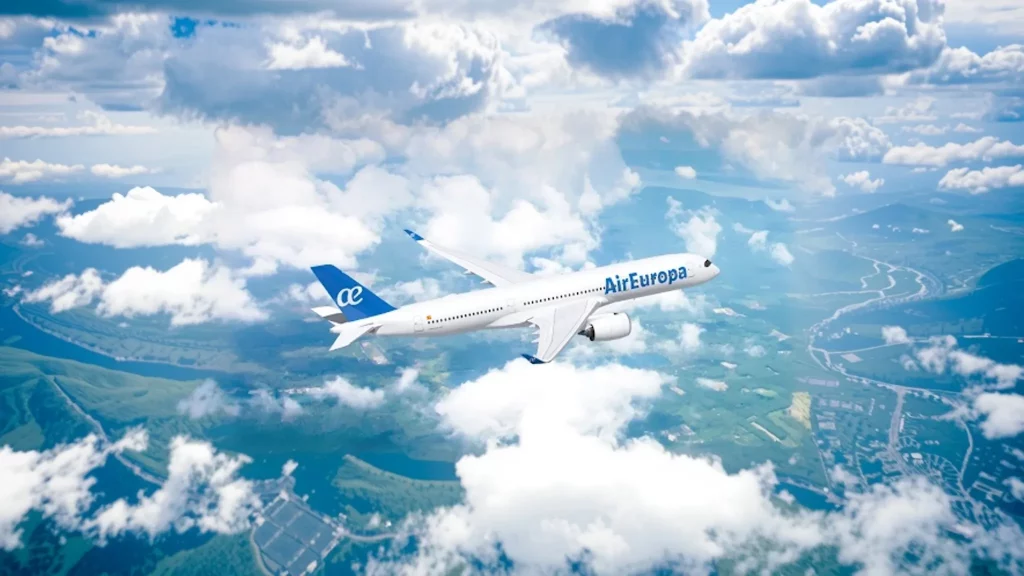
The Airbus A350‑900 is widely regarded as one of the most efficient and passenger‑friendly widebody aircraft in service today.
For Air Europa, the type offers several advantages:
- Fuel Efficiency: The A350‑900 burns significantly less fuel per seat than older widebodies, reducing operating costs and supporting the airline’s sustainability goals.
- Range and Performance: With the ability to fly long‑haul missions with ease, the aircraft is ideal for Air Europa’s core Latin American routes, including destinations such as Buenos Aires, São Paulo, and Montevideo.
- Passenger Comfort: The A350’s wider cabin, improved pressurisation, and quieter interior promise a step‑change in the onboard experience—an increasingly important differentiator in long‑haul travel.
- Operational Flexibility: The aircraft’s payload‑range capabilities allow Air Europa to optimise schedules, open new routes, and increase frequencies on high‑demand sectors.
Airbus emphasised that the A350‑900’s “unrivalled performance and economics” will help Air Europa accelerate its fleet renewal while boosting profitable growth across its long‑haul network.
A Return to Airbus After Years of Boeing Exclusivity
One of the most notable aspects of the agreement is Air Europa’s return to Airbus after a five‑year period operating exclusively Boeing widebodies.
The shift reflects a broader strategic recalibration, influenced in part by the airline’s evolving ownership structure and long‑term ambitions.
Industry reports highlight that the deal follows a major investment by Turkish Airlines, which has been exploring deeper commercial ties with Air Europa.
The introduction of the A350‑900 aligns with a more diversified and globally competitive fleet strategy.
Strengthening the Transatlantic Bridge
Latin America remains the beating heart of Air Europa’s long‑haul business.
The airline has built a strong presence in markets such as Argentina, Brazil, Colombia, and the Dominican Republic, positioning Madrid as a key European gateway to the region.
The A350‑900’s efficiency and capacity will allow Air Europa to:
- Increase frequencies on high‑demand routes.
- Launch new destinations where range and economics previously posed challenges.
- Compete more effectively with Iberia, LATAM, and European network carriers expanding their own transatlantic operations.
Aviation analysts note that the A350‑900 will “strengthen Air Europa’s position on transatlantic routes, where demand remains strong,” particularly as travel rebounds and airlines race to secure long‑term market share.
A Pivotal Moment for the Air Europa & It’s Future
The planned acquisition of up to 40 A350‑900s represents one of the most significant fleet investments in Air Europa’s history.
It signals confidence in the airline’s long‑term prospects, its transatlantic strategy, and its ability to compete in a rapidly evolving global aviation landscape.
While the agreement is currently described as an MoU in publicly available sources, the intent is clear:
Air Europa is preparing for a new era of growth, efficiency, and passenger experience. The A350‑900 will play a central role in shaping that future.
As the airline moves toward finalising the order and integrating the aircraft into its fleet, industry observers will be watching closely.
This is more than a fleet renewal—it is a strategic transformation that could redefine Air Europa’s position in the global market for years to come.
Continue to follow The Aviation Hub for more analysis and insight!
Advertise with us Your brand, in front of an aviation audience Home page and in-article placements, sold directly, one advertiser per slot. From £250 a year. See the rates

