Why SWISS Retiring Its A220-100 Fleet Is Worse News for Airbus Than It Looks
 By The Aviation Hub
5 min read
By The Aviation Hub
5 min read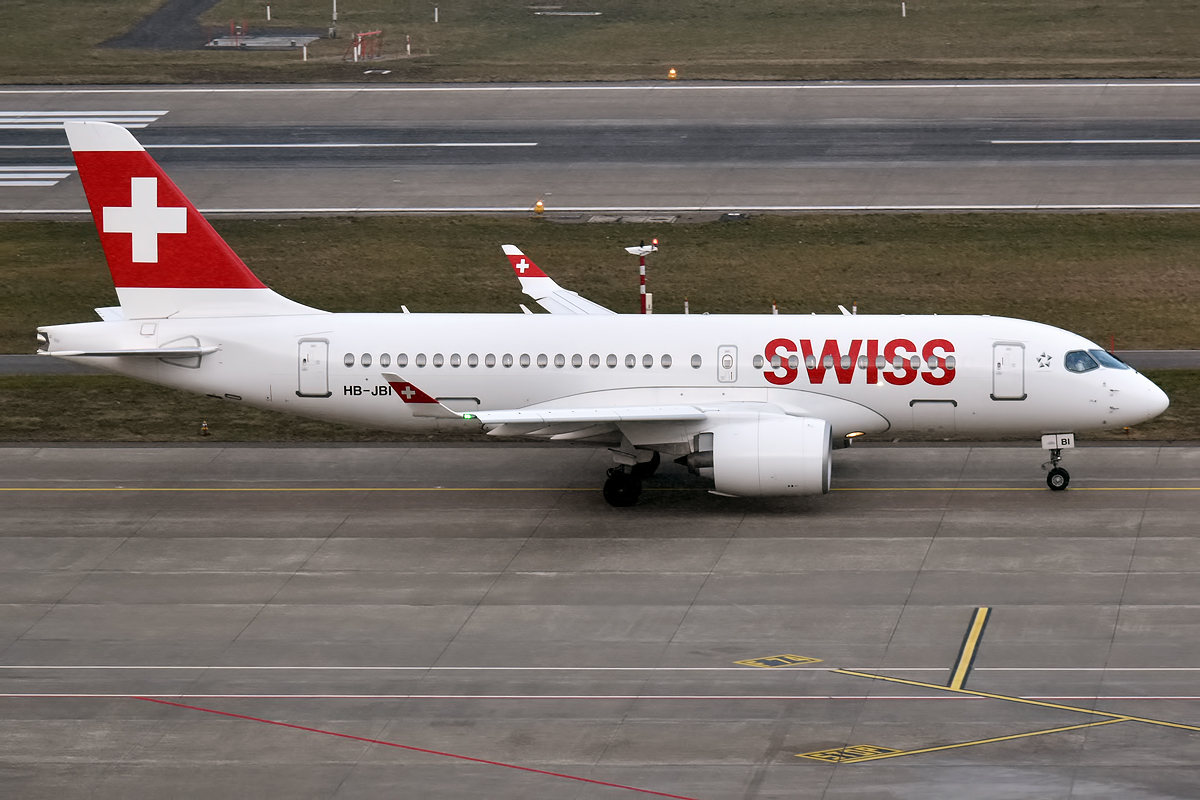
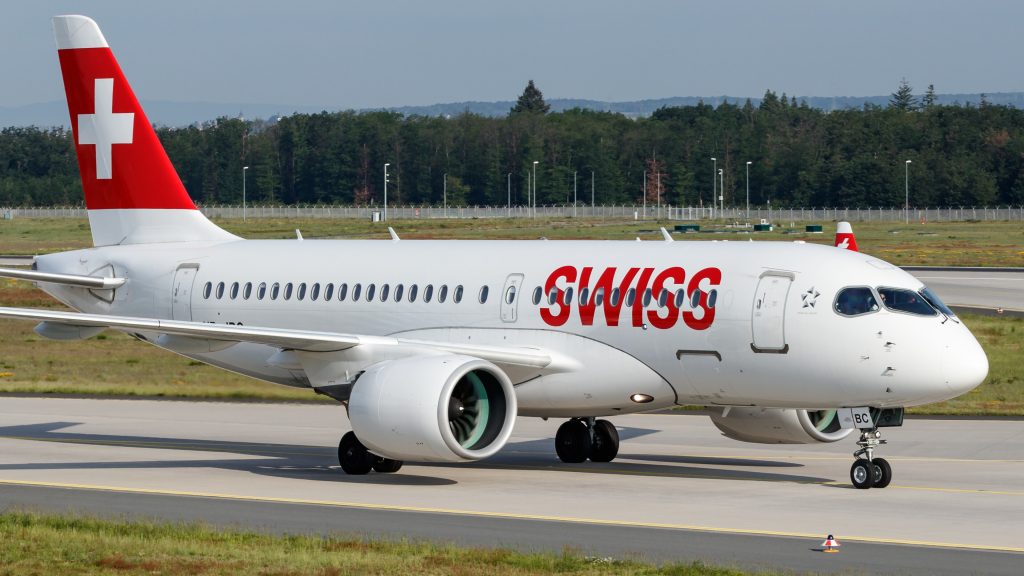
SWISS has confirmed it will withdraw its remaining Airbus A220-100s by the end of 2027, closing out a decade as the type’s launch operator and consolidating around an all-A220-300 fleet.
Presented as fleet simplification, the decision reads as routine.
It is not.
The Swiss flag carrier is retiring aircraft barely ten years old, scrapping two of them for parts, and doing so because the engines that power them cannot be kept on wing.
For Airbus, that is a considerably more uncomfortable story than a fleet planning footnote.
A Retirement Driven by Engines Rather Than Economics
The sequence matters. SWISS did not conduct a network review and conclude the 125-seat A220-100 no longer fitted.
It grounded the entire nine-aircraft sub-fleet in October 2025 as an emergency measure, stripping their Pratt & Whitney PW1500G engines to keep the larger and more commercially productive A220-300s flying.
That was framed at the time as temporary triage while the geared turbofan crisis worked itself out.
It is now permanent.
Five airframes have already been withdrawn, three placed in long-term storage, and two others, HB-JBC and HB-JBD, are being dismantled at Francazal in Toulouse to feed the -300 fleet with engines and components.
The final four follow by the end of 2027 and are expected to become a spares pool rather than find second-hand buyers.
This is the part Airbus cannot spin.
A stopgap response to a supplier failure has hardened into a fleet decision that removes a variant from an operator permanently.
The engine shortage has stopped merely delaying aircraft and started consuming them.
Parting Out Ten Year Old Airframes Sends a Residual Value Signal
Commercial aircraft are financed on assumptions about what they will be worth in fifteen or twenty years.
When a flag carrier reduces a decade-old jet to a parts inventory, appraisers, lessors and financiers notice.
A Delta enhanced equipment trust certificate filing put the A220-100’s mean appraised value at around $34.1 million in 2019.
Airframes at that age should be moving into a secondary market, not a scrapyard.
The problem is that there is barely a secondary market to move into.
Roughly 118 A220-100s were ever ordered against more than 850 for the -300, and around 70 were delivered.
Production is winding down as the residual backlog clears.
With so few operators, no meaningful lease pool and an engine that remains difficult to support, a used A220-100 is a hard asset to place.
SWISS worked out that the airframes are worth more disassembled than sold, and that calculation is not a flattering one for the programme.
The A220 Programme Could Least Afford Another Setback
Airbus is still not making money on the A220.
The path to breakeven has always run through production rate, and that target keeps receding.
Rate 14 per month was originally promised for 2025, then 2026. In October 2025 Airbus trimmed the 2026 ambition to 12.
At its half-year results in July 2026, the company confirmed it is now working towards 13 aircraft per month in 2028.
The delivery numbers illustrate the drag.
Airbus handed over 351 commercial aircraft in the first half of 2026, of which just 44 were A220s, an improvement of only three units year on year against 271 A320-family deliveries.
Quebec, which holds a 25% stake in Airbus Canada, booked a C$400 million write-down on that holding in October 2025.
Against that backdrop, the launch customer publicly concluding that part of its A220 fleet is not worth keeping in the air is not a helpful data point, however carefully it is framed.
Sole Source Exposure Leaves Airbus Carrying the Risk
The structural issue underneath all of this is that the A220 has one engine option.
A320neo customers unhappy with geared turbofan availability can specify the CFM LEAP instead.
A220 customers have nowhere to go.
Every durability shortfall, powder metal inspection and extended shop visit lands on Airbus without dilution.
That exposure has become openly adversarial.
In February 2026 chief executive Guillaume Faury told analysts Airbus was prepared to enforce its contractual rights over engine supply shortfalls, and the manufacturer subsequently triggered a dispute clause and pursued a damages claim.
The underlying argument is about allocation: whether scarce engines and parts go to new-build aircraft or to airline fleets already sitting on the ground.
SWISS cannibalising its own aircraft is precisely what that allocation squeeze produces at the sharp end.
The Recovery Is Real, but It Arrived Too Late
In fairness to Pratt & Whitney, the trajectory has genuinely improved.
Airbus says A220 groundings attributable to engine issues have fallen from around 17% of the global fleet in late 2025 to between 2% and 3%, and both companies expect engine-related A220 groundings to be effectively eliminated by the end of 2026.
airBaltic, one of the worst affected operators, reported no A220 groundings in the first quarter of 2026.
MRO capacity has expanded substantially and shop visit turnaround on the PW1500G has come down to roughly 200 days.
None of that helps the aircraft already committed to the scrap line.
Recovery timelines are measured in quarters, but fleet decisions are measured in decades, and SWISS has now made an irreversible one.
EgyptAir has dropped the type entirely, ITA Airways has pursued compensation, and SWISS itself has retained A320ceos earmarked for retirement and wet-leased capacity from airBaltic and Helvetic Airways to cover the gap.
The reputational residue outlasts the AOG chart.
What It Means for the A220-500
The timing is awkward for Airbus’s stretch ambitions.
A launch at Farnborough 2026 was widely expected earlier in the year before senior executives cooled the expectation, and no decision has been confirmed.
Airbus has consistently said profitability comes first and the stretch follows.
Selling a new variant means persuading lessors to underwrite residual values on a family whose launch customer is currently dismantling ten year old examples for spares.
That is a harder conversation than it was twelve months ago.
The Bottom Line
Airbus retains a genuinely strong position in the segment while the Boeing 737 MAX 7 remains uncertified, and the A220 itself remains an excellent aircraft.
But the SWISS decision demonstrates that supplier disruption has now permanently altered an operator’s fleet, destroyed residual value, and produced a visible example of a modern Airbus jet being scrapped young.
That is not a fleet simplification story.
It is the bill for the engine crisis arriving.
Continue to follow The Aviation Hub for more analysis and insight!