SWISS Flight LX52 Zurich-Boston Diverts to Dublin Due to Power Bank Trouble
 By The Aviation Hub
3 min read
By The Aviation Hub
3 min read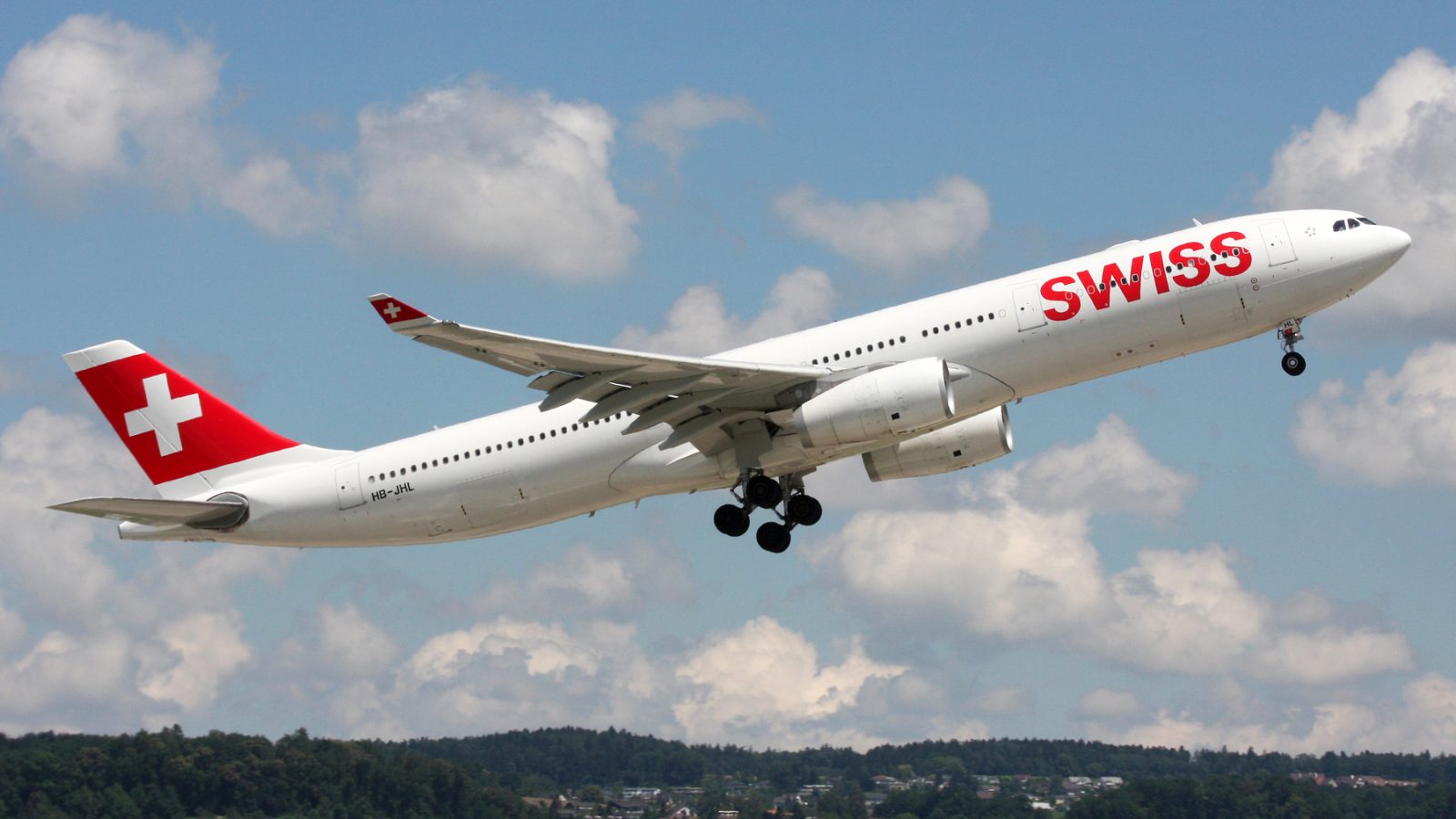
A Swiss Airbus A330-300 turned back over the North Atlantic and diverted to Dublin after smoke appeared in the cabin.
Crew Turns Back for Dublin, Ireland
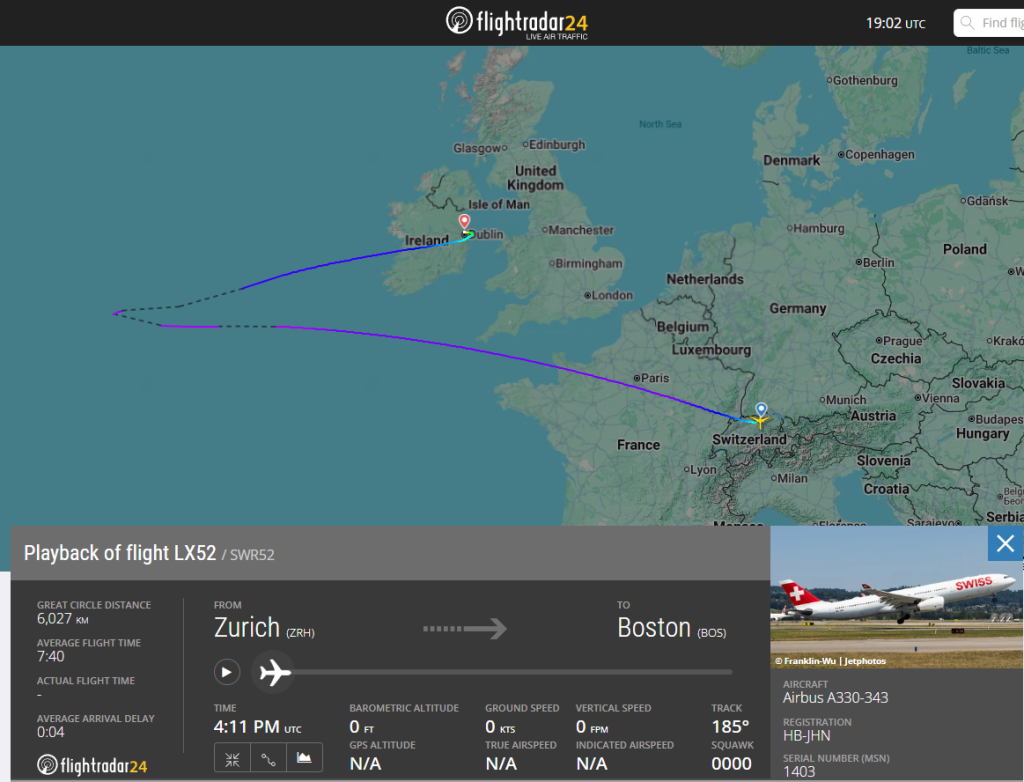
The aircraft, registered HB-JHN, operated flight LX52 from Zurich to Boston with 206 passengers and 12 crew on board as per The Aviation Herald.
The crew was cruising at FL380 roughly 660nm west southwest of Dublin when the smoke began.
The crew initially chose Shannon, the usual first option for transatlantic diversions into Irish airspace, then revised the plan and continued to Dublin.
The A330 landed safely on runway 28L about 100 minutes after the turn.
A Power Bank Takes the Blame
SWISS confirmed that a passenger power bank emitted smoke during the flight.
A passenger on board reported the device overheated in the business class cabin.
Crews train specifically for this scenario and carry containment bags and fire gloves to isolate a failing battery.
Lithium cells remain one of the most common sources of cabin smoke on long haul services.
Flight Cancelled Following Incident in Dublin
The airline cancelled the remaining sector to Boston along with the return service, and moved passengers into Dublin hotels.
The aircraft remained on the ground in Dublin around 14 hours after landing.
About HB-JHN
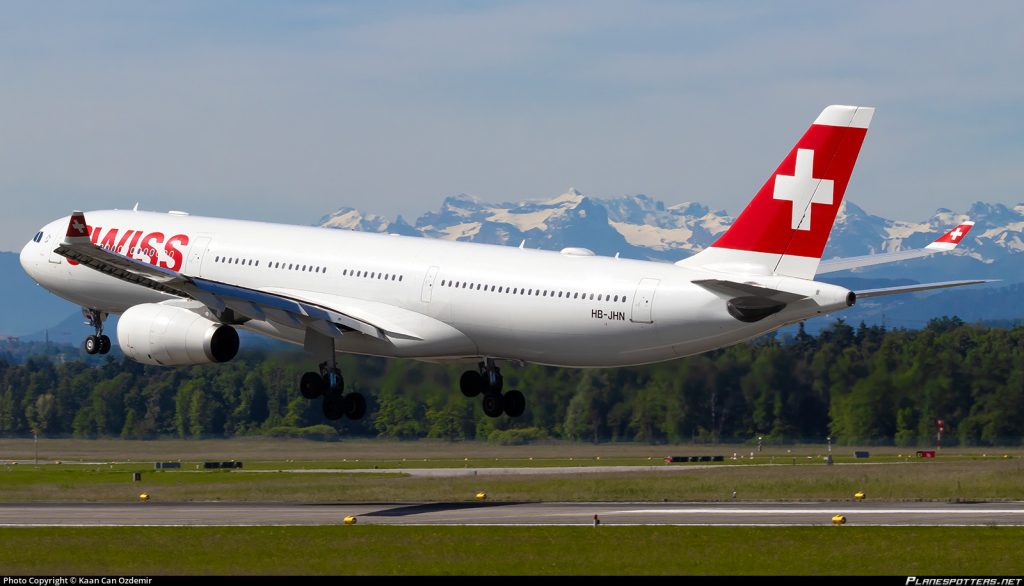
HB-JHN is an Airbus A330-343 carrying manufacturer serial number 1403.
It first flew on 1 March 2013 at Toulouse under the test registration F-WWYI, and SWISS accepted the jet on 15 April 2013, ferrying it to Zurich the same day.
The aircraft wears the name Altdorf, flies behind two Rolls Royce Trent 772B-60 engines and seats 236 passengers.
Two spells in storage interrupted its career during the pandemic.
It sat at Johannesburg from October 2020 until January 2021, then at Amman from March until June 2021, returning to service on 2 July 2021.
Why Power Banks Travel in the Cabin
Regulations require passengers to carry spare lithium batteries and power banks in hand luggage rather than in the hold, so crews can reach a device the moment it overheats.
Several carriers have since tightened rules on using or charging them in flight.
However, the diversion ended without injury, and the crew handled the event exactly as their training demands.
HB-JHN should return to service once engineers inspect the cabin in Dublin and clear the aircraft.
That outcome should not obscure the wider point, though. Lithium batteries now travel on every flight in the hundreds, and each one can fail without warning.
Airlines have responded by restricting charging in flight and asking passengers to keep power banks within reach, yet enforcement still rests largely on individual compliance.
Investigators will spend little time on this event. The pattern behind it deserves rather more attention.
Continue to follow The Aviation Hub for more analysis and insight!
Advertise with us Your brand, in front of an aviation audience Home page and in-article placements, sold directly, one advertiser per slot. From £250 a year. See the rates