
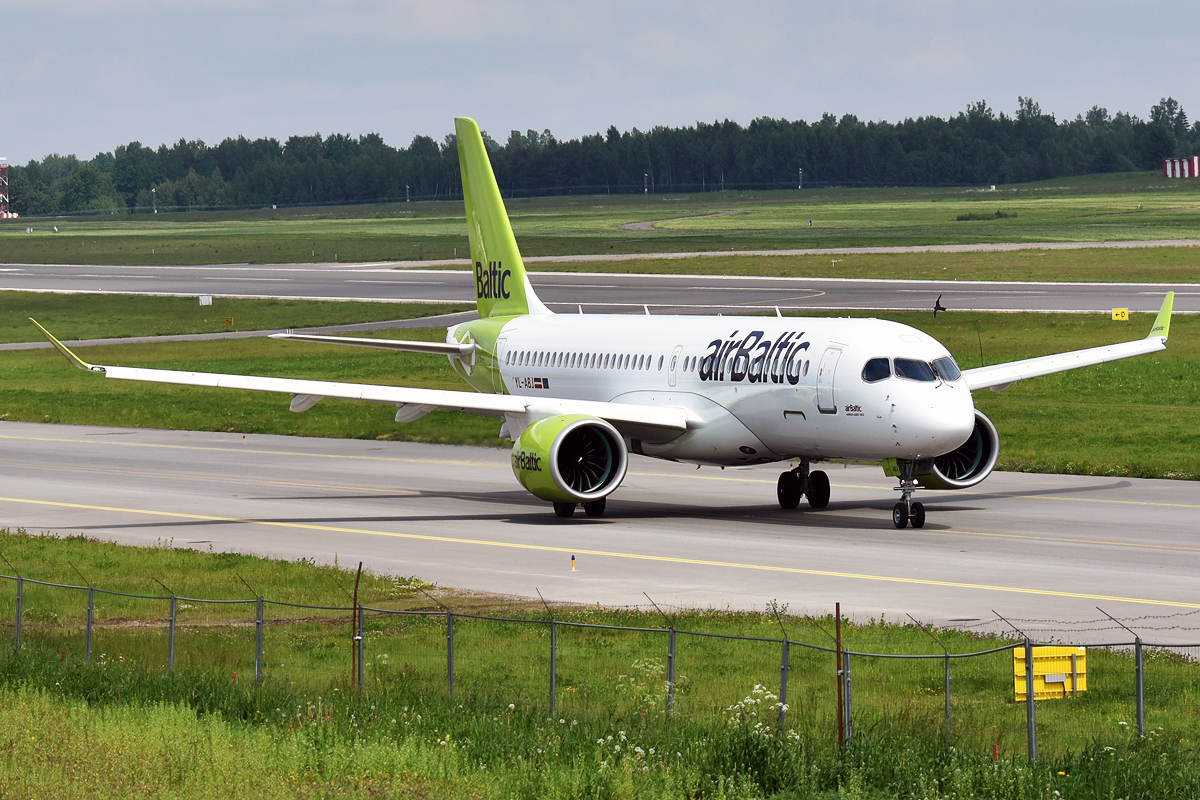
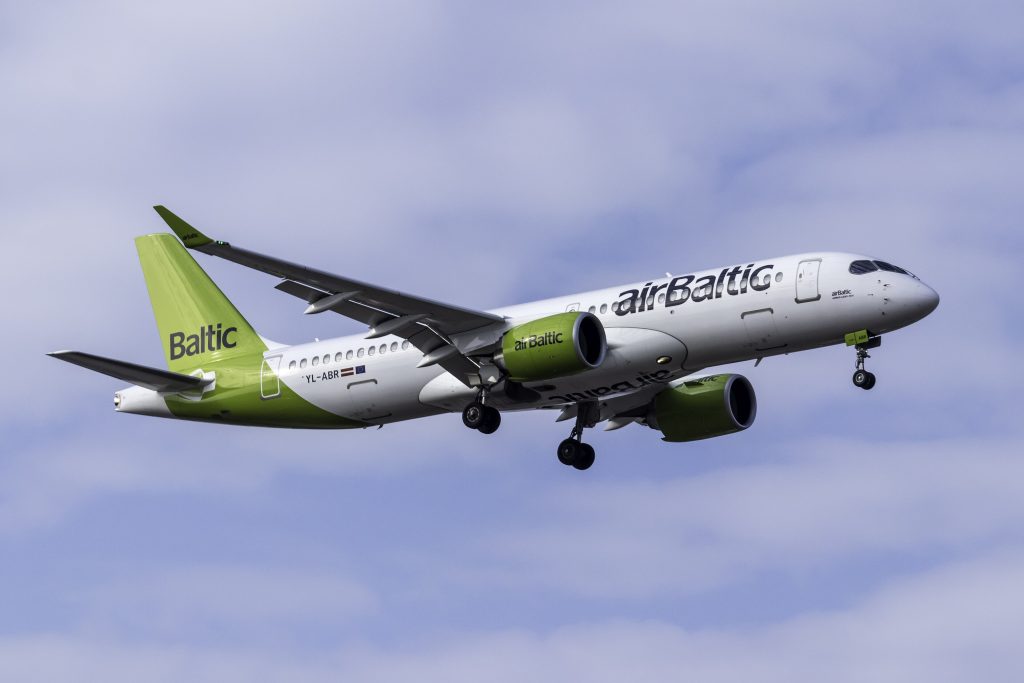
airBaltic published a revised business plan today containing a number no Airbus executive wanted to read; the cutting of its A220 fleet.
The airBaltic A220 fleet will shrink from 54 aircraft to roughly 36 by the end of this year.
The Latvian flag carrier frames the decision as discipline.
Financial stability first, growth second, built around a tighter Riga network and more ACMI flying.
Read the numbers rather than the language and a different story appears.
Europe’s largest A220 customer told Airbus it would operate close to 100 A220-300s by the early 2030s.
It now expects to operate around 40.
Airbus has absorbed setbacks on this programme before.
It has not absorbed one this large from a customer this committed.
From 100 A220 Aircraft to 40
The previous plan was written for an initial public offering that never happened.
It assumed sustained growth across the Baltic region and wider Europe, supporting expansion towards a fleet approaching 100 aircraft.
airBaltic exercised options four separate times to build towards that figure, reaching 90 firm A220-300 orders in August 2024.
It also signed a 17 year Pratt & Whitney maintenance agreement that both companies publicised as underwriting a 100 aircraft fleet by 2030.
The revised plan replaces all of it.
Approximately 36 aircraft at the end of 2026, rising gradually to around 40 by 2031.
Scheduled available seat kilometres fall from roughly 9.6 billion this year to 8.7 billion in 2027 before recovering to about 10.5 billion by 2031.
Revenue is projected at approximately €0.8 billion in 2027, against the €779 million airBaltic booked in 2025.
Five years of planning, and the airline expects to be marginally larger than it is today with a fleet a third smaller.
Funding it remains unfinished.
airBaltic is seeking €225 million of interim financing ahead of a permanent package of up to €225 million of new debt and €100 million of new equity, with partial equitisation of its 2029 Senior Secured Notes and a reconvened bondholder vote on 17 August.
Airbus Loses Its Most Committed European Customer
airBaltic is not an ordinary operator of the type.
It was the global launch operator of the A220-300 in 2016, it has flown nothing else since 2020, and Airbus has used it repeatedly as evidence the aircraft delivers what the brochure claims.
At 90 firm orders it is the largest A220 customer in Europe.
Roughly 34 of those aircraft have never been delivered.
The business plan does not mention them once.
A fleet of 36 rising to around 40 leaves room for perhaps five net additions across five years alongside any replacements.
The remainder have no place in the plan.
Airbus has not lost the order formally.
Nothing has been cancelled and no deferral has been disclosed.
But a backlog entry that the customer’s own approved business plan cannot accommodate is not a delivery stream.
It is a negotiation waiting to happen.
The Engine Crisis Wrote This Business Plan
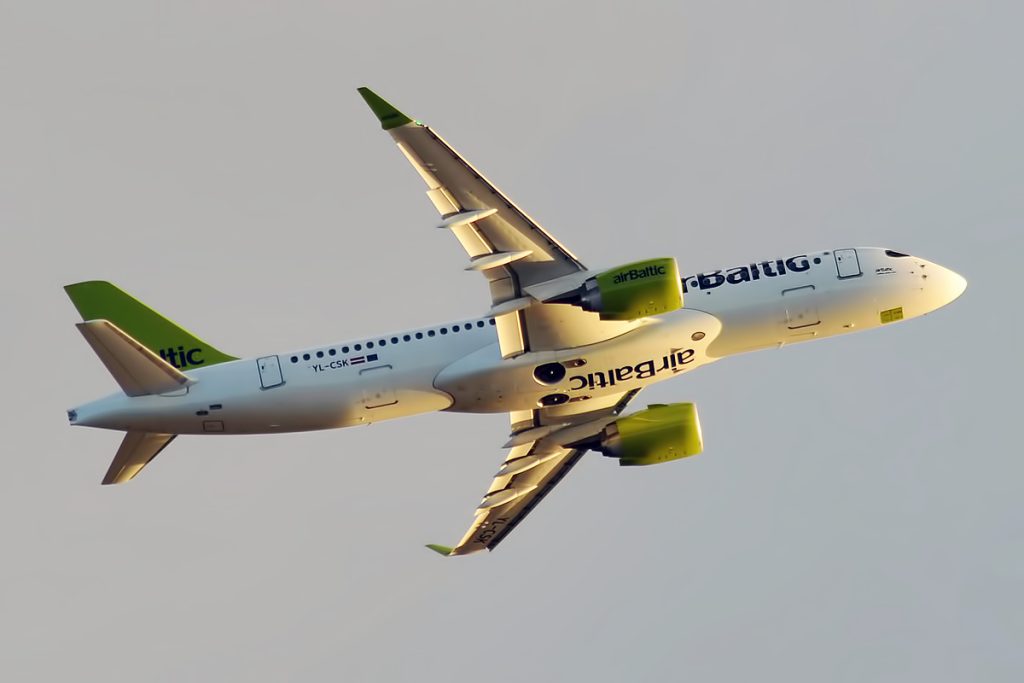
airBaltic is explicit about the causes.
Alongside moderating demand and geopolitical disruption in Ukraine and the Middle East, it cites prolonged Pratt & Whitney engine availability constraints that have restricted its ability to deploy the fleet it already owns.
That is the same root cause behind SWISS withdrawing its A220-100s and dismantling two of them for parts, EgyptAir dropping the type altogether, and ITA Airways pursuing compensation.
The pattern is now difficult to present as a series of unrelated commercial decisions.
Airbus can point out, fairly, that the operational picture has improved sharply.
Groundings attributable to engine issues have fallen from around 17% of the global A220 fleet in late 2025 to between 2% and 3%, and airBaltic recorded none at all in the first quarter of 2026.
By then the damage had moved from the operation to the balance sheet.
An airline that spent three years unable to fly aircraft it had financed arrived at 2026 with negative equity of €184 million, a Fitch downgrade to CCC minus, a shelved listing and an emergency state loan.
The recovery came after the capital structure broke, not before.
Eighteen A220s Are About to Leave the Fleet
The plan does not explain how airBaltic removes 18 aircraft in under five months.
Lease returns account for part of it, and the airline already handed two A220-300s back to a lessor early at the end of June.
Wherever those airframes go, the market effect is identical.
A concentrated supply of used A220-300s arrives at a moment when the type has a thin trading history, a small operator base and a single engine supplier.
Lease rates and appraised values underpin every A220 campaign Airbus runs.
When the launch operator releases roughly a third of the world’s largest fleet of the variant, lessors reprice the risk on everything else.
SWISS parting out ten year old A220-100s made the same point from the opposite direction.
Airbus now has two European examples inside twelve months of A220s shedding value faster than the financing assumed.
airBaltic Becomes a Capacity Supplier
The most revealing element of the plan is the ACMI strategy.
airBaltic already places up to 25 aircraft with Lufthansa Group carriers and Air Serbia over the summer, and around six across the winter.
The new plan makes that a permanent pillar of the business rather than a seasonal convenience.
Commercially it makes sense.
Wet leasing smooths the brutal seasonality of a northern European network, cuts fixed cost exposure over winter and transfers commercial risk to the customer.
Strategically it changes what airBaltic is.
A flag carrier flying a substantial share of its fleet on someone else’s behalf becomes a capacity provider with a scheduled network attached, and capacity providers grow by chasing lease economics rather than by ordering aircraft to build a hub.
The A220-500 Question Gets Harder
Airbus is still not making money on the A220.
It is working towards 13 aircraft per month in 2028 after missing 14 in both 2025 and 2026, it delivered just 44 A220s in the first half of 2026, and Quebec wrote down C$400 million against its 25% stake in Airbus Canada last October.
The stretched A220-500 remains unlaunched, with Airbus repeating that programme profitability comes first.
Any future campaign for it will run against a backdrop in which the launch operator of the A220-300 has cut its fleet by a third and the launch operator of the A220-100 has scrapped airframes for spares.
The Bottom Line
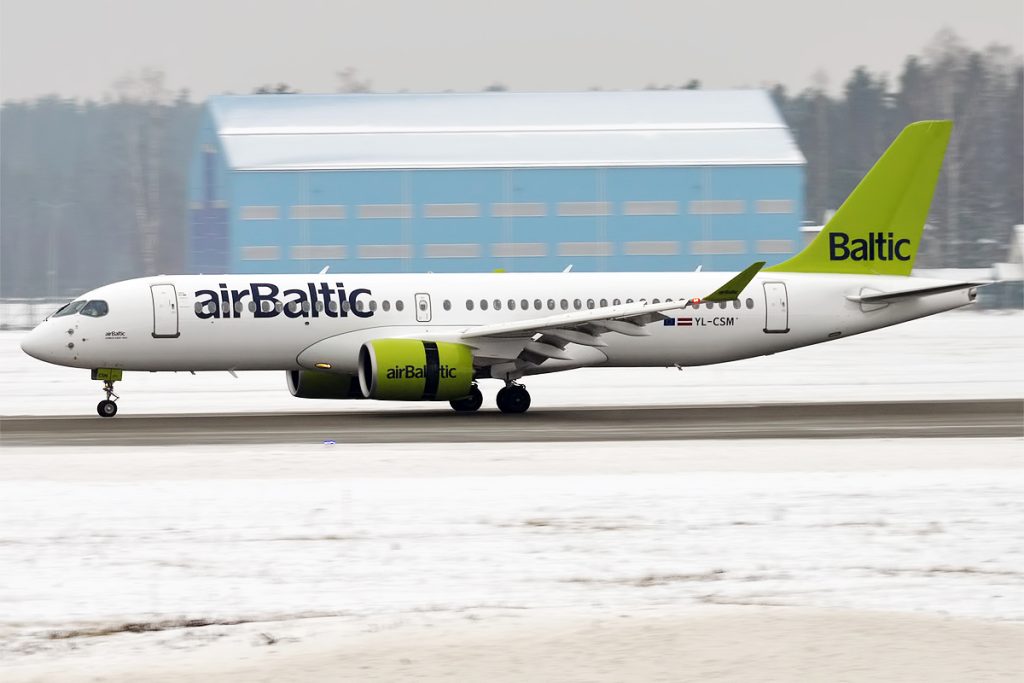
None of this makes the A220 a bad aircraft.
It remains the only modern certified Western jet in its class while the Boeing 737 MAX 7 waits, its economics on thin routes are excellent, and Airbus still holds a backlog of more than 400 aircraft.
The problem is not the airframe.
It is that the two most visible European champions of the type have both concluded, within twelve months of each other, that they cannot sustain the fleets they planned.
Airbus can fix a production rate.
Fixing the impression that operating the A220 in Europe has been financially punishing is a longer job.
Continue to follow The Aviation Hub for more analysis and insight!
Advertise with us Your brand, in front of an aviation audience Home page and in-article placements, sold directly, one advertiser per slot. From £250 a year. See the rates