Bomb Threat Causes Air India Express Emergency Landing in Ahmedabad
 By The Aviation Hub
4 min read
By The Aviation Hub
4 min read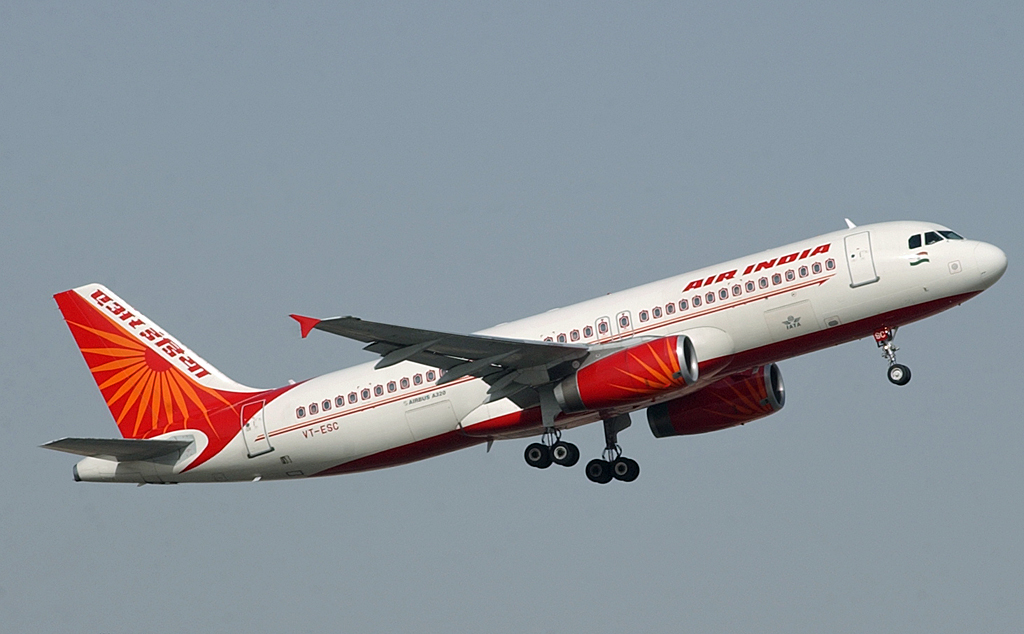
An Air India Express service from Dammam in Saudi Arabia to New Delhi was forced to divert and land at Ahmedabad on Monday after a crew member discovered a note referencing a bomb written on a tissue inside one of the aircraft lavatories.
Air India Express IX170 – Dammam to Delhi…
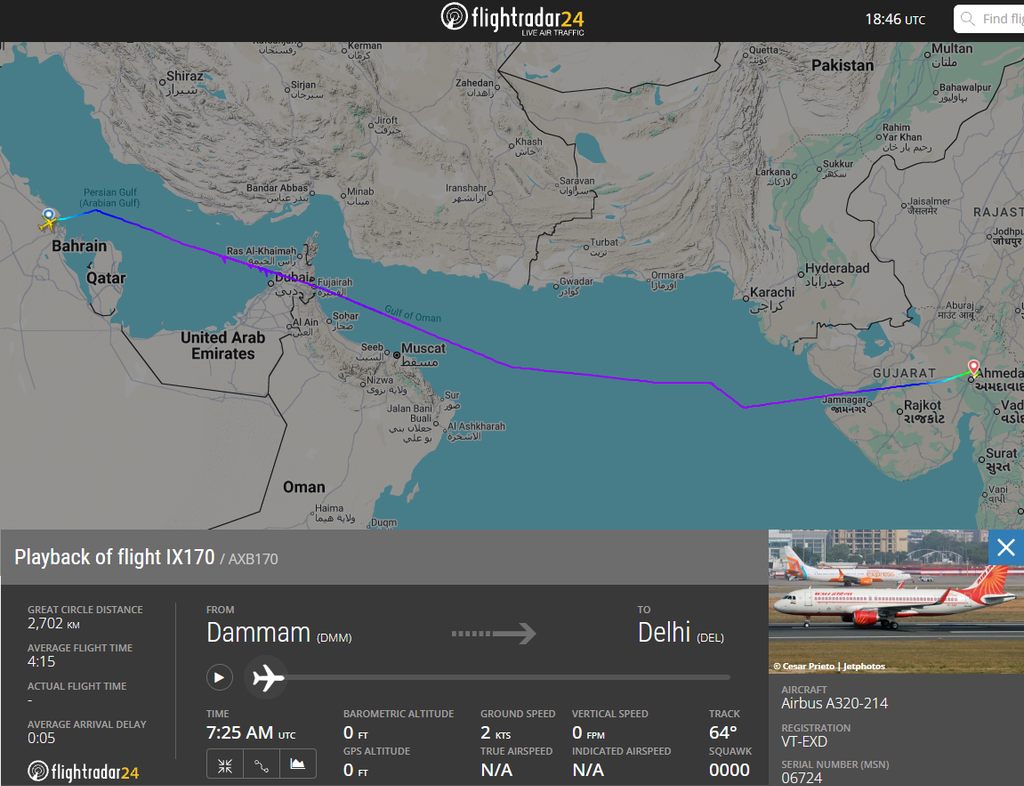
The flight, operating as IX170, was en route from Dammam (DMM) to Delhi (DEL) when a member of the cabin crew found the message during the journey.
Ahmedabad Police, quoted by Hindustan Times, confirmed that the note explicitly referenced a bomb, prompting the crew to alert the flight deck and initiate emergency procedures in line with standard aviation security protocol.
Rather than continuing to Delhi, the crew opted to divert the aircraft to the nearer airport at Ahmedabad, where it could be handled by dedicated security teams and, if required, an emergency response could be mounted more quickly.
The Diversion to Ahmedabad
Flight tracking data shows the aircraft’s track curving south of its planned route across the Gulf of Oman before making for Ahmedabad, consistent with a diversion decision taken while still over water.
The aircraft landed safely, and all 32 passengers on board were deboarded without incident, according to airport authorities.
Once on the ground, standard procedure for a specific and credible bomb threat was followed.
Security personnel, including bomb disposal specialists, began a full sweep of the aircraft, its cargo hold and the surrounding apron area to rule out the presence of any explosive material.
Passenger and Aircraft Safety in Ahmedabad
Authorities stressed that the deboarding was carried out safely and calmly, with passengers moved away from the aircraft while checks took place.
The government appointed Bomb Threat Assessment Committee, known as BTAC, was notified immediately once the threat was identified, and is the body responsible for evaluating the credibility of such threats and coordinating the response across airline, airport and security agencies.
As of the time of reporting, the aircraft remained on the ground at Ahmedabad while checks continued, with Air India Express confirming that the jet would only return to service once security clearance had been granted.
Airline Statement
An Air India Express spokesperson addressed the incident directly, saying:
“One of our flights from Dammam to Delhi was diverted to Ahmedabad as a precaution and in keeping with security protocols after being notified of a specific bomb threat.”
“The government appointed Bomb Threat Assessment Committee (BTAC) was alerted immediately, and all security procedures were promptly initiated.”
“The flight landed, and all guests have been disembarked safely.”
“The aircraft will be released for operations after necessary security checks are completed.”
Aircraft Details
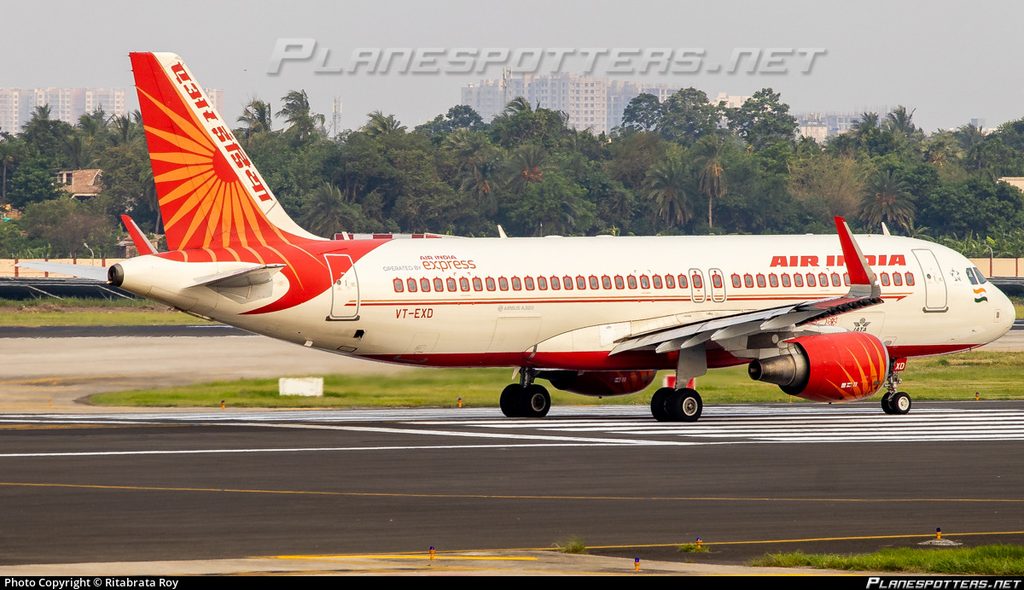
The aircraft involved was VT-EXD, an Airbus A320-214(WL), manufacturer serial number 6724.
It first flew on 19 August 2015 from Airbus’s Toulouse production site under the test registration F-WWIF, and was delivered new to Air India on 14 September 2015, having been ferried from Toulouse to Delhi via Sharjah shortly afterward.
The airframe is now 11 years old and is leased from CALC.
VT-EXD transferred to Air India Express on 9 October 2024 as part of the wider consolidation of Air India’s narrowbody fleet under the Express brand, and is configured in a single class layout seating 180 passengers.
It is powered by two CFM56 5B4/3 engines.
The aircraft has one notable prior incident on record.
On 25 May 2024, while operating out of Trivandrum, one of its engines ingested a bird during takeoff, prompting the crew to return to Trivandrum.
The aircraft was repaired and returned to service on 30 May 2024.
What Happens Next
Monday’s diversion adds to a run of bomb threats affecting Indian carriers in recent times, many of which have subsequently been assessed as hoaxes following investigation.
Police in Ahmedabad are expected to investigate the origin of the note found onboard IX170, while Air India Express works to reposition the aircraft and accommodate affected passengers once clearance is given.
Continue to follow The Aviation Hub for more analysis and insight!