
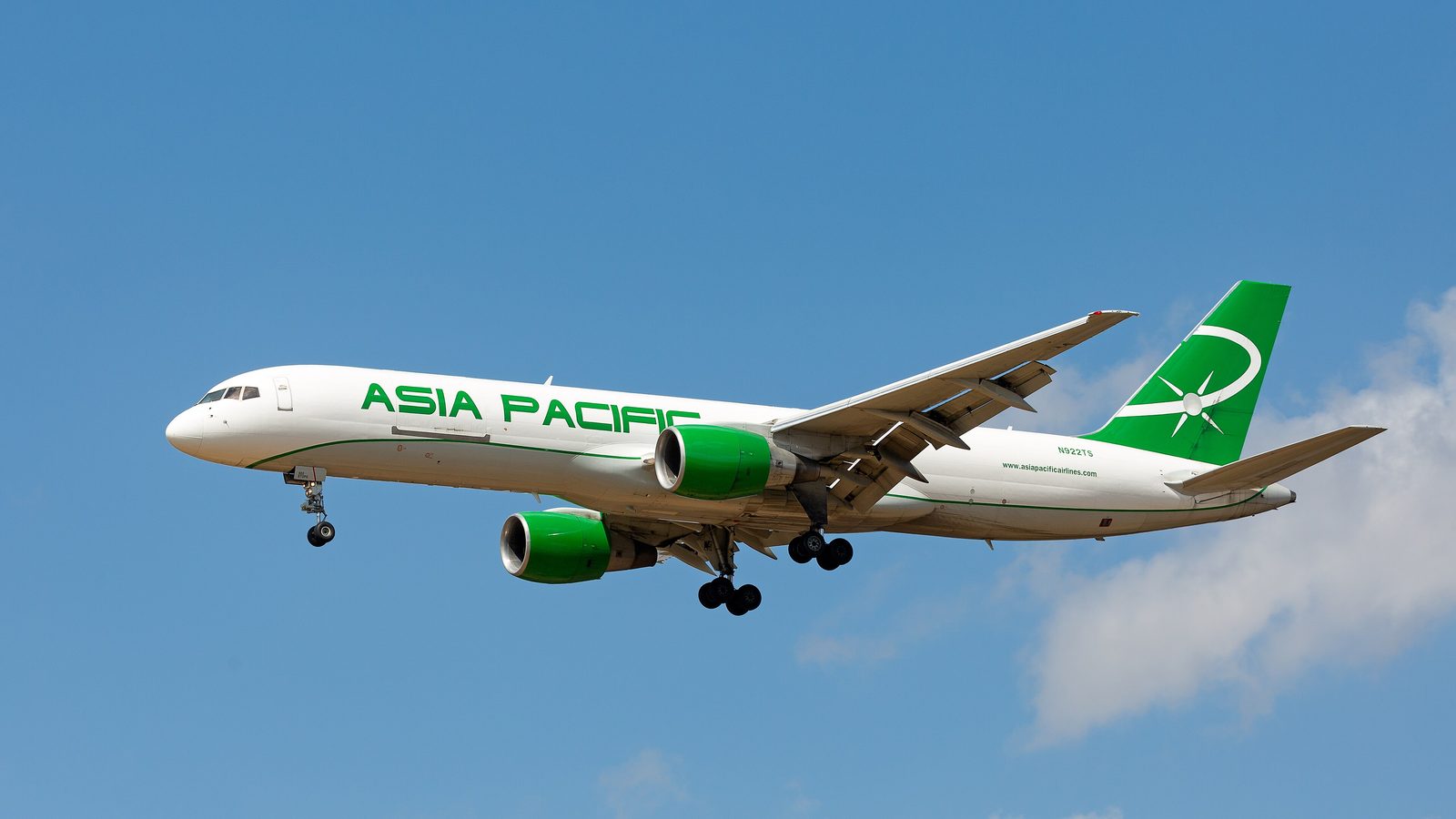
In the last 30 minutes, an Asia Pacific Airlines Boeing 757 operating a flight from Hong Kong to Guam has declared an emergency.
Information is limited surrounding the incident at hand.
Below is what we know on this so far…
Asia Pacific Airlines Flight P9881 – Hong Kong to Guam…
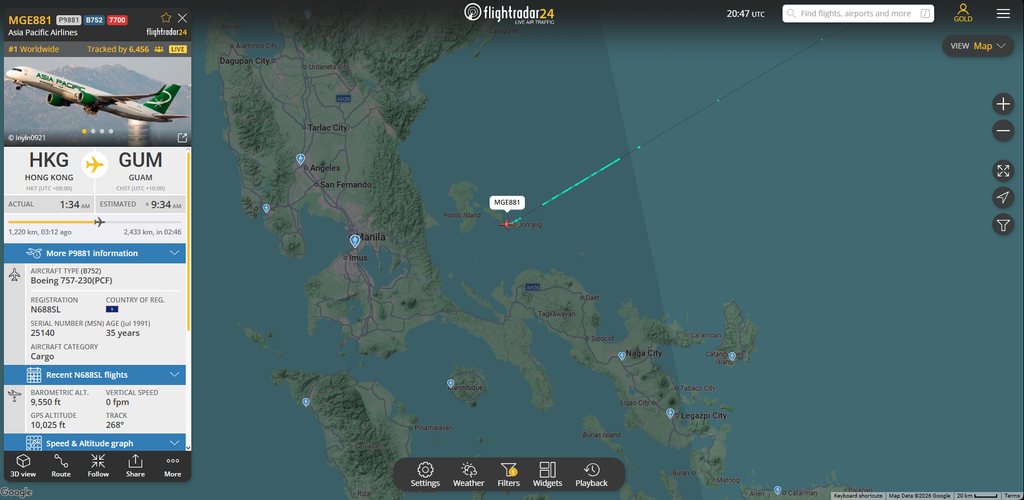
Asia Pacific Airlines flight P9881, which declared the emergency, is a routine scheduled flight between Hong Kong and Guam.
Furthermore, the aircraft involved in the incident was N688SL.
As per data from Planespotters.net, N688SL is a 35.1 year old Boeing 757-200 that started out life with Condor back in July 1991.
It remained with the German carrier until December 2006 when it was handed over to L’Avion.
By April 2009, the airframe was then handed over to OpenSkies, where it remained there until November 2018 when it was handed back to lessor, Aerolease.
Asia Pacific Airlines then took delivery of the airframe in March 2019 where it has been since.
Of the 757-200 Freighter variant, Asia Pacific Airlines has six of them in their fleet, of which three are in active service, and three are parked, with an average fleet age of 31.7 years.
Asia Pacific Airlines flight P9881, which declared the emergency, departed from Hong Kong at 0134 local time on September 3, and initially tracked eastbound towards Guam.
To the east of the Philippines, the aircraft then made a deviation to the south-west, and declared an emergency via the 7700 squawk code.
From there, the decision was made to divert to Manila, an airport best placed for emergencies in the area.
It is noted that during the emergency, the aircraft rapidly descended to 10,000 feet from it’s cruising altitude of 29,000 feet (31,000 feet GPS Altitude).
Reason for the Emergency?
At this stage, the reason for the emergency onboard Asia Pacific Airlines flight P9881 Hong Kong-Guam is unclear.
What is notable is the rapid descent to 10,000 feet from it’s cruising altitude.
Speculatively, this could indicate an issue with the aircraft’s pressurisation system.
If an aircraft loses pressurisation at an high altitude, it can put the souls onboard the aircraft at risk of hypoxia and oxygen issues.
At this stage, no official cause has been confirmed.
As soon as we get more information on this, then we will update you accordingly.
Continue to follow The Aviation Hub for more analysis and insight!