Qatar Airways Passenger Removed by Security in Ho Chi Minh City
 By The Aviation Hub
3 min read
By The Aviation Hub
3 min read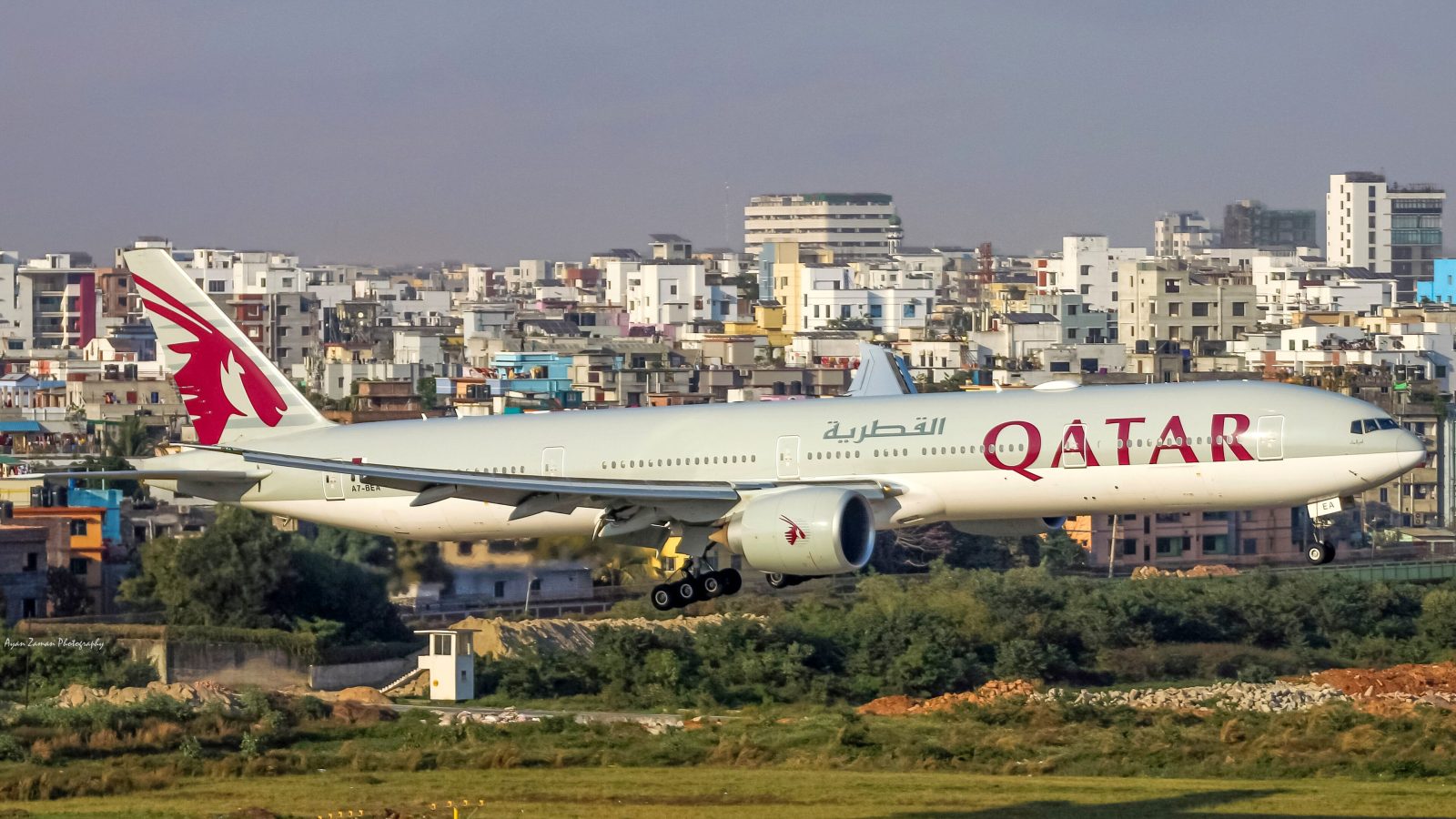
Qatar Airways flight QR970 requested security assistance on arrival at Ho Chi Minh City after a passenger was reportedly found smoking at the back of the aircraft during the overnight service from Doha.
Crew alerted ground authorities ahead of landing so that police could meet the aircraft on arrival.
What Happened in Ho Chi Minh City…
Details shared by AirLive.net indicate that a passenger lit a cigarette toward the rear of the cabin while the Boeing 777-300ER was en route to Vietnam.
Cabin crew identified the smoking and the flight deck subsequently requested security to meet the aircraft on arrival at Ho Chi Minh City, a standard response used by airlines when a passenger breaches inflight conduct rules.
There is no indication from the available information that the aircraft diverted or that any injuries resulted.
Flight Details
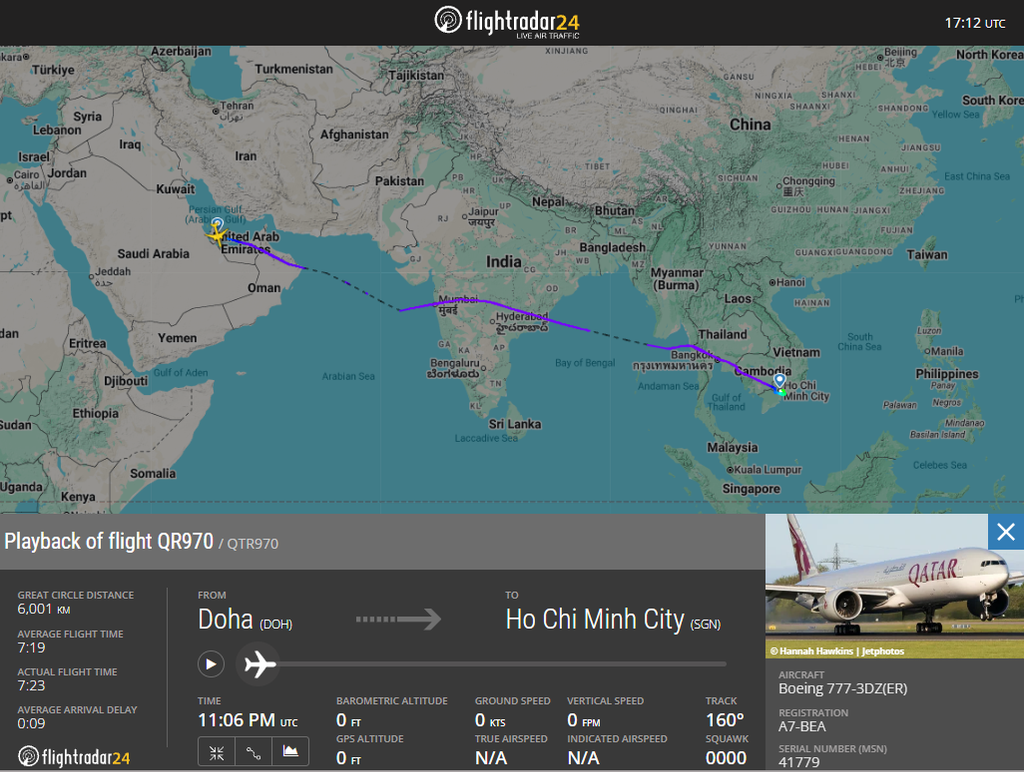
Flightradar24 data for QR970 shows the service operating on the Doha to Ho Chi Minh City route, with a scheduled onward sector continuing to Phnom Penh.
The relevant rotation departed Doha at 23:19 local time and landed in Ho Chi Minh City at 06:43, a flight time of seven hours and twenty three minutes across the Arabian Sea, the Indian subcontinent and Indochina.
The Aircraft Involved in the Ho Chi Minh City Incident…
The Boeing 777-300ER involved in the Ho Chi Minh City incident carries the registration A7-BEA, manufacturer serial number 41779 and line number 1098.
Built at Boeing’s Everett facility, the aircraft first flew on 13 April 2013 and was delivered new to Qatar Airways on 1 May 2013, making it just over thirteen years old.
It is configured in a 388 seat two class layout and is powered by two General Electric GE90-115B engines.
Across its operational history the airframe has spent spells on lease from Pembroke and BBAM, carried a temporary reconfiguration between 2014 and 2016, and wore a “FIFA World Cup Qatar 2022” livery sticker from October 2022 to May 2023.
Qatar Airways’ fleet tracking lists the airframe as active.
Why Smoking Is Banned On Aircraft
Smoking has been prohibited on commercial flights by airlines worldwide since the 1990s and 2000s, and Qatar Airways, like virtually every carrier operating international services, enforces a strict no smoking policy across its entire fleet, including in lavatories.
The rule exists primarily because of fire risk, which is why security removed this individual in Ho Chi Minh City.
Modern aircraft cabins and lavatories are lined with materials that can be highly flammable, and lavatory waste bins have historically been a source of onboard fires linked to discarded cigarettes.
Smoke detectors fitted throughout the cabin and lavatories are designed to trigger an immediate crew response, and a lavatory fire in flight is treated as one of the most serious emergencies a crew can face given the difficulty of reaching a confined space at altitude.
Beyond fire risk, smoke introduced into a pressurised cabin can interfere with air quality systems and obscure visibility in an emergency, while a naked flame near oxygen equipment or fuel vapour poses an explosion hazard.
Regulators and airlines also treat inflight smoking as a disruptive passenger offence, since it can trigger false fire alarms, unsettle other passengers and, as with QR970, prompt a formal security response on arrival.
Continue to follow The Aviation Hub for more analysis and insight!