Two American Airlines Incidents in 24 Hours in Atlanta & Dallas
 By The Aviation Hub
5 min read
By The Aviation Hub
5 min read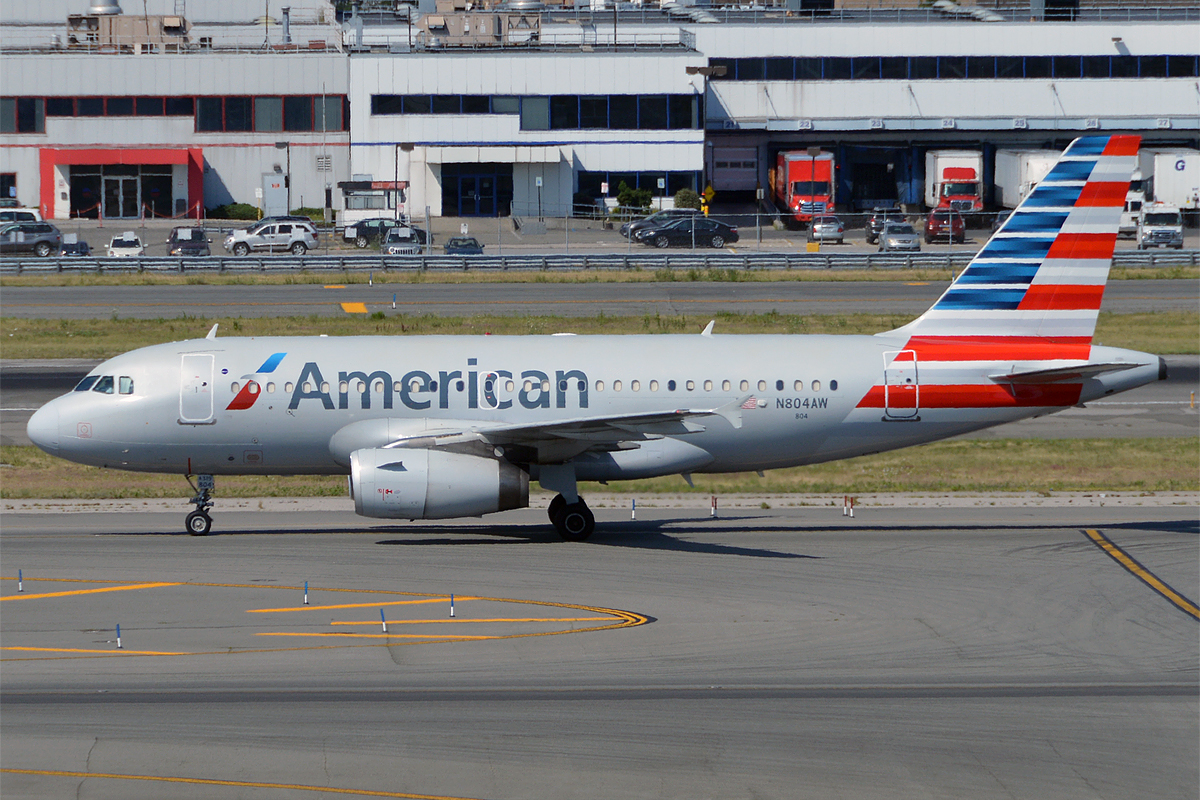
American Airlines crews handled two separate inflight incidents inside 24 hours, the first on approach to Atlanta and the second on approach to Dallas.
A device fire in the cabin prompted an emergency declaration on a flight from Miami to Atlanta. Hours later, a flap problem forced a Boeing 737 into a high speed landing at Dallas Fort Worth. Both aircraft landed safely.
Device Fire on Approach to Atlanta
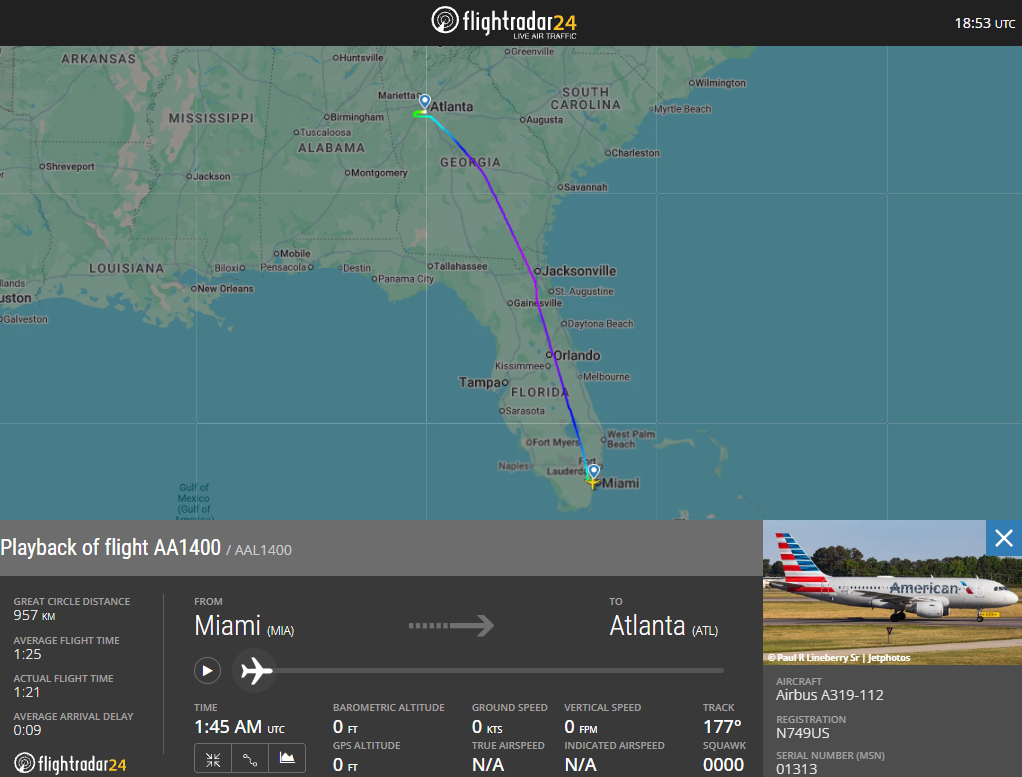
The first incident involved flight AA1400 from Miami to Atlanta on the night of 29 September 2026. An Airbus A319-100, registration N749US, operated the service.
Flightradar24 data shows the aircraft left Miami at 02:28 UTC on 30 September, which was 33 minutes behind schedule.
According to The Aviation Herald, the aircraft was descending through 15,000 feet towards Atlanta when the crew declared an emergency.
The pilots reported that a laptop and a mobile phone had caught fire in the cabin.
Cabin crew contained both devices in a galley cart.
The flight crew then asked emergency services to meet the aircraft in case either device reignited.
The A319 landed on runway 09R at Atlanta about 15 minutes later.
Flightradar24 recorded the landing at 03:49 UTC, which was 23:49 local time in Atlanta.
Lithium battery fires are hard to put out for good.
A damaged cell can enter thermal runaway and flare up again after the flames die down.
Therefore, the crew wanted firefighters waiting at the runway.
The Aircraft Involved in Atlanta
N749US is a veteran of the American Airlines fleet.
Data from Planespotters.net shows the A319-112 first flew from Hamburg Finkenwerder on 23 August 2000.
It carries manufacturer serial number 1313 and is now 26.1 years old.
US Airways took delivery on 15 September 2000.
The aircraft then moved to American Airlines on 9 December 2013 following the merger of the two carriers.
Two CFM International CFM56-5B6/P engines power the jet.
It seats eight passengers in the premium cabin and 120 in economy. American currently leases the airframe from AerCap.
The fire did not keep the aircraft out of action for long.
N749US returned to service about 10 hours after it landed in Atlanta.
Flap Problem on Approach to Dallas
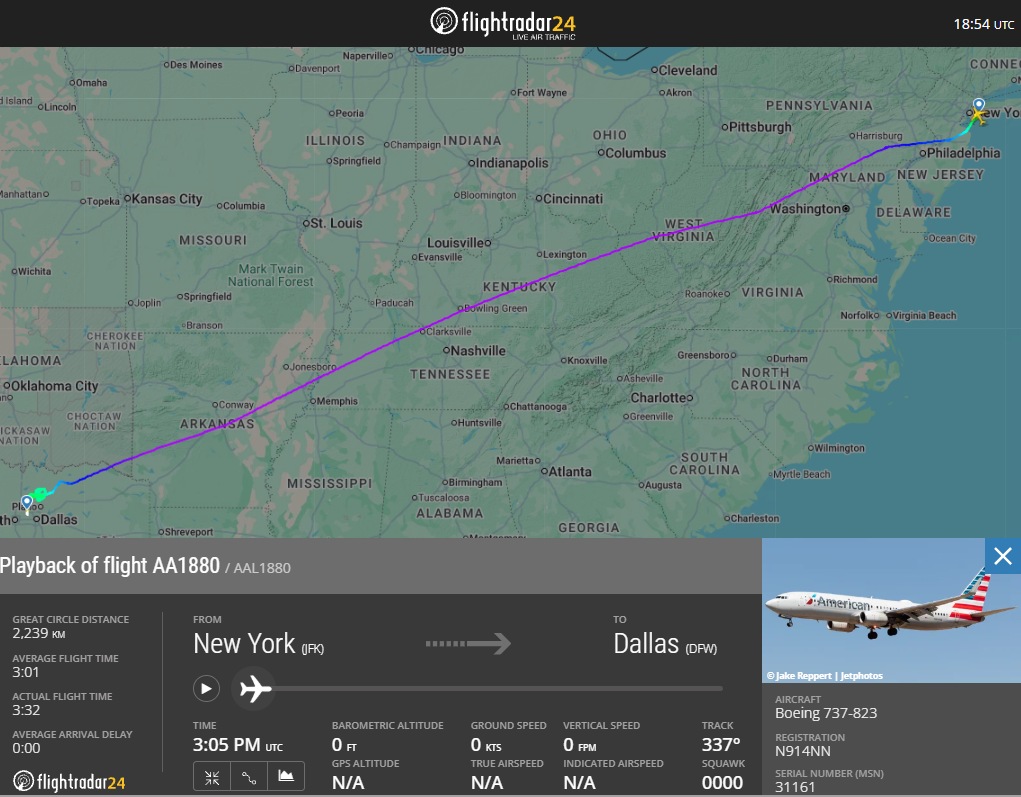
The second incident followed on the afternoon of 30 September.
A Boeing 737-800, registration N914NN, was operating flight AA1880 from New York JFK to Dallas Fort Worth.
Flightradar24 data shows the aircraft departed JFK at 15:42 UTC.
The Aviation Herald reports that it was descending towards Dallas when the crew stopped the descent at about 5,000 feet and reported problems with the flaps.
The crew subsequently declared PAN PAN.
They told controllers they needed to carry out a “no flaps landing” and asked emergency services to check the brakes after landing.
The 737 landed safely on runway 17R at a higher than normal speed, about 35 minutes after it stopped the descent.
Flightradar24 logged the landing at 19:14 UTC, or 14:14 local time. That was only five minutes after the scheduled arrival time.
The Aircraft Involved in Dallas
N914NN is a much younger airframe than the A319 involved in the Atlanta incident.
Planespotters.net lists it as a 737-823 with winglets, serial number 31161 and line number 4315.
The jet first flew from Renton on 10 January 2013. American Airlines took delivery on 25 January 2013 and ferried it from Boeing Field to Dallas Fort Worth the same day.
It is now 13.7 years old.
Two CFM56-7B24E engines power the aircraft.
The cabin holds 16 premium seats and 156 economy seats.
In addition, the records show American stored the jet at Greensboro between 26 March and 29 May 2020.
The flap fault kept the 737 grounded for far longer than the Atlanta aircraft. It remained in Dallas for about 33.5 hours.
Flightradar24 data shows it then returned to service with a flight to Cincinnati.
Why a No Flaps Landing Matters
Flaps let an airliner fly slowly enough to land comfortably.
They increase lift and drag, so the aircraft can approach at a lower speed.
Without them, the crew must fly a much faster approach.
As a result, the aircraft needs more runway to stop and the brakes absorb far more energy.
That explains the request for a brake check.
Hot brakes can cause fires or deflated tyres, so fire crews inspect them before the aircraft continues to the gate.
The crew also chose their words carefully.
PAN PAN signals an urgent situation that does not pose an immediate danger to the aircraft.
It sits one level below a MAYDAY call. In contrast, the Atlanta crew declared an emergency, because a cabin fire leaves far less room for delay.
The 35 minutes between the first report and the landing also gave the Dallas pilots time to prepare.
Crews in this position typically work through checklists, calculate the landing distance and brief the cabin.
Two Unrelated Events and Two Safe Outcomes
Nothing links the two incidents beyond the airline and the timing.
One started with passenger devices in the cabin. The other started with an aircraft system.
However, both show crews following their training.
The Atlanta crew contained the fire quickly and put the aircraft on the ground within 15 minutes.
Meanwhile, the Dallas crew took their time, prepared for a difficult landing and asked for help before they needed it.
Passengers can also take a lesson from the Atlanta flight.
Lithium batteries power almost every device on board.
Travellers should therefore keep devices within sight and alert cabin crew immediately if one overheats, swells or smokes.
Neither report mentions any injuries, and both aircraft are back in service.
For more coverage like this, visit our Squawk 7700 hub.
Continue to follow The Aviation Hub for more analysis and insight
Advertise with us Your brand, in front of an aviation audience Home page and in-article placements, sold directly, one advertiser per slot. From £250 a year. See the rates