KLM’s First A350: What the Night Watch Means for the Fleet
KLM has taken delivery of its first Airbus A350-900, marking the start of a €7 billion intercontinental fleet renewal.
 By The Aviation Hub
5 min read
By The Aviation Hub
5 min read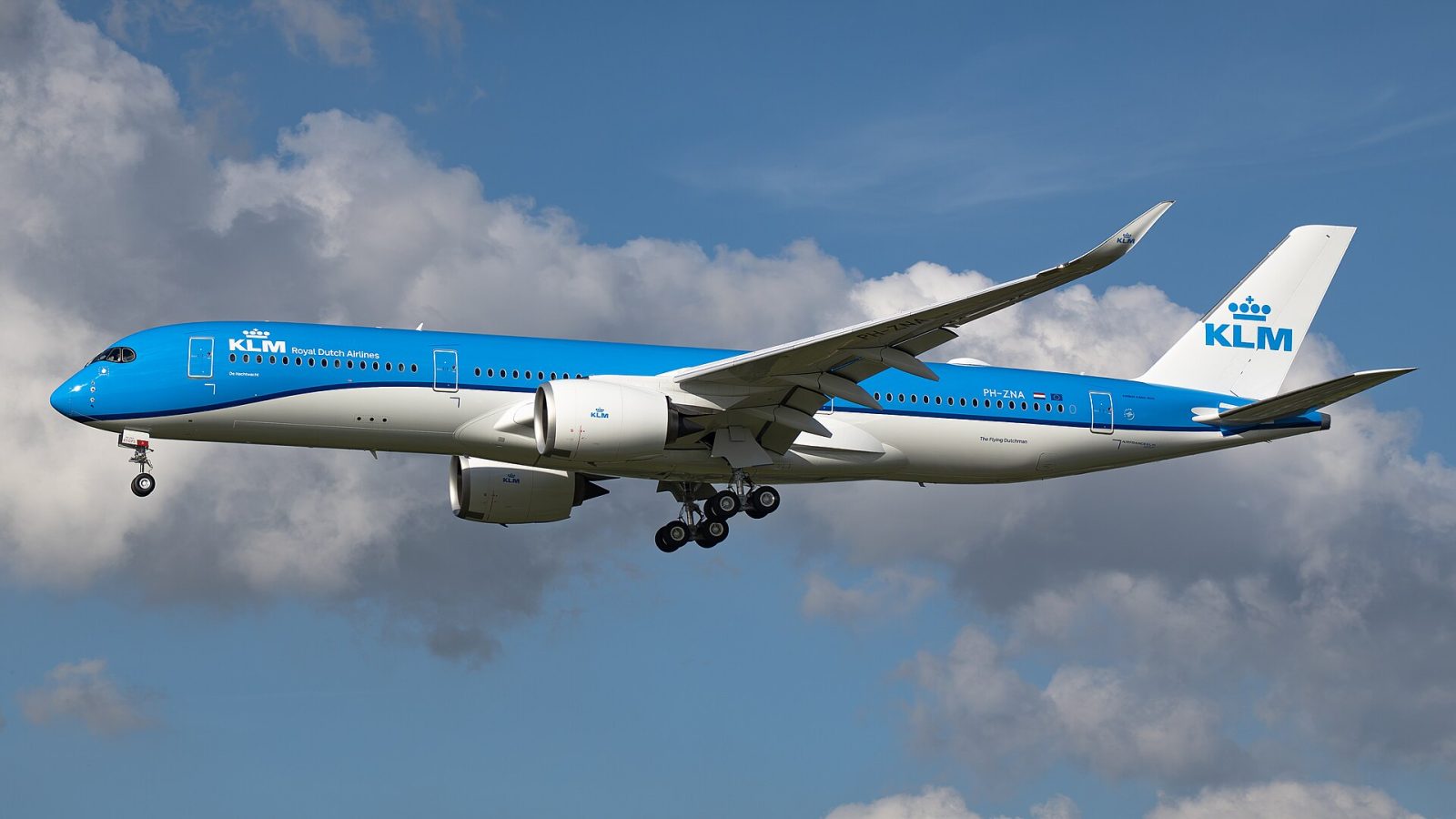
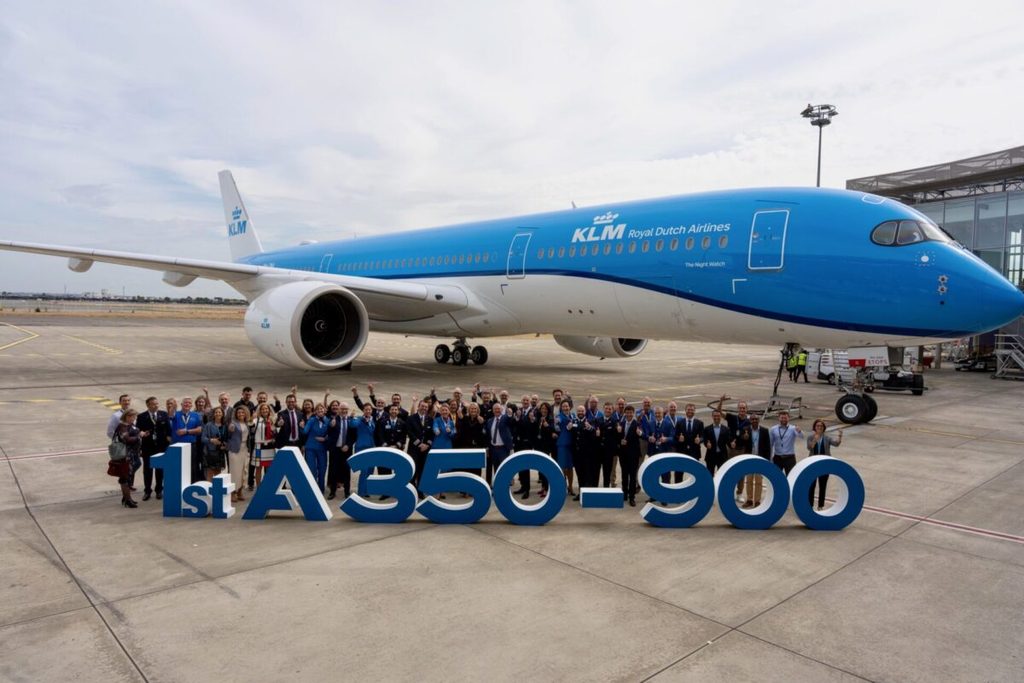
KLM‘s first A350 arrival marked a milestone: the KLM A350-900 was delivered on 2 October 2026, with the aircraft, named “The Night Watch,” accepted at Amsterdam Airport Schiphol (AMS). The arrival opens a fleet renewal programme that Airline Geeks reports will eventually cost the carrier €7 billion.
Why the KLM A350 Matters Beyond a Single Delivery
One aircraft arriving at one airport might seem like routine industry news, but this delivery is the visible start of a structural shift in KLM’s long-haul operation. The carrier has relied on Airbus A330-200s, A330-300s and Boeing 777-200ERs for its intercontinental flying. All three types are ageing relative to what competitors now operate, and as AeroTime notes, the A350 is directly intended to replace them.
The stakes are substantial. KLM told us earlier this autumn that it plans to serve 164 destinations this winter, which is a heavy schedule to sustain on older, less efficient hardware. Bringing in the A350 is not simply about adding capacity: it is about reducing the unit cost of flying that network over time.
What the Figures Say About Efficiency
The headline number from Airbus is a 25% reduction in fuel burn compared with previous-generation competing aircraft, achieved through Rolls-Royce engines, aerodynamic design and lightweight composite materials. For a carrier operating to Africa and North America, even a modest per-flight saving compounds into a meaningful reduction across thousands of annual sectors.
KLM’s CEO, Marjan Rintel, framed the rationale clearly in the airline’s own delivery statement: “Fleet renewal is one of the most effective ways we can make our operations cleaner, quieter, and more fuel-efficient.” The €7 billion envelope covers the A350-900, the freighter variant A350F, Embraer’s E2 family and the Boeing 787 Dreamliner, so the A350 sits at the centre of a broader strategy rather than being the whole of it.
KLM already operates 17 Airbus A321neos on European routes, as Rintel noted, so the carrier has recent experience of absorbing a new Airbus type at scale. That matters operationally: training pipelines, maintenance procedures and crew familiarisation are not starting from zero.
The Seat Certification Question
There is a complication that the headline delivery announcement obscures. AeroTime reported that KLM disclosed in June 2026 that a revised interpretation of regulatory requirements meant business-class seats would be unavailable when its first two A350s began carrying passengers. The European Union Aviation Safety Agency (EASA) has since approved the seat test results, allowing the certification process to begin, but KLM did not confirm in its delivery announcement whether business class would actually be available on the inaugural passenger flights to Toronto.
This matters commercially. The A350’s business-class product, with 34 suites offering direct aisle access, is central to KLM’s premium revenue pitch on long-haul routes. Flying those seats empty, or simply not selling them, on early services would reduce the revenue yield per departure at precisely the moment the carrier is absorbing the fixed costs of a new type.
The situation remains unresolved from a public-facing standpoint. KLM has not stated a date by which business class will be certified and on sale.
The Group Dimension
The 50-aircraft order belongs to Air France-KLM as a group, with options for a further 40, according to AeroTime. The group has not disclosed how the jets will be divided between KLM and Air France. That allocation decision will have consequences for both carriers’ network strategies, and the Air France side of the equation is also evolving: the group’s other carrier has been expanding its own European footprint, as seen when Air France returned to London Gatwick with a twice-daily Paris service earlier this year.
For KLM specifically, the naming convention already adopted signals ambition. AeroTime notes that the second aircraft will be named “Girl with a Pearl Earring,” introducing a Dutch Old Masters theme across the fleet. That kind of brand investment in a new type tends to indicate a carrier expects the aircraft to define its identity for a generation.
What Is Still Not Known
Several material questions remain open. The group has not said how many of the 50 aircraft will go to KLM rather than Air France. The timeline for receiving subsequent airframes has not been published. Most pressingly, the business-class certification status means the cabin configuration for early revenue flights is uncertain.
It is also not yet clear whether KLM’s initial route list, Toronto and then Montreal, Kilimanjaro, Dar es Salaam, Nairobi and Zanzibar, represents a considered sequencing of the aircraft into its most commercially suitable markets, or simply reflects which slots and schedules were most readily adapted. The carrier has not explained the selection.
You can track the aircraft type and related Airbus deliveries using our Aircraft Search tool.
What to Watch Next
The most immediate indicator to follow is whether KLM confirms business-class availability before or shortly after the Toronto launch flight. If the seats remain uncertified through the first weeks of service, the carrier will be under pressure to explain the timeline to passengers who have booked on the expectation of a new premium product.
Beyond that, watch the pace of subsequent deliveries and the group’s allocation announcement. The A350 will only begin to reshape KLM’s cost base meaningfully once multiple airframes are in service displacing older types. A single aircraft, however well named, is a promise rather than a transformation.
Continue to follow The Aviation Hub for more analysis and insight.
Advertise with us Your brand, in front of an aviation audience Home page and in-article placements, sold directly, one advertiser per slot. From £250 a year. See the rates