
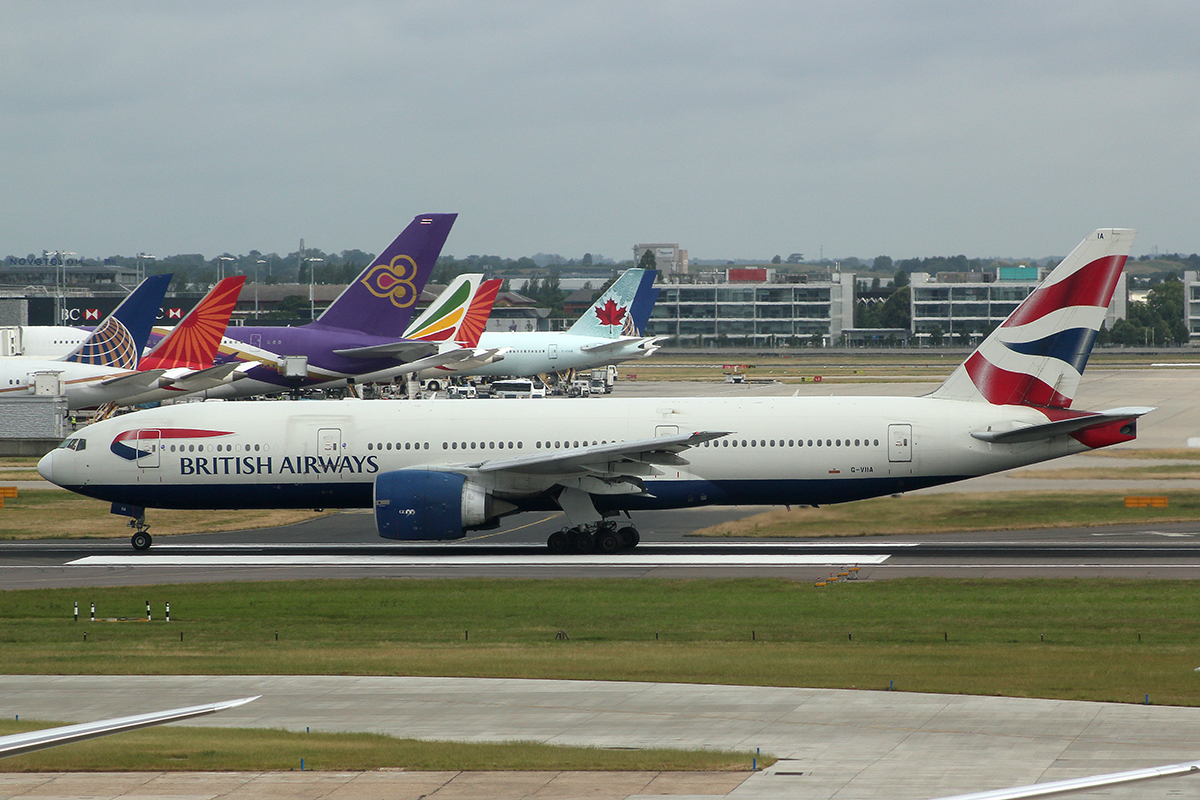
A British Airways Boeing 777 made an emergency return to London on Monday 5 October 2026 after the aircraft lost cabin pressure over the Irish Sea.
The widebody was flying from London Heathrow to Chicago O’Hare when the crew began an emergency descent and the passenger oxygen masks deployed.
The jet later landed safely back in London. Here is what we know so far.
What Happened On The Flight From London To Chicago
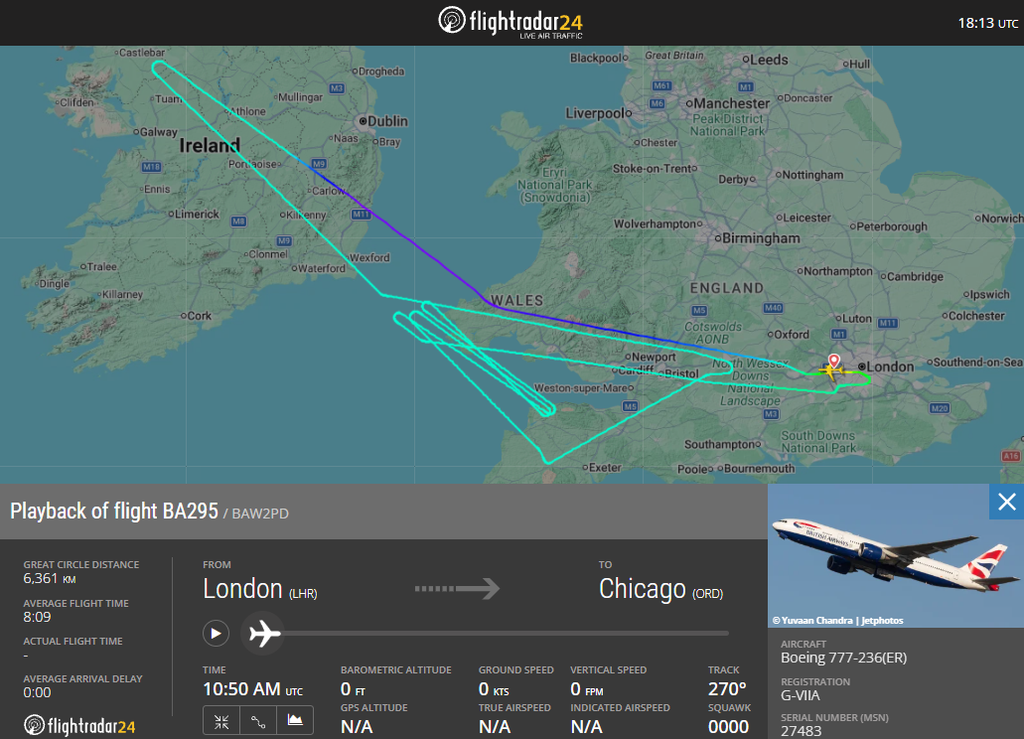
Flight BA295 left London Heathrow at 11:14 UTC, around an hour behind its scheduled 10:10 UTC departure, according to Flightradar24.
The aircraft climbed to its cruising level of FL360, or 36,000 feet, and headed west towards the Atlantic.
The Aviation Herald reports that the 777 was about 40 nautical miles south of Dublin when the crew initiated an emergency descent because of a loss of cabin pressure.
The passenger oxygen masks dropped from the overhead panels.
The aircraft levelled off at FL090, or 9,000 feet, about seven minutes later.
That equals an average descent rate of roughly 3,800 feet per minute.
The crew also set the general emergency transponder code, squawk 7700, as AIRLIVE reported at the time.
Why The Crew Descended So Quickly
Airliners cruise at altitudes where the outside air is too thin to breathe.
The pressurisation system keeps the cabin at a safe and comfortable level.
When that system fails, the crew must bring the aircraft down to breathable air without delay.
Passenger oxygen masks only provide a limited supply.
Pilots therefore put on their own masks, declare an emergency and descend to around 10,000 feet, where everyone on board can breathe normally.
The crew of BA295 levelled off just below that height while they planned the journey back to London.
The rapid descent feels dramatic in the cabin.
It is, however, a trained and controlled procedure, and the profile that BA295 flew matches it closely.
Why The Aircraft Returned To London
An aircraft that cannot hold cabin pressure cannot cross the Atlantic.
Jet engines burn far more fuel at low altitude, so the crew could no longer reach Chicago from 9,000 feet.
London made sense as the alternative. British Airways has its main base at Heathrow, along with its engineering teams and the widest choice of onward flights for passengers.
A second problem remained.
The 777 had left London with enough fuel for a transatlantic flight, which put it well above its maximum landing weight.
The crew dumped fuel over the Irish Sea near Cardiff to reduce that weight, The Aviation Herald reports.
The aircraft then landed safely on runway 27L at London Heathrow.
The Aviation Herald puts the touchdown about four hours and five minutes after the jet left FL360.
The Aircraft Involved In The London Return
The aircraft is G-VIIA, a Boeing 777-236ER and one of the most historically significant jets in the British Airways fleet.
Planespotters.net lists it as the first Boeing 777-200ER built, with manufacturer serial number 27483 and line number 41.
Boeing built the jet at Everett in Washington state, where it carried the test registration N5022E.
It first flew on 4 October 1996. The incident therefore came one day after the 30th anniversary of that first flight. British Airways took delivery on 3 July 1997.
Two General Electric GE90-85B engines power the aircraft, and the cabin seats 235 passengers across four classes.
G-VIIA also spent a long spell in storage at Cardiff during the pandemic, from April 2020 until December 2021.
What Happens Next
Nobody has yet confirmed what caused the loss of cabin pressure.
Engineers in London will now inspect the pressurisation system before the aircraft returns to service.
Checks after an event like this typically cover the outflow valves, the door seals and the air conditioning packs.
The UK Air Accidents Investigation Branch may also decide to examine the event.
For now, the outcome speaks for itself.
The crew followed the procedure, the safety systems worked as designed and the aircraft brought everyone back to London safely.
You can track similar events on our Squawk 7700 hub.
Continue to follow The Aviation Hub for more analysis and insight.
Advertise with us Your brand, in front of an aviation audience Home page and in-article placements, sold directly, one advertiser per slot. From £250 a year. See the rates