
Flydubai FZ1073: The Vetting Failure That Made Every Other Safeguard Irrelevant
The FZ-1073 attack was not stopped by any security system. It was stopped by a wounded captain and a handful of passengers.
 By The Aviation Hub
7 min read
By The Aviation Hub
7 min read
The picture emerging from failures in Flydubai vetting has moved well beyond the immediate horror of a pilot attacking his captain with a crash axe. According to multiple sources citing unnamed officials, the first officer had been flagged for extremism at a previous airline, had allegedly planned the attack before joining Flydubai, and had reportedly come within reach of carrying it out on an earlier flight. The central question is no longer what happened on 30 September. It is how the conditions for it were allowed to exist at all.
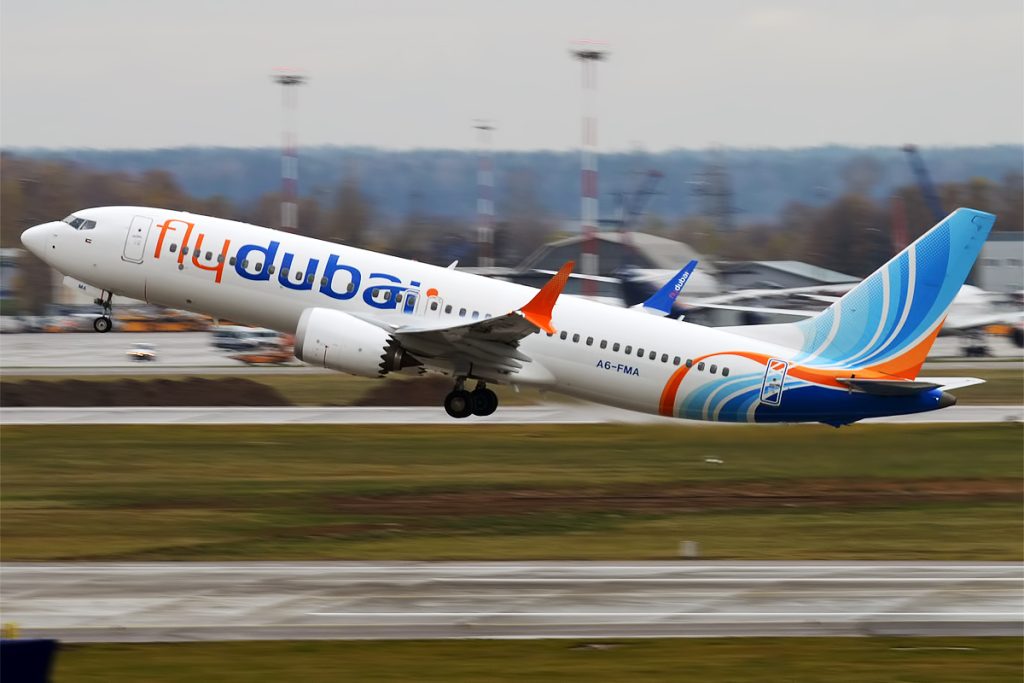
As we reported when the flight diverted to Tabuk after the cockpit struggle, the aircraft, a Boeing 737 MAX 8 registered A6-FKF, was brought safely down in Saudi Arabia by two off-duty Flydubai pilots who happened to be travelling as passengers. The fact that the outcome was not catastrophic owes everything to that chance and nothing to any layer of pre-flight security.
What the Emerging Evidence Shows About Flydubai Vetting
The allegations, drawn from anonymous officials speaking to multiple outlets, are striking in their specificity. Paddle Your Own Kanoo reports that first officer Hamam al-Hammami was a trainee co-pilot at Oman Air in 2024 when he was found with extremist material, grounded and moved into an administrative role. He then, somehow, secured a flying position at Flydubai.
Airline Geeks reports that, according to Israeli officials, Flydubai did not check his background with Oman's government when hiring him. Oman Air's own position, as reported by Airways Magazine citing Reuters, is that it transferred him to an administrative role and that he subsequently resigned voluntarily. No criminal charges were brought.
That last point is important. Paddle Your Own Kanoo notes that a standard criminal record check would have returned clean, because he had never been convicted of anything. The concern resided in an employer's internal knowledge, not in any publicly accessible database. The question that investigators, and the industry, now need to answer is whether Flydubai ever asked Oman Air directly, and if it did, what it was told.
Why Pre-Employment Intent Changes the Picture
Reuters, cited by Airways Magazine, reported on 5 October that two Israeli officials said al-Hammami had told UAE interrogators he specifically searched for airlines serving Tel Aviv before applying to Flydubai. A separate source told Reuters he had intended to carry out the attack on an earlier Tel Aviv flight this year but abandoned the plan, for reasons that remain unclear.
Paddle Your Own Kanoo's subsequent reporting adds further alleged detail: that his plan was to fly the Boeing 737 MAX 8 normally until seconds before landing at Ben Gurion, then divert and crash it into the terminal building, reasoning that Israeli air defences would have insufficient time to respond. Airline Geeks reports, citing CBS News and Israeli officials, that al-Hammami told interrogators he had been planning the attack for over a year.
It is essential to note that the UAE attorney-general's statement of 3 October, as reported by Airways Magazine, described an attempted terrorist act and confirmed investigators were still examining motives, possible links and digital evidence. That statement did not address pre-hiring intent. The pre-employment timeline comes, at this point, entirely from anonymous officials, and Airways Magazine correctly cautions that pre-hiring intent, if substantiated, would make what information was available during recruitment the central question, while still requiring investigators to establish what was reasonably discoverable and by whom.
The Structural Problem No Airline Can Solve Alone
Paddle Your Own Kanoo makes a point that deserves to sit at the centre of any policy discussion: this is not a problem unique to Flydubai. Any airline that recruits internationally, and in the Gulf that means virtually all of them, faces the same structural constraint. When you hire from another country, you depend on what that country is willing and able to share. Intelligence files rarely cross borders. An employer's internal records are under no legal obligation to cross them either.
This is precisely what makes the FZ-1073 case so uncomfortable. The warning signs were not buried in a classified intelligence file. A previous employer knew and had already acted on the concern. The failure, if the reporting is accurate, was not an intelligence gap in the conventional sense. It was a recruitment gap: a question that may never have been asked, or may not have received a candid answer.
Airline Geeks also reports that multiple Israeli former defence and transportation officials have said al-Hammami should not have been operating flights to Israel because Oman does not recognise the country, limiting the intergovernmental channels through which proper vetting could occur. Israel is now conducting a review of foreign airlines operating to Israel. A 2023 Israeli security law requires foreign carriers to submit crew lists ahead of scheduled flights, but Israeli officials have said no agency had taken responsibility for reviewing that information, according to Airline Geeks.
Why the Debate About Cockpit Rules Misses the Point
Much of the public commentary since FZ-1073 has focused on whether airlines outside North America should adopt the two-person cockpit rule, under which a flight attendant occupies the flight deck whenever a pilot steps out. Paddle Your Own Kanoo argues this directly, and the analysis is persuasive: there were already two people in the cockpit of FZ-1073 when the attack happened, and a pilot prepared to overpower a captain could as easily overpower a flight attendant.
The same analysis applies to the suggestion that the axe should not have been there. As Paddle Your Own Kanoo notes, a pilot does not need to smuggle anything past a security checkpoint. The tools exist on the flight deck because aviation regulators accept that crew need them and, crucially, because those crew are assumed to have passed rigorous background checks before they ever received an airport ID.
Every layer of trust extended to flight crew, from the lighter security screening to the locked cockpit door to the crash axe at the pilot's seat, is built on the assumption that the vetting was done properly. If it was not, those layers of trust do not protect against the threat. They become, instead, the conditions that enable it.
What Remains Unknown
The facts established by official sources remain limited. The UAE attorney-general has confirmed an attempted terrorist act and said the investigation is continuing. Everything concerning pre-employment intent, the previous Oman Air grounding, the aborted earlier flight and the specific plan to strike the terminal building comes from anonymous officials, primarily through Israeli channels, speaking to Reuters, CBS News, the Wall Street Journal and ABC News.
Several material questions have no public answer. Whether Flydubai conducted any direct reference check with Oman Air is disputed: Airline Geeks reports that Israeli officials say it did not, but Flydubai had not responded to requests for comment at the time of the reports cited here. Whether al-Hammami was acting alone or with support from any network remains under investigation. Airways Magazine notes that New Zealand police were examining time he spent there and an Australian counterterrorism team was investigating his Australian links, without any established connection to the alleged plot.
Royal Air Maroc confirmed he completed three months of theoretical training with the airline in 2025 but was not hired, and denied any employment relationship. Airways Magazine cautions that a rejected application alone does not establish a security concern.
What to Watch Next
As we noted in our coverage of what Netanyahu said about the Flydubai incident, the political dimension of this case is already significant, and the regulatory consequences are likely to be substantial. Israel's review of foreign airline operations is under way. The question of who is responsible for reviewing crew manifest data submitted under Israeli law has been exposed as unresolved, and that exposure alone is likely to prompt a formal answer.
The deeper question, one that goes well beyond a single airline or a single regulator, is whether the industry has any mechanism for sharing employer-level security concerns about pilots and crew across international borders. At present, the answer appears to be: not reliably. Vetting also cannot be a one-time event, as Paddle Your Own Kanoo observes. An airline needs credible routes for ongoing concerns to be raised and acted on throughout a crew member's career.
You can track the aircraft involved and others like it using our Aircraft Search tool. The FZ-1073 incident is also logged on our Squawk 7700 hub, where we maintain a live emergency board and incident archive. We will update our coverage if Flydubai, the UAE attorney-general or any other authority with jurisdiction releases further information.
Continue to follow The Aviation Hub for more analysis and insight.
Advertise with us Your brand, in front of an aviation audience Home page and in-article placements, sold directly, one advertiser per slot. From £250 a year. See the rates

.jpg)