
Update, 21 October 2026, 05:01
The Etihad 787-9 involved in the incident has been identified by Aviation A2Z as registered A6-BNJ. The same source confirms that the Republic Airways aircraft forced to go around was operating as Delta Connection flight DL5739, on an Embraer E175. That flight subsequently returned to runway 4L and landed at Boston at approximately 3:09 p.m. local time, arriving ahead of its scheduled time despite the interruption.
The Etihad aircraft's return service to Abu Dhabi was also affected. Aviation A2Z reports that EY8 departed Boston at approximately 5:28 p.m., nearly an hour behind its scheduled 4:35 p.m. departure, though the flight recovered much of that delay and reached Abu Dhabi only a few minutes late.
The incident adds to a recent pattern of runway safety events at Boston Logan. Aviation A2Z notes that on 20 June 2026, an American Airlines Boeing 737-800 and a Delta Air Lines Airbus A319 were involved in a separate runway incursion at the airport, in which the two aircraft came within approximately 670 feet (204 metres) of each other during a conflicting takeoff and landing on runways 27 and 33L. No damage or injuries were reported in that event.
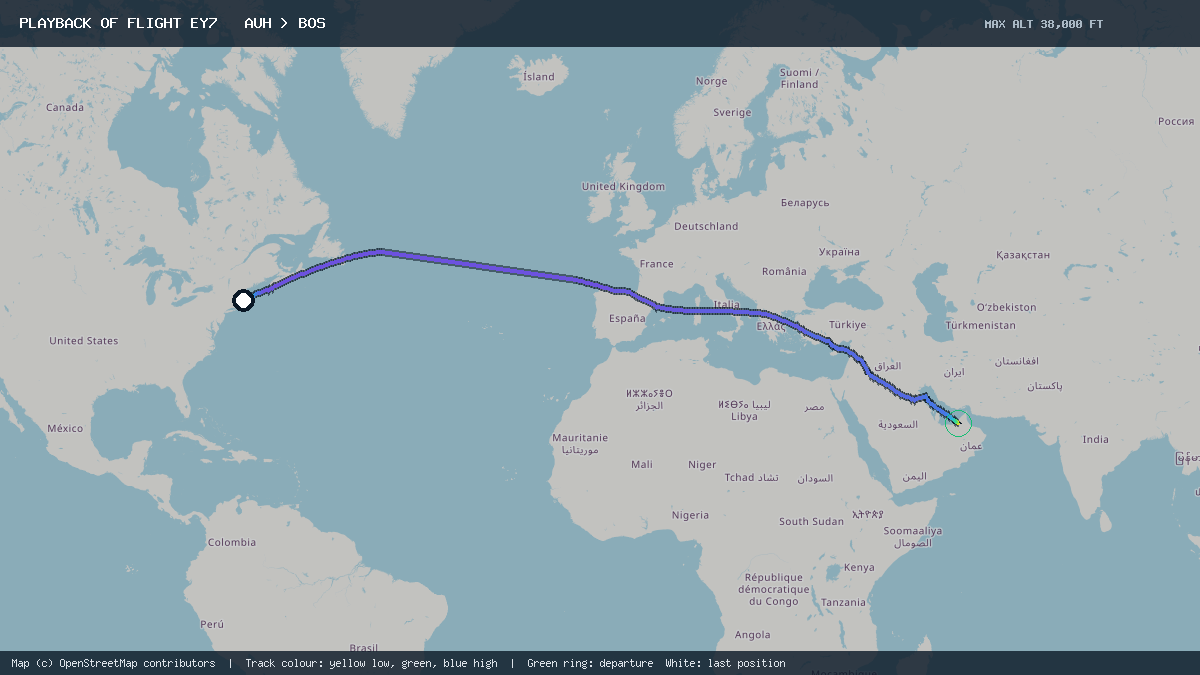
The Etihad Boston incident began when an Etihad Boeing 787-9 entered an active runway at Boston Logan International Airport (BOS) without air traffic control clearance on Thursday, 15 October 2026, forcing a Republic Airways aircraft on approach to execute a go-around. The Etihad flight in question was EY7, operating from Abu Dhabi (AUH).

The incident has drawn attention for the straightforward reason that the pilots correctly read back the instructions they were given, and then appeared not to follow them. According to One Mile at a Time, air traffic control audio and a runway visualisation of the event were published by the YouTube channel You Can See ATC.
What the Etihad Crew Were Told to Do
After landing from Abu Dhabi, the 787-9 crew were instructed to taxi via taxiways R and N and to hold short of runway 22R/4L, which was the runway in use for arrivals at the time. One Mile at a Time reports that the pilots correctly read those instructions back to the controller.
The problem arose when the aircraft actually reached the runway. Rather than stopping at the hold-short point, it continued across, entering the active runway without clearance.
How the Controller Responded
The air traffic controller caught the incursion immediately. According to One Mile at a Time, the controller told the Etihad crew to stop and hold position, while simultaneously instructing the Republic Airways aircraft, operating under the callsign "Brickyard", to go around.
The response was swift and the situation did not escalate further. The Etihad crew were subsequently given clearance to continue their taxi to the ramp.
The Pilot Deviation Call
It was only as the 787-9 approached the ramp that the situation was formally flagged. One Mile at a Time reports that the ground controller gave the Etihad pilots a number to call regarding a possible pilot deviation. That is standard procedure in the United States when an incursion of this kind occurs.
Whether the Etihad crew fully understood what had happened while it was unfolding is not clear from the audio. The pilot handling radio communications appeared composed throughout the remainder of the taxi.
Why This Kind of Incident Matters
A runway incursion by a heavy jet is a serious event regardless of the traffic picture at the time. One Mile at a Time notes that the Republic Airways regional jet had not yet landed and the risk of it reaching the crossing point before the 787-9 cleared the runway was not imminent. Even so, an uncleared entry onto an active runway is exactly the scenario that runway safety procedures are designed to prevent.
Runway incursions and the go-arounds they trigger have featured in a number of incidents tracked on our Squawk 7700 hub, the live emergency board and incident archive where we log events of this kind. Separately, we covered the United Airlines hard landing in Orlando earlier this year that also led to a ground stop, illustrating how quickly a single aircraft event can affect an airport's traffic flow.
Four Pilots, One Active Runway
One aspect of this incident that observers have highlighted is the crew complement. One Mile at a Time points out that a long-haul flight from Abu Dhabi to Boston would typically carry four pilots, meaning multiple sets of eyes were available in the cockpit during the taxi phase.
How none of them appear to have identified that the aircraft was crossing an active runway, having just read back instructions to hold short of it, is a question that will presumably be addressed through the pilot deviation process.
What the Etihad Boston Investigation Has Next
The formal outcome of this incident will depend on the investigation that follows the pilot deviation notification. No regulatory findings have been published at the time of writing.
Readers with a broader interest in Etihad's operations and fleet can explore further detail through our Aircraft Search tool.
The Bottom Line
A correctly read-back clearance was not followed, a controller acted quickly, and a go-around was the result. The system worked as it should, but the underlying question of why four crew members taxied onto an active runway they had been told to hold short of will need a clear answer. We will update our coverage if Etihad Airways or the relevant authorities release further information.
Continue to follow The Aviation Hub for more analysis and insight.
Advertise with us Your brand, in front of an aviation audience Home page and in-article placements, sold directly, one advertiser per slot. From £250 a year. See the rates