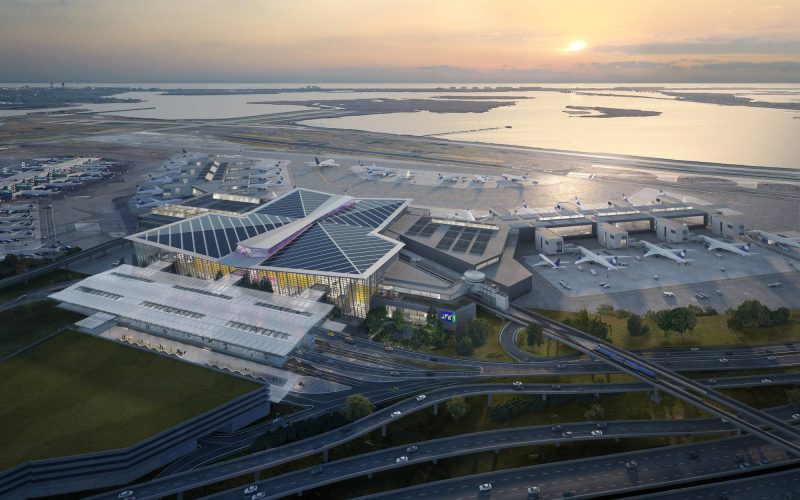
Christchurch Airport is the main gateway to New Zealand’s South Island and the country’s second busiest airport after Auckland. It sits on the Canterbury Plains at Harewood, on the northwestern edge of the city. A record 6.6 million passengers used it in 2025. It is also the departure point for American, New Zealand and Italian flights to Antarctica, which gives an otherwise practical regional hub a unique place in world aviation.
Christchurch Airport at a Glance
The IATA code is CHC and the ICAO code is NZCH. The terminal lies about 7 miles (12 km) northwest of Christchurch city centre, beside State Highway 1. Elevation is 123 feet (37 m). There are two sealed runways, plus a grass strip for light aircraft, and one integrated terminal for domestic and international flights. Christchurch International Airport Limited runs the site, owned mostly by Christchurch City Council with the Crown holding the remainder.
Christchurch Airport handled 6,623,365 passengers in 2025, up 5.4 per cent and comfortably past the previous record of 6.31 million set in 2016. Air New Zealand is the dominant carrier, with regional and mainline services, large maintenance hangars and the Christchurch Engine Centre run jointly with Pratt and Whitney. Jetstar flies domestic jets from here too. The airport operates 24 hours a day with no curfew. Flight information is on the airport’s official website.

A Short History of Harewood
Christchurch City Council chose the Harewood site in 1935 and began buying 227 hectares the following year. A 915 m runway and a small terminal were ready in 1937. The airport officially opened on 18 May 1940 as Christchurch (Harewood) Airport, and the Royal New Zealand Air Force immediately took it over as RNZAF Station Harewood for wartime training.
Peace brought ambition. On 16 December 1950 Harewood became New Zealand’s first international airport, with flights across the Tasman. In the 1950s the United States chose it as the base for Operation Deep Freeze, its Antarctic research programme, and the partnership has continued ever since. The first scheduled Boeing 747 to Christchurch, a Qantas flight from Sydney, landed on 3 December 1972.
The modern terminal was built during the Canterbury earthquakes. Construction went ahead in stages from 2011 through thousands of aftershocks, finished in late 2012, and Prime Minister John Key officially opened the integrated building on 18 April 2013. Earlier projects included a 45 m control tower in 2009 and a regional lounge in 2010. In April 1989 a British Airways Concorde visited, one of the more memorable days in the airport’s history.
Runways at Christchurch Airport
The main runway, 02/20, is asphalt and measures 3,288 m (10,787 ft) by 45 m. It handles wide body jets including the Airbus A380, and runway 02 is in use about 70 per cent of the time, with runway 20 taking roughly 20 per cent. The crosswind runway, 11/29, is a narrower 1,741 m (5,712 ft) bitumen strip. A grass runway parallel to the main runway serves general aviation.
Runway 29 comes into its own during Canterbury’s famous nor’westers, hot gusty winds that blow down from the Southern Alps and make the main runway a crosswind challenge. It accounts for about 8 per cent of movements, mostly landings. Fog can close the field in winter, and a Piper Chieftain commuter flight crashed short of runway 20 in fog in June 2003, killing eight people. On 31 May 2024 a Jetstar A320 slid off runway 02 after landing, without injury.
Terminals and Airlines
The single terminal at Christchurch Airport sits on the eastern side and has 37 gates in three zones. The southwest regional wing serves Air New Zealand’s ATR 72 and Q300 turboprops. The central zone handles Air New Zealand and Jetstar domestic jets, and the northeast international wing includes gate 30, with a dual jetbridge for the A380. Swing gates allow some stands to switch between domestic and international use.
Air New Zealand flies Airbus A320neos and A321neos on trunk routes and across the Tasman. Jetstar uses A320s on domestic and Australian routes, while Qantas adds Sydney, Melbourne and Brisbane. Emirates links the city with Dubai via Sydney, and Singapore Airlines serves Singapore nonstop. China Southern, Cathay Pacific and United add seasonal long haul flights, and Fiji Airways covers the Pacific. As of December 2023, 11 airlines flew scheduled services to 18 domestic and 10 international destinations.
Routes and Destinations
Auckland is the busiest route by a wide margin, followed by Wellington, with frequent jets on both. Regional turboprops connect Christchurch Airport with smaller centres across both islands. Internationally, Sydney, Melbourne and Brisbane dominate, with Perth and Adelaide adding seasonal capacity. Air New Zealand launched a seasonal Adelaide route in late October 2025.
Singapore, about 5,200 miles (8,400 km) away, is the longest year round nonstop route. Seasonal Guangzhou, Hong Kong and San Francisco flights reach further, and Air New Zealand adds summer flights to Tokyo Narita and Perth from late 2026. Summer is the peak, driven by tourists heading for Queenstown, Kaikoura and the Southern Alps. Cathay Pacific’s Airbus A350-1000s and United’s Boeing 787-9s are among the seasonal highlights for local enthusiasts.
Getting to and from Christchurch Airport
Metro buses are the cheapest option. Route 3 runs to the central city via Avonhead and Riccarton and continues to Sumner, while Route 29 takes a different line through Fendalton. Both reach the centre in roughly 30 to 35 minutes for a few dollars with a Metrocard. Route 8, the Port to Port service, continues through the city to Lyttelton, and Route 125 links Redwood with Halswell.
Drivers reach Christchurch Airport from Russley Road, part of State Highway 1, and Memorial Avenue via a diamond interchange. The drive to the city centre is about 7 miles (12 km) and takes 15 to 20 minutes outside peak times. Taxis cost roughly NZ$50 to NZ$70 (£22 to £31), and Uber has a dedicated pickup zone. The multi storey car park houses the Loop drop off and pick up area on its ground floor.
Spotting and Photography
Christchurch Airport is one of the few places where enthusiasts can watch Antarctic operations. During the Deep Freeze season, US Air Force Boeing C-17 Globemaster IIIs, ski equipped LC-130 Hercules and RNZAF transports operate from the military apron near the International Antarctic Centre. The centre itself is a visitor attraction next to the terminal and explains the ice programme in detail.
Public roads around the perimeter give views of both ends of runway 02/20, and the eastern side gets the best morning light. With runway 02 in use most days, arrivals come in from the southwest over the city’s western fringe. Nor’westers bring the crosswind runway into play and make for dramatic landings. Stay on public land, keep away from fences and respect the military apron. Airport security patrols regularly.
What Comes Next
The preferred runway plan adds 300 m to the northeast end of 02/20, taking it to 3,600 m. Runway 11/29 would be widened to 45 m and extended 250 m into the Harewood golf course. The airport is also building the Kowhai Park solar farm, a 168 MWp scheme on 400 hectares southwest of the main runway, expected to generate around 290 GWh a year.
Beyond Canterbury, the airport company proposed a new airport at Tarras in Central Otago to serve Queenstown and Wanaka, a project that divided local opinion and was put on hold in February 2024. At home, the verdict is clear: Christchurch Airport has the runway, the terminal and the Antarctic role to keep growing steadily. Compare it with Auckland and Queenstown on our Airports of the World map.
Continue to follow The Aviation Hub for more analysis and insight.
Advertise with us Your brand, in front of an aviation audience Home page and in-article placements, sold directly, one advertiser per slot. From £250 a year. See the rates