Albuquerque Airport, known locally as the Sunport, is the main air gateway to New Mexico. It sits on a high desert mesa just south east of downtown Albuquerque, sharing its runways with Kirtland Air Force Base. Around 5.3 million passengers used it in 2025, and Southwest Airlines carries roughly half of them. The combination of altitude, heat, military traffic and Pueblo Revival architecture makes it one of the more distinctive mid sized airports in the United States.
Albuquerque Airport at a Glance
The official name is Albuquerque International Sunport, with the IATA code ABQ and the ICAO code KABQ. The field lies about 3 miles (5 km) south east of downtown at an elevation of 1,632 m (5,355 ft). It has three concrete runways and a single terminal with 25 gates across its concourses.
Albuquerque Airport handled 5,311,480 passengers in 2025. Southwest is the focus carrier, followed by American, United and Delta, with SkyWest flying many regional services for the big three. FedEx, UPS and Amazon Air handle cargo. The City of Albuquerque owns the airport and its Aviation Department runs it day to day. Flight times, parking rates and transport options are listed on the airport’s official website.

How Albuquerque’s Airport Came to Be
Albuquerque’s first airfields were private ventures, including Oxnard Field from 1928 and West Mesa Airport from 1929. Work on a public municipal airport began in 1937 with Works Progress Administration money, and Albuquerque Municipal Airport opened in 1939. Its adobe style terminal still stands, is listed on the National Register of Historic Places, and now houses security agency offices.
In 1940 the military arrived. Albuquerque Army Air Base, the forerunner of Kirtland Air Force Base, was set up on the east side of the field, and civil and military aviation have shared the runways ever since. The airport was renamed the Albuquerque Sunport in 1963, became Albuquerque International Airport in 1971, and took its current name in 1994.
Southwest arrived in 1980 and built the field into a significant focus city, reshaping the route map. A terminal modernisation ran from 2017 to 2020. Runway 17/35 closed in 2012, and its land is being redeveloped as the Destination Sunport business park.
Runways at Albuquerque Airport
Runway 08/26 is the main strip at 4,204 m (13,793 ft) long and 46 m wide, with a grooved concrete surface. Its great length is no accident. At this altitude, and with summer temperatures well above 30 degrees, air density is low and aircraft need far more distance to get airborne. The runway gives loaded jets plenty of margin on the hottest afternoons.
Runway 03/21 measures 3,048 m (10,000 ft) and serves as the crosswind runway, valuable during the strong spring westerlies and gusty storm outflows. Runway 12/30 is 1,829 m (6,000 ft), the shortest of the three, and handles mainly general aviation and military light traffic. All three are 46 m wide and grooved concrete. Kirtland’s crash and rescue crews provide firefighting cover for the whole field. Military operations make up roughly 15 per cent of movements, so a CV-22 Osprey or C-130 can appear between airline arrivals.
Terminals and Airlines
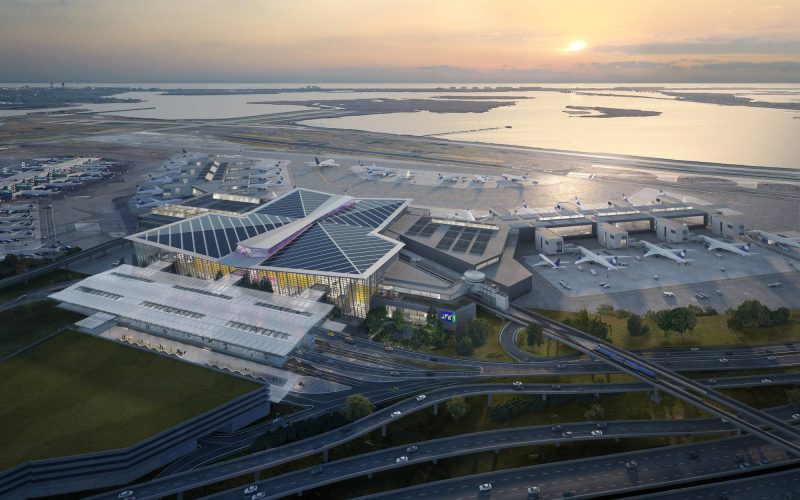
Albuquerque Airport has a single terminal built in Pueblo Revival style, with earth toned walls, carved wood and a large collection of Native American and Hispanic art. Concourse A holds 13 gates and Concourse B nine, while a small concourse handles commuter carrier Advanced Air. Security is centralised, and walking distances are short by American standards. Free WiFi has been a point of pride for two decades.
Southwest dominates Concourse A and flies Boeing 737s across its network. American, United, Delta and Alaska use their hub networks to feed passengers onwards, with American Eagle, United Express and Delta Connection jets supplementing mainline Airbus A320s and 737s. JetBlue adds an East Coast option. Alliance groupings matter here mainly as a route to onward connections, since all three big network carriers operate from the same building.
Routes and Destinations
Denver was the busiest route from Albuquerque Airport in 2025 with about 307,000 passengers, closely followed by Phoenix with around 302,000. Dallas Fort Worth ranked third at roughly 270,000, then Las Vegas and Dallas Love Field. Atlanta, Los Angeles, Chicago O’Hare and both Houston airports complete the top ten.
Most routes are domestic hub links or point to point Southwest flights across the West and the Sun Belt. The longest nonstops reach the East Coast. Despite the international title, regular scheduled international service has been rare. Traffic is steady through the year, with a sharp bump in early October for the Albuquerque International Balloon Fiesta. During the fiesta, hundreds of hot air balloons rise over the city and airlines often add seats.
Getting to and from Albuquerque Airport
ABQ RIDE Route 50 serves the baggage claim level and runs to the Alvarado Transportation Center downtown in about 20 minutes, the cheapest sensible option. Route 222 links the terminal with the Bernalillo County International Sunport station on the Rail Runner Express, the commuter line running north to Santa Fe. Scheduled shuttles also run to Santa Fe, about an hour away by road.
By car, Sunport Boulevard links Albuquerque Airport with Interstate 25, a few minutes to the west. Downtown is about 10 to 15 minutes away by taxi or ride hailing service outside peak times. A consolidated Car Rental Center sits off airport, with free shuttles every five minutes. A free cell phone waiting lot helps people collecting arriving passengers, and garage and economy parking are both available.
Spotting and Photography
Spotting at Albuquerque Airport needs extra care because of Kirtland Air Force Base. Large parts of the perimeter are military land, and base security takes a firm line with anyone photographing installations. The safest places are public roads and car parks on the civil side, plus the terminal windows, which overlook the Southwest gates on Concourse A.
Wind decides which end of the main runway is in use, so check the forecast before choosing a position. Light is excellent almost year round thanks to the dry climate, with low winter sun giving crisp shots. The Sandia Mountains to the east make a dramatic backdrop. Military types, from special operations C-130 variants to visiting C-5 Galaxies, add real interest. Stay off base property, avoid photographing gates and guard posts, and move on politely if asked.
What Comes Next
The long term master plan calls for a new terminal to the north east of the current building, linked by a people mover. That remains a distant prospect, and for now the city is focused on the Destination Sunport business park on the old runway land. The park is planned in phases and aims to bring aerospace and logistics jobs next to the airfield.
Passenger numbers have stayed in the low to mid 5 million range, and growth depends heavily on Southwest’s network choices. New nonstop routes and a stronger cargo business are the realistic targets. Albuquerque Airport looks set to remain a solid, well run regional airport rather than a fast growing hub. Compare it with other American fields on our Airports of the World map.
Continue to follow The Aviation Hub for more analysis and insight.
Advertise with us Your brand, in front of an aviation audience Home page and in-article placements, sold directly, one advertiser per slot. From £250 a year. See the rates