
Kuching Airport Guide: Sarawak’s Gateway and AirBorneo Hub
Kuching Airport explained: its long runway, the 2006 terminal, AirAsia and the new AirBorneo, busiest routes, getting into the city and future plans.
 By The Aviation Hub
5 min read
Updated October 20, 2026
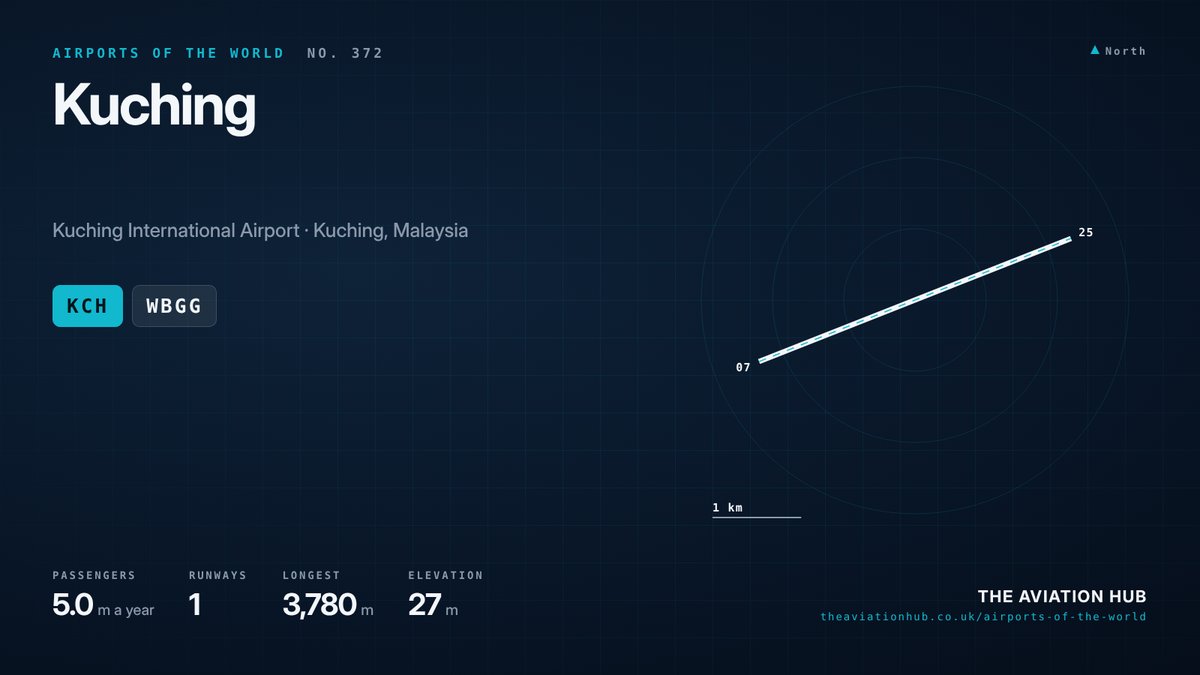
Kuching Airport is the main gateway to Sarawak, the largest state in Malaysia, on the island of Borneo. It sits a short drive south of the state capital and handled close to 5.8 million passengers in 2025. AirAsia runs a major base here, and Sarawak’s own airline, AirBorneo, launched from the airport in January 2026. A new international airport is now on the drawing board.
Kuching Airport at a Glance
The airport carries the IATA code KCH and the ICAO code WBGG. It lies about 6.8 miles (11 km) south of Kuching city centre, at an elevation of 89 feet (27 m). There is one runway and a single terminal of about 46,000 square metres. Malaysia Airports Holdings Berhad operates the site.
Traffic reached about 5.76 million passengers in 2025, up 7% on the year before, with roughly 50,200 aircraft movements and nearly 48,000 tonnes of cargo. AirAsia and AirBorneo are the key based carriers at Kuching Airport. The Royal Malaysian Air Force shares the field as RMAF Kuching. Flight information is on the airport’s official website.
How Kuching’s Airport Came to Be
An airstrip was built at 7th Mile, near Bukit Stabar, in 1938. After the Second World War the site was developed for civil use, and the terminal opened on 26 September 1950. Early scheduled services from Singapore made it the gateway to Sarawak, Brunei and North Borneo.
The runway grew in stages between 1959 and 2008 as jets replaced propeller aircraft. The biggest change came in 2006, when a rebuilt terminal opened. Its design borrows heavily from Kuala Lumpur International Airport, and frequent travellers notice the family resemblance.
Ownership has also shifted. The Sarawak government converted MASwings, the former Malaysia Airlines rural air service, into the full service AirBorneo. The new airline started flying on 2 January 2026, giving Kuching Airport a home carrier for the first time in years.
Runways at Kuching Airport
A single asphalt runway, 07/25, handles all traffic. It measures 3,780 metres (12,402 feet) long and 46 metres wide, enough for the largest wide body jets. Gate 9 was even built for Airbus A380 operations, though airside restrictions apply.
The runway runs roughly east to west. Monsoon winds and the local sea breeze decide which end is in use. Heavy tropical downpours, especially during the northeast monsoon from November to February, can cause short delays.
Two incidents stand out. On 13 January 2007 a Boeing 737-200 crash landed, closing the airport for six hours and disrupting about 2,200 passengers. That episode showed how a single runway leaves Kuching Airport exposed when one aircraft blocks the strip. On 2 October 2009 a Malaysia Airlines 737 was badly damaged when its main landing gear collapsed at the gate.
Terminals and Airlines
All flights use the 2006 terminal, which has 12 aerobridge stands and four remote bays for turboprops. Domestic and international areas are separated inside. Sarawak runs its own immigration controls, so passengers arriving from Peninsular Malaysia or Sabah pass through an immigration check at Kuching Airport.
AirAsia uses the airport as one of its main bases, flying Airbus A320 family jets. AirBorneo has taken over the former MASwings network of ATR 72s and Twin Otters, serving rural Sarawak. Malaysia Airlines, Batik Air Malaysia and Firefly add domestic links.
International carriers include Scoot, Royal Brunei Airlines and Indonesia AirAsia. Malaysia Airlines brings Oneworld connections through Kuala Lumpur.
Routes and Destinations
Kuala Lumpur dominates, with about 173 weekly flights in January 2026, roughly 600 miles (970 km) across the South China Sea. Miri followed with 46 weekly flights, then Kota Kinabalu with 37 and Bintulu and Sibu with 35 each. These domestic routes keep Sarawak’s spread out cities connected, since road journeys between them can take many hours.
Singapore is the busiest international route, with around 19 weekly flights. Pontianak in Indonesian Borneo follows with about 14, then Jakarta and Bandar Seri Begawan in Brunei. Smaller rural airstrips across Sarawak are served by AirBorneo turboprops.
Traffic peaks during school holidays, Chinese New Year, Hari Raya and the Gawai harvest festival. Cargo is substantial, at nearly 48,000 tonnes in 2025, supporting the state’s resource and manufacturing industries. Tourists use Kuching as a base for Bako National Park, the Semenggoh orangutan centre and the Rainforest World Music Festival, which draws visitors every summer.
Getting to and from Kuching Airport
There is no rail link yet. Bus routes Q14 and Q15 run roughly hourly to the city, and free electric city bus 103 runs about every 90 minutes. The buses are the cheapest sensible option for travellers with time to spare.
Taxis operate on a coupon system from a counter in the arrivals hall. Ride hailing apps including Grab, AirAsia MOVE and Maxim work well. The drive to the waterfront and the main hotels takes about 20 minutes outside rush hour.
Car hire is available, and parking sits next to the terminal. A planned station on the Red Line of the Kuching Urban Transportation System will eventually link the terminal with the city. The beach resorts at Santubong and Damai lie roughly 45 minutes north by road, and most offer transfers from Kuching Airport.
Spotting and Photography
Kuching Airport is a pleasant field for enthusiasts. The mix of AirAsia A320s, AirBorneo turboprops and Twin Otters, and occasional military aircraft gives more variety than the traffic level suggests. The terminal windows offer views of the apron and runway.
Roads near the runway ends provide additional viewpoints. Morning light suits much of the airfield, before afternoon storms build. RMAF aircraft, including those of No. 7 Squadron, add interest but also impose limits.
Respect the military areas, which carry strict photography rules. Stay outside the fences, avoid drones and cooperate with security staff and police at all times.
What Comes Next
Sarawak has bigger plans. In 2025 the state premier announced a new international airport at Tanjung Embang, with the current terminal kept for regional and domestic flights. Timescales and funding are still to be confirmed. Until then, the existing runway and terminal have room to absorb steady growth.
Meanwhile Kuching Airport will focus on AirBorneo’s growth and new international links. The state’s control over its own airline and immigration gives it unusual freedom to chase routes. Compare it with other Borneo gateways on the Airports of the World map. The verdict: a busy, well equipped airport preparing for a future split between two sites.
Continue to follow The Aviation Hub for more analysis and insight.
Advertise with us Your brand, in front of an aviation audience Home page and in-article placements, sold directly, one advertiser per slot. From £250 a year. See the rates

