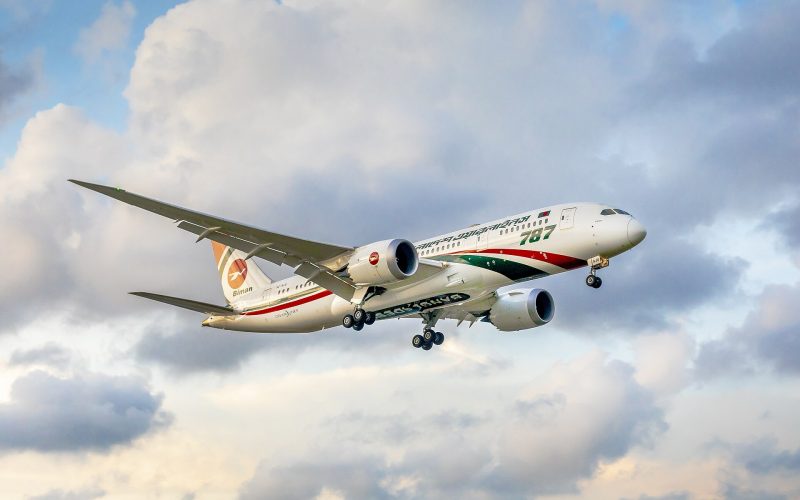
Chandigarh Airport serves the planned city designed by Le Corbusier, the joint capital of Punjab and Haryana. It also draws passengers from Mohali, Panchkula and the hill towns of Himachal Pradesh. The civil terminal sits on an active Indian Air Force station, and a new building opened in 2015 on the Mohali side of the field. Traffic reached almost 3.93 million passengers in the year to March 2026, the bulk of them on IndiGo flights to Delhi, Mumbai and other Indian cities.
Chandigarh Airport at a Glance
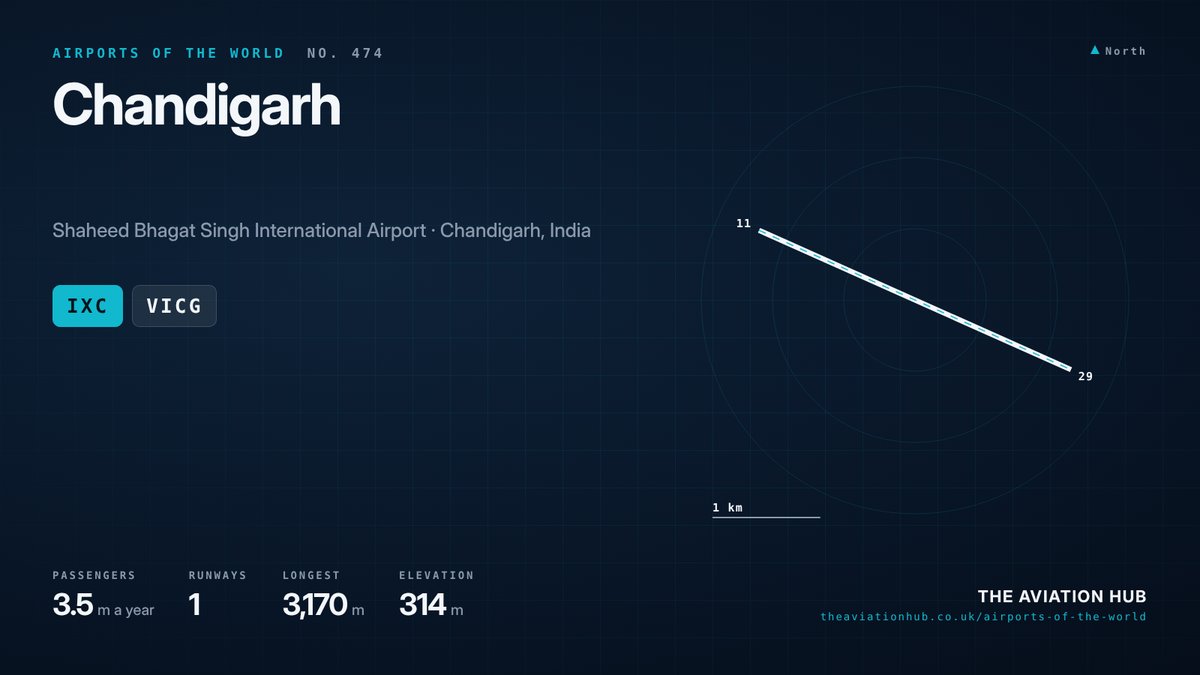
The codes are IXC for IATA and VICG for ICAO. The terminal stands at Jhiurheri in Mohali district, Punjab, about 5 miles (8 km) south of central Chandigarh in a straight line, though the drive is longer. Elevation is 314 metres (1,029 feet). There is one runway and one civil passenger terminal.
The Airports Authority of India recorded 3,926,519 passengers in the year from April 2025 to March 2026, down 5.4 per cent, with about 26,400 aircraft movements. IndiGo is the dominant airline at Chandigarh Airport. Chandigarh International Airport Ltd, owned 51 per cent by the Airports Authority and 24.5 per cent each by Punjab and Haryana development agencies, runs the terminal. Details are on the airport’s official website.
How Chandigarh’s Airport Came to Be
Civil flying began in the 1970s, when Indian Airlines started flights to Delhi from a small civil enclave on the air force station. For decades that enclave sat on the Chandigarh side of the runway, cramped and limited to domestic services. A new building opened there on 14 April 2011, and the site was declared a customs airport that August, but no international flight ever used it.
In 2008 the Punjab government acquired 304 acres on the south side of the runway for a new terminal. It was completed in 2015 at a cost of ₹939 crore. Prime Minister Narendra Modi inaugurated it on 11 September 2015, and it opened to passengers on 19 October that year.
International flights were slow to follow. Local industry went to court in December 2015 over the lack of overseas routes, and IndiGo and Air India Express finally launched flights to Dubai and Sharjah in September 2016. In 2022 Chandigarh Airport was named after Bhagat Singh, the revolutionary hanged by the British in 1931, ending a long dispute between Punjab and Haryana over the name.
Runways at Chandigarh Airport
There is a single asphalt runway, 11/29, measuring 3,170 metres (10,400 feet) long and 45 metres wide, which is enough for wide body aircraft. Overruns at each end add to the paved surface beyond that figure. The runway runs roughly east to west across the plain below the Shivalik Hills.
An upgrade between 2017 and April 2019 improved the runway and its systems, allowing round the clock operations from 10 April 2019. A new taxiway added in April 2022 lifted capacity to 20 aircraft movements an hour. Touchdown zone lighting, installed in 2021, helps during the dense winter fog that disrupts flying across northern India each December and January.
The Indian Air Force controls the airfield at Chandigarh Airport and has priority. Military transport aircraft and helicopters share the runway with airliners, and air force exercises can bring short delays for civil traffic.
Terminals and Airlines
The 2015 terminal covers about 53,000 square metres and can handle around 1,600 passengers at a time. Five bays have aerobridges, with eight further remote stands served by bus. The old civil enclave on the Chandigarh side no longer handles scheduled passenger flights. Domestic and international flights share the building. In 2021 it won an Airports Council International award for hygiene measures in the Asia Pacific region.
IndiGo has by far the largest network, flying to Delhi, Ahmedabad, Chennai, Jaipur, Lucknow, Srinagar, Jammu, Indore and the new Noida airport. It also operates the international routes to Dubai and Abu Dhabi. Air India serves Delhi and Leh, and Air India Express flies to Bengaluru and Pune. Alliance Air links the city with Delhi and Hisar.
Routes and Destinations
Delhi is the core route, with several daily flights by IndiGo, Air India and Alliance Air. Major metros such as Mumbai and Bengaluru follow, and the network reaches 17 domestic destinations in total.
Some of the most interesting routes from Chandigarh Airport head into the mountains. Flights to Leh, Srinagar and Dharamshala serve tourists, pilgrims and military families, and they can be spectacular on a clear day. Jammu adds another northern link.
Abroad, Dubai and Abu Dhabi carry migrant workers and families from Punjab, which has a large diaspora in the Gulf. Many Punjabis still travel to Delhi or Amritsar for flights to Britain and Canada. Cargo is modest at around 14,500 tonnes a year.
Getting to and from Chandigarh Airport
There is no rail link to the terminal. Chandigarh Transport Undertaking runs public buses to the airport, which are the cheapest sensible option for travellers with light luggage. Taxis and app based cabs take around 30 to 45 minutes to central Chandigarh, depending on traffic.
The airport road links the terminal with Mohali, Zirakpur and the main highways towards Delhi, Shimla and Amritsar. Chandigarh railway station, with fast trains to Delhi, is a short taxi ride away. Many visitors heading for Shimla or Kasauli hire a car and driver straight from the terminal.
Spotting and Photography
Chandigarh Airport is not a spotting venue. As an active Indian Air Force station, it is covered by strict rules on photography, and security forces patrol the perimeter. Photographing military aircraft or installations can lead to arrest.
Travellers can still watch the traffic from the terminal, where IndiGo Airbus A320neos and A321neos dominate, alongside Air India A320s and Alliance Air ATR 72s. Air force transports and helicopters appear regularly. Keep any photography to the inside of the terminal or aircraft, and only where staff allow it.
What Comes Next
Traffic dipped in 2025 to 2026, but long term demand from Punjab, Haryana and Himachal Pradesh remains strong. More international routes, particularly to the Gulf, are the clearest opportunity. Military control of the airfield limits how far civil operations can expand.
Chandigarh Airport looks set to grow steadily as a domestic hub for the region, with wider international reach still the missing piece. See how it compares with Amritsar and Delhi on our Airports of the World map.
Continue to follow The Aviation Hub for more analysis and insight.
Advertise with us Your brand, in front of an aviation audience Home page and in-article placements, sold directly, one advertiser per slot. From £250 a year. See the rates