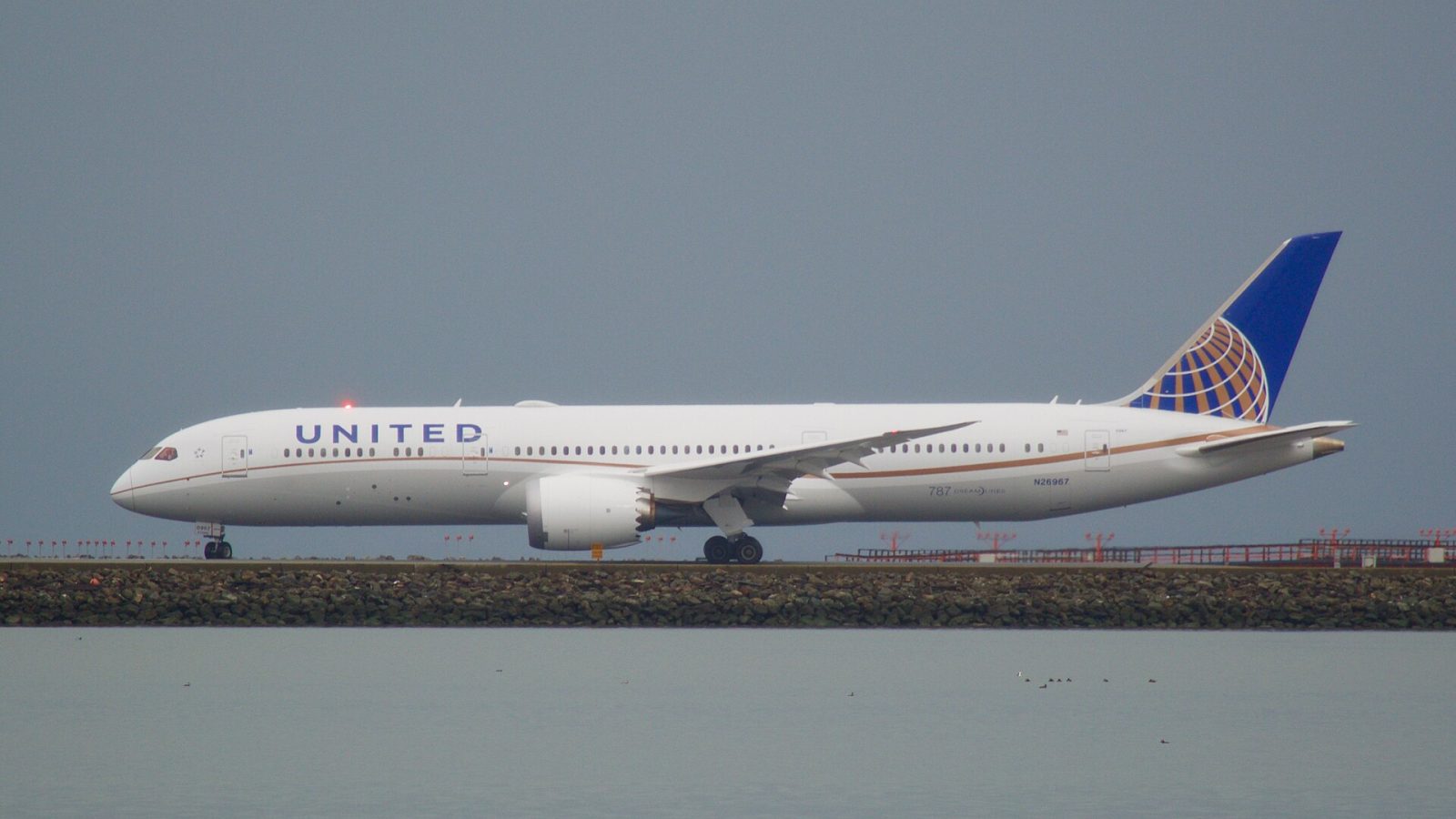
Scott Kirby, CEO of United Airlines, is making headlines well beyond the aviation industry, doubling down on calls for a national wealth tax and now adding compulsory national service to his list of policy positions.
Kirby has taken home $84.8 million from his role as United's chief executive over the past three years alone, according to One Mile at a Time. That makes his advocacy for higher taxes on the wealthy one of the more striking stories to emerge from a US airline boardroom in recent memory.
What Scott Kirby Said on Wealth and Inheritance Taxes
In earlier remarks that drew widespread attention, Kirby argued that "wealth inequality has become a danger to our society, and we need to address that," and called for "a national wealth tax" alongside "inheritance taxes that get close to 100 percent at some level," adding that he "would pay them," as One Mile at a Time reports.
Those comments were not a one-off. In a Bloomberg TV interview on Wednesday, 21 October 2026, Kirby returned to the subject and framed it as a matter of principle. "The basic concept is one of fairness," he said, arguing that sufficiently wealthy individuals can "just make an investment and the laws are set up that you literally never pay taxes on all that growth that can happen."
When asked whether he would be willing to redistribute some of his own wealth directly to lower-paid United employees, Kirby said "of course not," and added that "even if Elon Musk decided to do it, and he's a trillionaire, it's not enough to make a difference." His preferred remedy, he explained, is "some way of taxing that wealth growth, whether it's a wealth tax or some other way of doing it, and lower income taxes."
The Call for Compulsory National Service
In the same interview, Kirby went further, calling for compulsory national service as a way of addressing long-term national challenges. "We need to stop punting some of our problems to the next generation," he said, according to One Mile at a Time. He cited his seven children as a personal motivation, saying he cares "about what the country is going to be like for them."
View from the Wing notes that Kirby attended the Air Force Academy and began his career at the Pentagon, which may inform his view of structured service. He has not, however, specified which problems he wants national service to solve, how long participants would be conscripted, or what form the programme would take.
The Criticism His Proposals Have Attracted
The proposals have drawn sharp responses from across the political spectrum. Louisiana Governor Jeff Landry called the wealth tax push "audacious from a guy that didn't even build @united and makes $32 million a year," and challenged Kirby to "simply cut a check," as quoted by One Mile at a Time.
View from the Wing offers a detailed economic critique of both proposals. On the wealth tax, the site argues that such measures "discourage saving and investment while incentivizing consumption," with real consequences for wages and productivity. On compulsory service, it points to research using Denmark's military draft lottery finding that conscription carries a long-term cost to earnings, and argues that redirecting young people out of employment and training at a time of declining birth rates and an ageing population would impose substantial costs on the broader economy.
View from the Wing also raises a philosophical point: an electrician, an aircraft mechanic, or someone caring for a family member is already contributing to society without being directed to do so by a government programme. The site credits economist Milton Friedman with the arguments that ultimately ended the US draft, and suggests those arguments apply equally to Kirby's proposal.
The Political Context Around the Timing
One Mile at a Time observes that Kirby's public positioning has shifted considerably depending on the political moment. Under the Biden administration he was seen by many conservatives as notably progressive in his corporate messaging. After President Trump returned to office, Kirby was reported to have praised him effusively and to have explored the possibility of a large airline merger involving United or American and Delta with the new administration.
The latest round of comments lands within two weeks of the midterms, a timing that One Mile at a Time describes as "just so incredibly strange," while acknowledging it cannot determine whether the remarks reflect a deliberate strategy or simply Kirby's genuine beliefs.
You can follow United Airlines and other carriers using our Airline Search tool.
A CEO Who Contradicts Himself?
One tension in Kirby's position is hard to ignore. He argues that society needs collective solutions to shared problems, yet when asked directly whether he would voluntarily share his own wealth with his employees, he declined. One Mile at a Time flags this exchange without drawing a conclusion, leaving readers to form their own view.
View from the Wing notes an irony in the national service argument specifically. Kirby has described finding "where everyone else is wrong" as the way to create value, and View from the Wing argues that young people deserve the same freedom to exercise independent judgement, even when figures like Kirby believe they should be doing something else.
The Bottom Line
Scott Kirby is an unusually outspoken chief executive, and his remarks on wealth taxes and compulsory national service are generating attention that has nothing to do with seat configurations or route networks. Whether his comments reflect a consistent political philosophy, a calculated intervention ahead of the midterms, or simply the views of a wealthy executive who is comfortable being controversial, the debate they have sparked is real.
United Airlines is one of the few carriers whose CEO has become a recurring figure in broader political conversations. Aviation watchers interested in the relationship between government and the airline industry may also want to read our coverage of the brand new Air Force One programme, which sits at a similar intersection of politics and aviation.
Continue to follow The Aviation Hub for more analysis and insight.
Advertise with us Your brand, in front of an aviation audience Home page and in-article placements, sold directly, one advertiser per slot. From £250 a year. See the rates