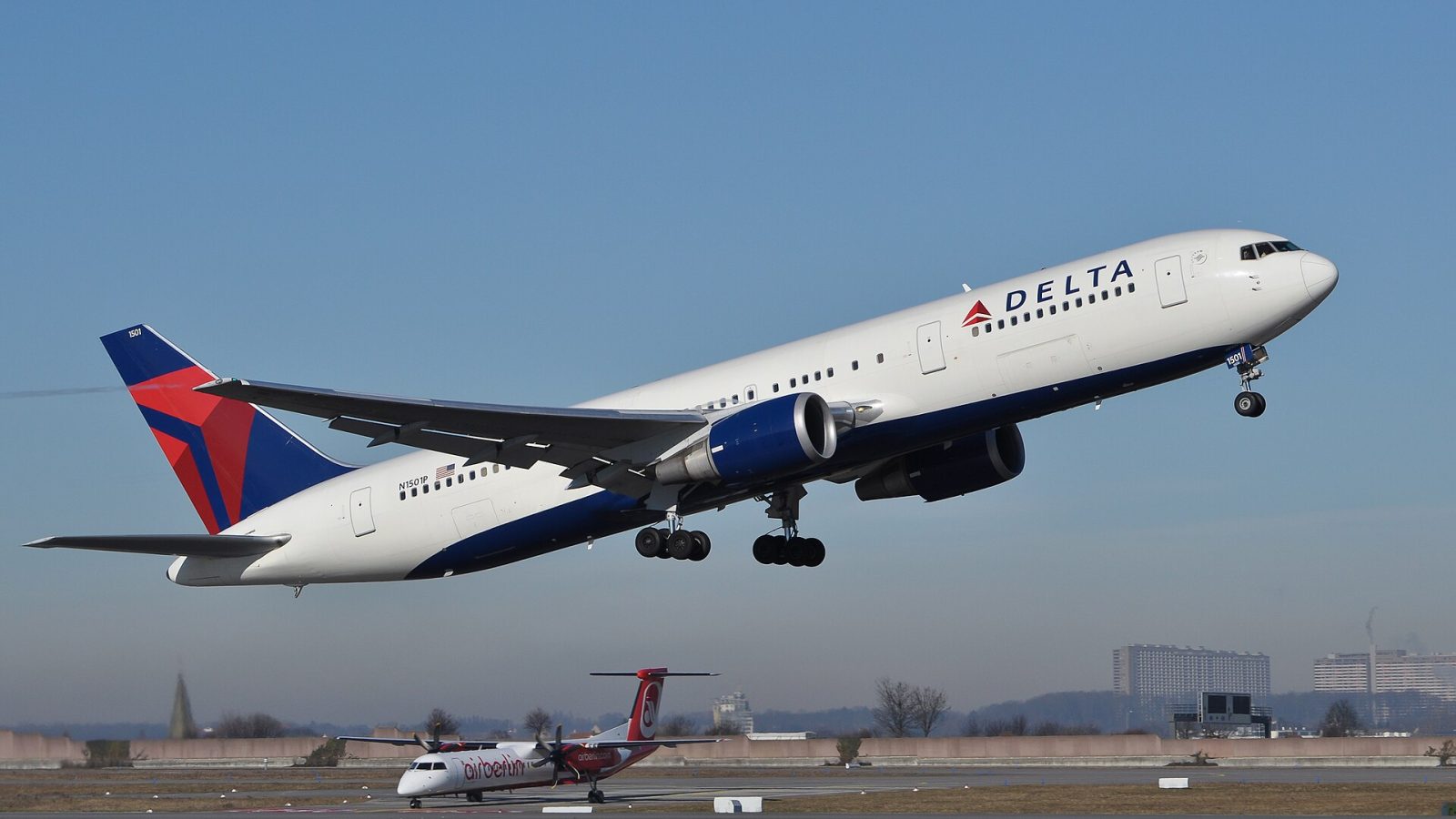
Delta Air Lines Pacific expansion hit a notable obstacle in the third quarter of 2026, with capacity growing faster than its key revenue measures. While United Airlines delivered the most balanced results in the region, Delta's numbers raised fresh questions about its competitive position across the Pacific.
What the Q3 2026 Pacific Numbers Show
According to Aviation A2Z, Delta's Pacific capacity increased 8% year over year in Q3 2026, while passenger yield rose 7% and passenger revenue per available seat mile (PRASM) grew just 5%. Its load factor declined by 2 percentage points compared with the same quarter in 2025.
United, by contrast, kept capacity growth to 5% and recorded yield growth of 10.8% and PRASM growth of 10.9%. It was the only one of the three carriers to record a year-over-year increase in load factor, up 0.1 percentage points.
American Airlines delivered the strongest yield growth of the three at 14.8%, with PRASM up 11.3% against capacity growth of 6.6%. Its load factor nevertheless fell by 2.6 percentage points.
How Delta Air Lines Pacific Performance Compares With Q2
The gap between Delta's capacity additions and its revenue metrics was visible in the previous quarter too, and Aviation A2Z reports that the relationship deteriorated further on the PRASM measure in Q3.
In Q2 2026, Delta's PRASM increased 7% against 8% capacity growth. By Q3, PRASM growth had slowed to 5% even as capacity continued to expand at the same 8% rate. Its load-factor decline also widened, from 1 percentage point in Q2 to 2 percentage points in Q3.
The trend suggests that Delta is adding seats faster than its passenger revenue per available seat mile is improving. That does not, by itself, establish that its Pacific operations are unprofitable, but it marks a weaker trajectory than those recorded by either of its two main competitors.
The Hub Question
A key structural difference between Delta and United lies in their Pacific gateway airports. Aviation A2Z notes that Delta's transpacific network relies on Los Angeles (LAX) and Seattle (SEA), while United operates its major Pacific gateway through San Francisco (SFO).
A concentrated hub can help an airline attract passengers from a broad catchment area, feed them onto long-haul services, and offer more convenient onward connections. Whether Delta's two-hub approach represents a structural disadvantage is not established by a single quarter of figures, but the performance gap is consistent enough to invite the question.
We have previously looked at Seattle's role in Delta's international ambitions in our guide to Seattle-Tacoma Airport, Alaska's home and Delta's Pacific door, which sets out how the airport functions as a key long-haul departure point for the carrier.
Hong Kong and the Frequency Challenge
Delta has recently added flights to Hong Kong (HKG), a market where United already holds an established position. Aviation A2Z reports that United operates four daily flights to Hong Kong, placing Delta up against a competitor with significantly greater frequency in that market.
Frequency matters for business travellers and for connecting traffic. A carrier with more daily departures can offer more flexible itineraries, which can support stronger pricing power and loyalty.
Building that kind of presence takes time. New international routes can require several quarters to attract local demand, generate connecting traffic, and achieve the revenue performance that more established services deliver.
What American's Results Tell Us
American Airlines maintains a more limited presence across Asia than either Delta or United, yet its Q3 Pacific metrics were the strongest of the three on yield and PRASM growth. Aviation A2Z observes that this does not establish American would achieve the same results at a larger scale, since differences in route mix and passenger demand play a significant role.
The comparison is nevertheless a useful reminder that raw capacity growth does not automatically translate into stronger revenue performance. A focused network, well matched to demand, can outperform a broader one on yield metrics even at lower absolute volumes.
You can compare transpacific schedules and track carrier performance across routes using our Airline Search tool.
The Bottom Line
Delta Air Lines is making a deliberate push across the Pacific, adding capacity to markets including Hong Kong, Seoul Incheon (ICN), Los Angeles and Seattle. Its Q3 2026 results show that capacity growth is running ahead of yield and PRASM improvement, and the gap widened compared with Q2.
United's Q3 figures remained comparatively strong, with balanced growth across capacity, yield and load factor. That places United in a firmer competitive position heading into 2027, at least on the metrics available for this quarter.
One quarter of data does not determine a long-term outcome, and new routes routinely take time to mature. Whether Delta can close the revenue gap as its Pacific network develops is the question to watch in the quarters ahead.
Continue to follow The Aviation Hub for more analysis and insight.
Advertise with us Your brand, in front of an aviation audience Home page and in-article placements, sold directly, one advertiser per slot. From £250 a year. See the rates