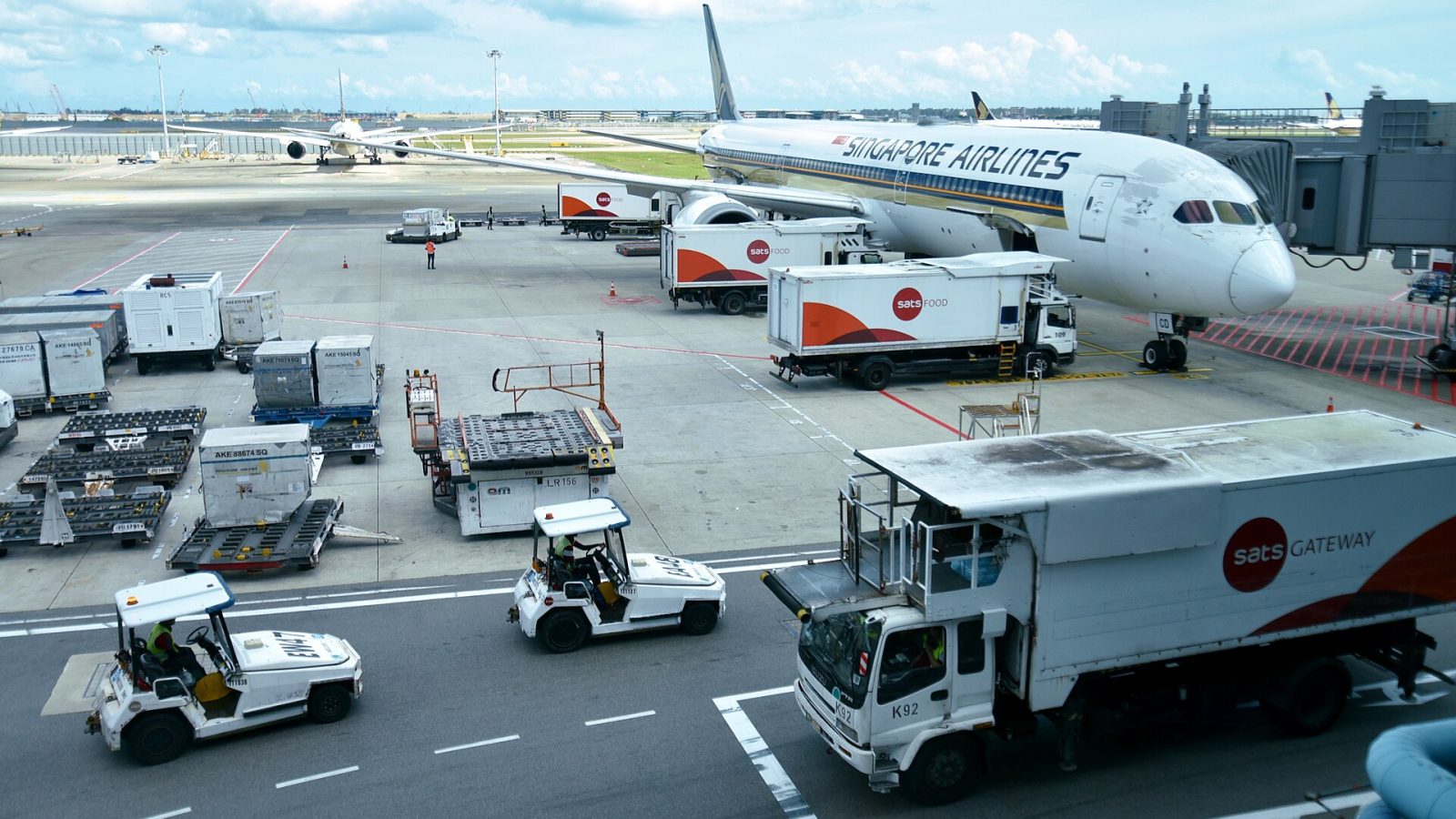
Singapore Airlines has agreed to purchase up to 4,800 metric tons of sustainable aviation fuel from Aether Fuels over a three-year period, making the Singapore Airlines SAF deal the first commercial offtake agreement from Aether's Project Beacon facility. The binding agreement was announced on 28 October 2026, according to AeroTime.

The deal is notable not only for its scale but for what the fuel is made of. Project Beacon produces SAF by converting waste-derived gases into liquid jet fuel, a pathway Singapore Airlines has not purchased from before.
What Project Beacon Is and Where It Sits
Situated within Aether's refining complex on Pulau Bukom in Singapore, Project Beacon is the company's first commercial SAF production facility. According to AeroTime, biomethane and industrial waste gases are among the feedstocks the facility will draw upon.
Aether's proprietary Aurora technology underpins the conversion process, using a Fischer-Tropsch based approach to produce liquid aviation fuel from waste-derived gases, as reported by both AeroTime and Aviation Week. The resulting fuel will receive certification under CORSIA, the international carbon offsetting and reduction scheme for aviation.
From MOU to Binding Singapore Airlines SAF Agreement
The two companies had already signalled their intent. The binding purchase agreement follows a memorandum of understanding that Singapore Airlines and Aether Fuels signed in 2025, according to AeroTime. Converting that earlier commitment into a formal contract represents a meaningful step forward for both parties.
Deliveries are scheduled to begin in 2028. Singapore Airlines is the first airline to sign a purchase agreement for SAF from Project Beacon, as confirmed by AeroTime and Aviation Week.
Why Waste-Carbon Conversion Matters for the Industry
For Singapore Airlines, this purchase marks its first acquisition of SAF made through waste carbon conversion rather than the biofuel-based routes it has previously used. Lee Wen Fen, Chief Sustainability Officer at Singapore Airlines, said: "As the first airline to purchase SAF from Project Beacon, SIA is demonstrating demand for new lower-carbon fuel production pathways in Singapore."
The airline's wider decarbonisation strategy sets a net zero carbon emissions target for 2050, according to AeroTime. Deals of this kind help signal commercial demand to producers who need long-term offtake certainty before committing to larger facilities.
Aether's Larger Ambitions
Aether positions Project Beacon as a stepping stone rather than a destination in itself. A first large-scale commercial plant is targeted for 2031, with a capacity at least ten times greater than Project Beacon, according to AeroTime. Having Singapore Airlines as an anchor customer gives Aether the kind of commercial foundation that early-stage fuel producers typically require before scaling to that level.
For readers tracking the airline's broader sustainability commitments, our Airline Search tool lets you explore Singapore Airlines' network and fleet in detail.
The Bottom Line
The aviation industry's path to lower-carbon fuel is moving incrementally, and deals like this one illustrate both the progress being made and the distances still to travel. The 4,800 metric tons committed here represents a small fraction of what a carrier the size of Singapore Airlines burns each year, but the significance lies in the production pathway being proven at commercial scale.
Waste-carbon conversion is a younger route to SAF than conventional biofuels, and Singapore Airlines backing it early with a binding contract gives Aether a credible reference point as it seeks financing and partners for its larger 2031 facility. The debate over what technology ultimately powers aviation in the coming decades, whether SAF, hydrogen or something else, continues in parallel with questions about how human roles in the cockpit may evolve, a topic we examined in our look at whether AI could remove the need for pilots. For now, the fuel question is the more pressing commercial reality, and Project Beacon is one of the more concrete answers yet proposed.
Continue to follow The Aviation Hub for more analysis and insight.
Advertise with us Your brand, in front of an aviation audience Home page and in-article placements, sold directly, one advertiser per slot. From £250 a year. See the rates