
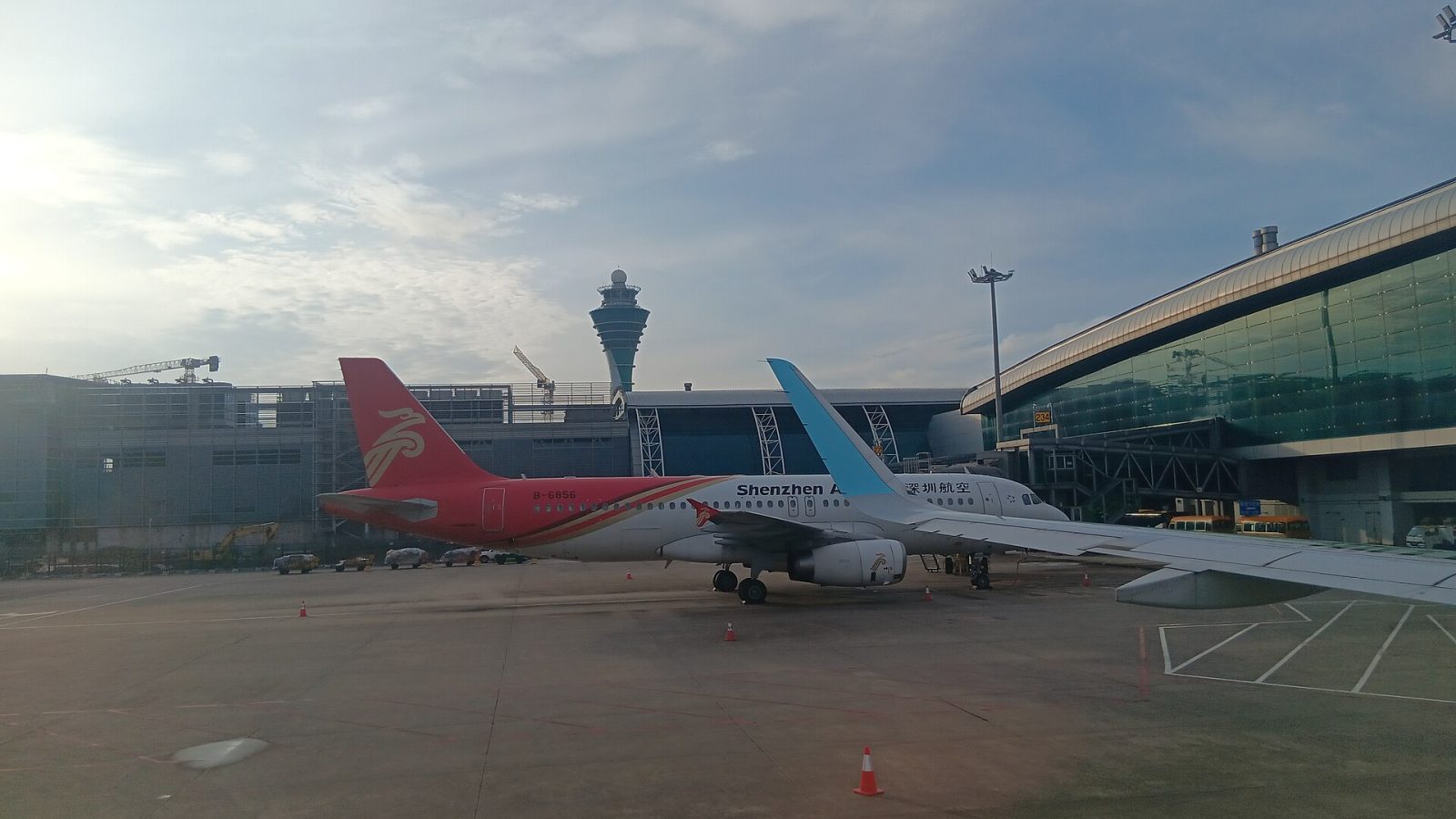
The most telling fact about Guangzhou airport rankings in 2026 is a single set of nine-month passenger figures: Guangzhou Baiyun (CAN) handled 67.09 million passengers between January and September 2026, overtaking Shanghai Pudong (PVG) and reclaiming the title of China's busiest airport. The shift is not a quirk of one quarter. It reflects a structural redistribution that has been building for years.
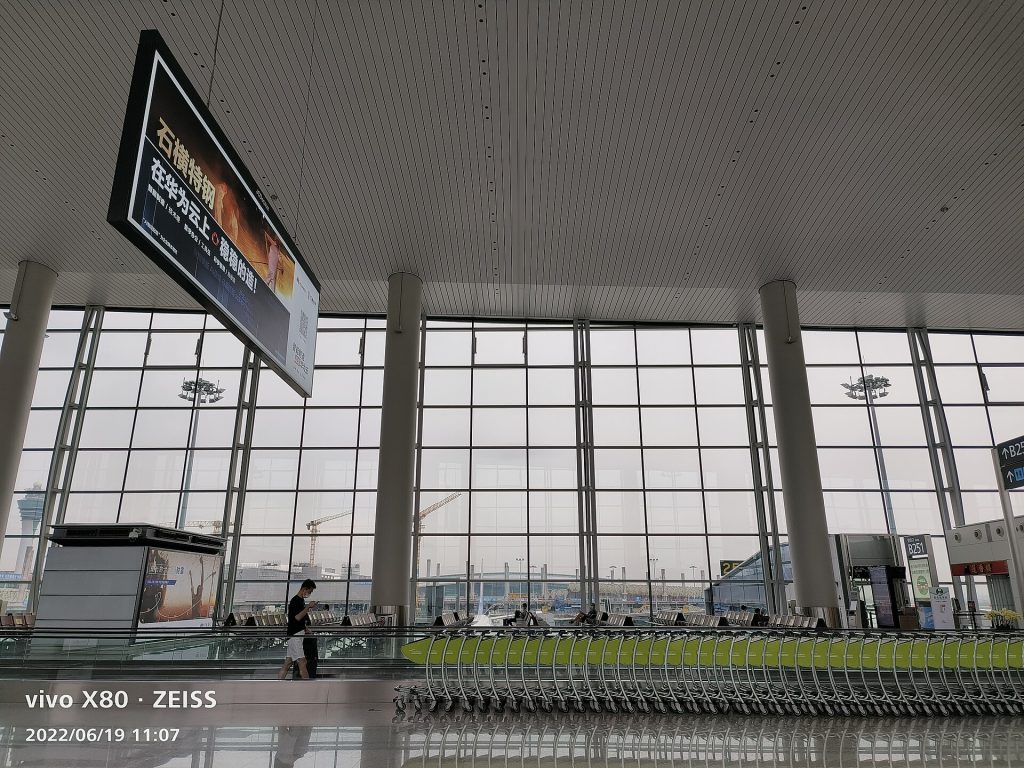
The Numbers That Tell the Story
The Guangzhou Municipal Government reports that Baiyun's January-to-September 2026 passenger total reached 67.0905 million, up 9.8% year on year. Aviation A2Z reports that Shanghai Pudong handled 66.58 million passengers over the same period, leaving Baiyun ahead by approximately 510,500 passengers, according to Aviation A2Z.
That gap matters in context. According to the Guangzhou Municipal Government, Shanghai Pudong had overtaken Baiyun as recently as 2024, when it handled 76.787 million passengers for the full year. The throne changed hands again within two years. The question is why, and what sustains the shift.
Peak travel periods have proven especially revealing for Baiyun. The Guangzhou Municipal Government reports that the 2026 Spring Festival travel rush saw Baiyun lead the country on two measures simultaneously: overall passenger traffic and the highest single-day passenger volume recorded anywhere in China. That kind of performance at the busiest moment of the year points to genuine structural demand rather than a fleeting statistical anomaly.
Capacity Built to Lead
The most straightforward driver of Baiyun's rise is bricks and mortar. Terminal 3 and a fifth runway came into operation on 30 October 2025, according to both the Guangzhou Municipal Government and Aviation A2Z. The expansion lifted Baiyun's designed throughput ceiling to 120 million passengers a year, as the Guangzhou Municipal Government confirms. Aviation A2Z reports that the third-phase development carried a price tag of 53.77 billion yuan, equivalent to roughly US$8.1 billion.
No airport climbs a ranking without the infrastructure to handle the volume. Shanghai's two airports combined remain formidable: the Shanghai Hongqiao CBD, the official Shanghai city authority, reports that Shanghai recorded 839,000 flight movements in 2025, up 4.5% year on year, and that the two airports together handled the equivalent of over 1.35 billion passenger journeys in cumulative terms, up 8.3%. Shanghai Hongqiao exceeded 50 million annual passengers for the first time in 2025, the city authority notes. But Pudong's capacity envelope is not expanding at the same pace, and that asymmetry now shows in the rankings.
Use our Airline Search to explore carriers operating across Chinese hubs.
Guangzhou's International Push
Infrastructure on its own does not guarantee passengers. Baiyun has pursued an active route-development strategy to match the demand its expanded facilities can accommodate. The Guangzhou Municipal Government reports that between January and August 2026, new or strengthened services were launched on upwards of 30 international passenger routes, with destinations including Haiphong, Sihanoukville, Kuching, Bishkek and Luanda among those newly connected.
Entering the final quarter of 2026, Baiyun's combined international and regional network stretched to more than 100 destinations, according to the Guangzhou Municipal Government. Through the first nine months of 2026, the airport's immigration checkpoints recorded over 15 million inbound and outbound movements, a year-on-year increase of more than 18.3%, the government reports. For a single calendar year, that pace of international growth is considerable.
The commercial logic is visible on the ground. Gao Zhendong, a business consultant advising Chinese factories operating in Southeast Asia, told Aviation A2Z: "There are several direct flights from Guangzhou to Hanoi daily." Guangzhou's geography, its manufacturing hinterland and its proximity to Southeast Asian markets give it a structural advantage on routes that matter for trade as well as tourism.
The Rail Factor and the Long-Haul Shift
Any honest analysis of Chinese aviation demand must account for high-speed rail. OAG reports that China's high-speed rail network had surpassed 50,000 km by the close of 2025, a figure that exceeds the total for every other country on earth combined. That vast network has fundamentally reordered short-haul aviation in ways that bear differently on each major hub.
OAG also reports that total domestic air capacity in China grew 65% between August 2016 and August 2026, but that domestic capacity on routes over 800 km rose 91% over the same decade while capacity on routes under 800 km fell 7%. Rail has effectively displaced aviation on shorter domestic corridors, pushing airlines towards longer domestic routes and international flying. Baiyun's expanding long-haul and international network positions it well for exactly that reorientation.
Shanghai, as a mature international hub with a large transfer function, faces different competitive pressures. Its cargo strength remains considerable: the Shanghai Hongqiao CBD reports that Shanghai's cargo and mail throughput reached 4.5 million metric tonnes in 2025, up 7.9% year on year. But on passenger volume, the momentum has moved south.
As of 9 October 2026, Baiyun had logged more than 100,000 inbound and outbound passenger and cargo flight movements since January, representing a year-on-year rise of 12.3%, the Guangzhou Municipal Government confirms.
What This Means for Passengers and Airlines
For passengers, Baiyun's growth means more direct international options from southern China, particularly into Southeast Asia, Central Asia and Africa. For airlines, it means one of the world's highest-capacity airports is actively seeking route partnerships and frequency increases, with a government-backed expansion already paid for and operational.
Baiyun has form when it comes to landmark achievements. The Guangzhou Municipal Government reports that the airport welcomed 43.768 million passengers in 2020, a total that brought Atlanta Airport's unbroken 20-year reign as the world's busiest to a close. It is not the first time Baiyun has stepped forward while rival airports have been held back.
What to Watch: Guangzhou Airport Rankings
The nine-month figures are suggestive but not conclusive. Full-year 2026 data will determine whether Baiyun holds its lead across peak and off-peak seasons alike. The scale of Pudong's recovery capacity, and whether Shanghai pursues its own infrastructure investment to close the gap, will shape the ranking in subsequent years. Baiyun's ability to sustain 18%-plus international growth as the base expands is also a credible test: high growth rates from a smaller base are easier to achieve than sustained growth from a larger one.
The Bottom Line
Guangzhou's recapture of China's busiest airport ranking is not accidental. It reflects deliberate infrastructure investment, a targeted international route-building programme and a demand environment shaped by the long-haul shift in Chinese domestic aviation. Shanghai's airports remain among the world's most significant hubs by any measure. But the centre of gravity in Chinese passenger aviation has, at least for now, moved to Baiyun. Whether it stays there depends on choices that both cities are still making.
This article draws on information from Shanghai Hongqiao CBD (official Shanghai government) and NewsgD (Guangzhou Municipal Government) and reporting by Aviation A2Z.
Continue to follow The Aviation Hub for more analysis and insight.
Advertise with us Your brand, in front of an aviation audience Home page and in-article placements, sold directly, one advertiser per slot. From £250 a year. See the rates