
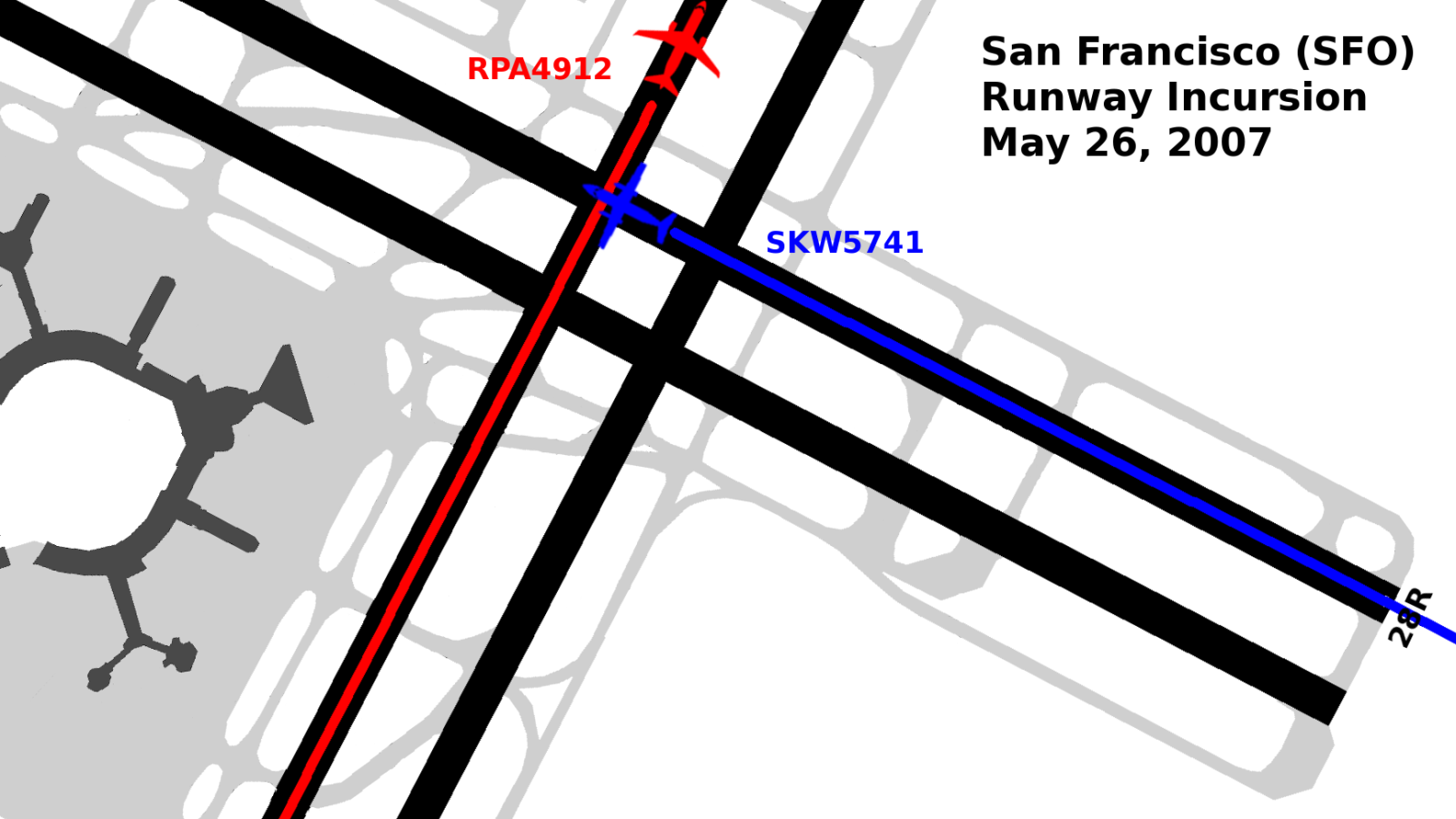
The headline figure from US runway safety data is striking: severe runway incursions rose 44 percent in 2025, even as the overall total nudged downward. That divergence, a safer-looking aggregate masking a sharper rise in the most dangerous events, is precisely what should concern passengers, pilots and policymakers alike.
What the Numbers Actually Show
AVweb reports that total runway incursions exceeded 1,600 in 2025, a fall of approximately one percent on the previous year. On its own that might read as modest progress. The FAA Safety Team, however, puts the severity picture plainly: "While the total number of runway incursions (over 1,600) decreased by about 1%, 'severe' (Category A & B) incursions increased by 44%."
The most serious classification in the FAA's system, Category A incursions are those in which a collision was only narrowly averted. According to AVweb, fiscal year 2024 saw the FAA log nine Category A and B incursions combined, which makes the 44 percent increase recorded in the year that followed a particularly troubling movement in the wrong direction at the upper end of the severity scale.
The overall count falling while the worst incidents rise is not a statistical curiosity. It suggests that while the volume of lower-category events is being managed, the conditions that produce near-collisions are not.
What the DOT Inspector General Found on Runway Incursions
Part of the explanation for that gap can be found in a report the Department of Transportation's Office of Inspector General published in March. The DOT OIG concluded that the FAA has no unified framework for pulling together and analysing runway incursion data, a structural shortcoming that undermines the agency's capacity to spot emerging patterns and intervene before situations deteriorate.
The audit examined Category A and B incursions at primary commercial airports from the beginning of fiscal year 2022 onwards, and it set out five recommendations centred on strengthening FAA data sharing and the quality of information flowing to stakeholders. The OIG further determined that a number of runway incursion mitigation initiatives remained undelivered by the FAA, despite the agency having convened a safety summit and directed more than 200 million dollars toward those very efforts at airports across the country.
That last point is worth sitting with. Significant public money has been committed and a high-profile summit convened, yet the mitigation initiatives that were intended to follow have not been fully delivered. The OIG's report does not attribute fault for specific incidents, and we do not speculate on causes, but the institutional picture it draws is one of incomplete follow-through at a time when the severity data is moving in the wrong direction.
A Broader Safety Backdrop
Runway incursions do not sit in isolation. The International Air Transport Association's 2025 Annual Safety Report provides context that cuts both ways. On the positive side, IATA found that the five-year rolling average fatal accident rate improved from one fatal accident per 3.5 million flights in the 2012 to 2016 period to one per 5.6 million flights in the 2021 to 2025 period. The long-run trajectory of commercial aviation safety remains strongly upward.
Within that same report, however, IATA drew attention to two trends placing additional strain on the navigation and situational awareness systems that safe surface operations depend upon. Compared with 2023, GPS jamming events in 2025 were up by 67 percent, IATA reported, and GPS spoofing incidents climbed 193 percent across the same period. IATA Director General Willie Walsh was direct on the implications: "GNSS interference events are deeply concerning. Airlines rely on GNSS for safe and efficient flight operations."
Neither jamming nor spoofing is cited by any authority as a cause of the US runway incursion figures above, and we make no such link. What the IATA data does establish is that external interference with navigation technology is a worsening and widespread pressure on the system, one that regulators and operators are dealing with simultaneously.
A separate accountability issue also featured in IATA's report: of all accident investigation reports covering the period from 2019 to 2023, just 63 percent were completed in accordance with the obligations set out under the Chicago Convention. Where investigation reports fall short of the required standard or arrive too late, the lessons capable of preventing future incidents simply fail to reach those who most need to act on them.
What This Means for Passengers and the Industry
For passengers, the immediate reassurance is that commercial aviation's long-term safety record continues to improve. The fatal accident rate statistic from IATA is a genuine achievement, not a talking point. The short-term concern is that the most dangerous category of runway event is rising at US commercial airports, and the oversight body charged with examining that trend has told the FAA it does not yet have the analytical infrastructure to understand why.
For the industry, the DOT OIG's five recommendations represent a clear to-do list. Better data integration, improved stakeholder communication and the delivery of mitigation initiatives that have already been funded are not speculative asks. They are the minimum the data now demands.
Readers who want to explore the safety records and route networks of individual airlines can use our Airline Search tool.
The Bottom Line
A one percent fall in total runway incursions is not a story. A 44 percent rise in the severest category, at commercial airports, in a year when the oversight body found the FAA lacks the data analysis capability to fully understand the problem, is the story. The money has been spent. The summit has been held. The mitigation initiatives have not all been implemented. The OIG has made its recommendations. What happens next with those recommendations is the number to watch, and we will report on the FAA's response as it becomes available.
This article draws on information from US Department of Transportation Office of Inspector General and International Air Transport Association (IATA) and reporting by AVweb.
Continue to follow The Aviation Hub for more analysis and insight.
Advertise with us Your brand, in front of an aviation audience Home page and in-article placements, sold directly, one advertiser per slot. From £250 a year. See the rates