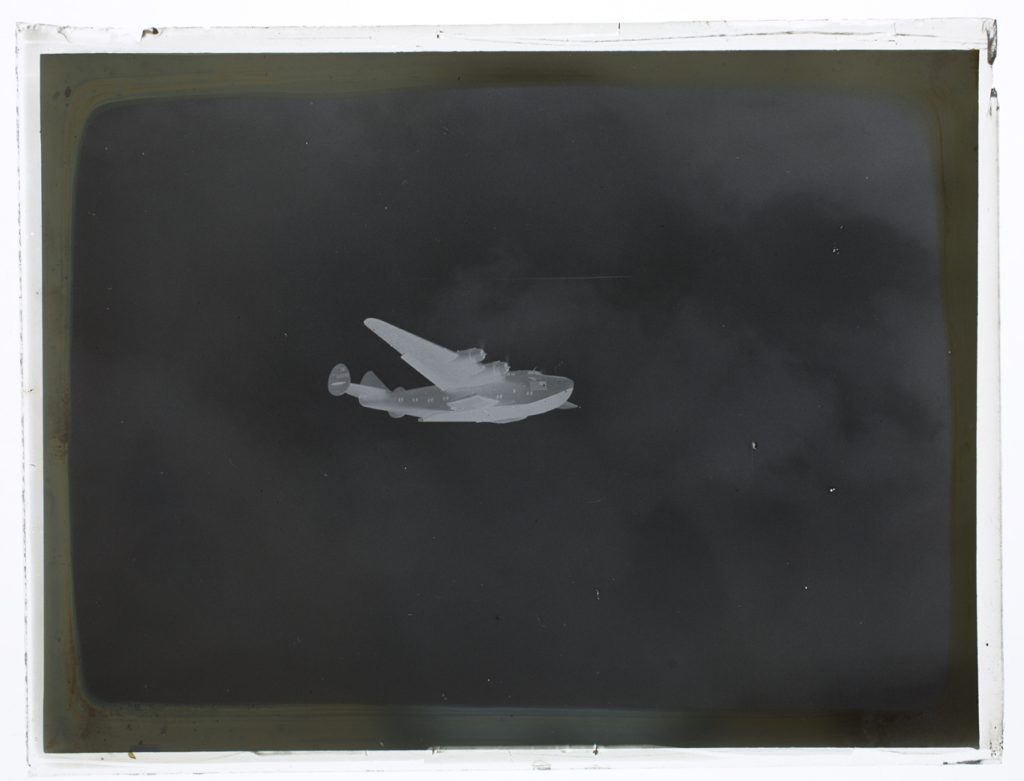
In the summer of 1939, the flying boat represented the pinnacle of commercial aviation: a Pan Am Boeing 314 could carry passengers across the Atlantic in conditions that no land-based aircraft of the era could match. Twelve years later, the last Boeing 314 sank in Baltimore harbour. The speed of the flying boat's disappearance was not an accident of technology. It was the direct consequence of a war that built, at vast public expense, the land infrastructure that made the flying boat redundant overnight.
The World Before Runways
Part of the answer lies in what civil aviation actually looked like in the 1930s. The Smithsonian National Air and Space Museum reports that Floyd Bennett Field on Long Island, New York, was home to the sole concrete runway in the entire United States right up until 1938. A single strip of paved ground, for a whole nation. The oceans, by contrast, offered a near-infinite network of natural landing surfaces at no cost to the airlines that used them.
Every major long-range aircraft programme of that decade was shaped by this reality. The Smithsonian National Air and Space Museum reports that the transpacific route to the Far East was inaugurated in 1936 by Pan Am's Martin M-130 China Clipper, serving a corridor no land-based aircraft of the era could have managed. Pan Am, founded in 1927 by Juan Trippe, built its entire long-range identity around water.
The British followed the same logic. The Museum of Applied Arts and Sciences (NSW Government) reports that the British Government decided at the end of 1934 to implement an air mail service to every Commonwealth country at a standard rate, and that Imperial Airways commissioned Short Brothers to build the Short Empire flying boat to serve that network. Short Brothers captured the philosophy of what they were making when they said: "We don't build aircraft that float, we build ships that fly."
The Museum of Applied Arts and Sciences (NSW Government) also reports that Qantas Empire Airways ordered six Short Empire flying boats and moved its operations from Brisbane to Sydney in May 1938, extending the Commonwealth network southward.
The Boeing 314: The Peak of the Era
The Boeing 314 was the machine that represented the flying boat at its most refined. HistoryLink.org (Washington State's Online Encyclopedia) reports that Pan Am ordered six Boeing 314s for $4.8 million on 21 July 1936, with an option for six more, and that the aircraft made its first flight on 7 June 1938 from Puget Sound, Seattle, piloted by Eddie Allen, a flight that lasted 38 minutes.
Pan Am began scheduled New York to Europe service in 1939 using the Boeing 314, turning the Atlantic crossing into a commercial reality. The fare was not for ordinary travellers: the Foynes Flying Boat and Maritime Museum reports that a single transatlantic ticket cost $375, a sum that placed it firmly among the luxuries of the wealthy. HistoryLink.org (Washington State's Online Encyclopedia) also reports that Pan Am later ordered six improved 314A aircraft on 1 October 1939, suggesting that as late as the first months of the war, the long-range flying boat still looked like the future.
You can explore the full history of the aircraft types discussed here through our Aircraft Search.
What the War Built
The Second World War changed the equation permanently, and it did so not through the destruction of flying boats but through the construction of runways. The Smithsonian National Air and Space Museum reports that during the war, the US Navy's SeaBees construction battalions built runways across Pacific islands, islands that had previously offered no aviation infrastructure at all.
This was military necessity, not aviation policy. Bombers, fighters and transport aircraft needed hard runways, and so the United States and its allies built them, at scale, across every theatre of the war. By 1945, a global network of paved runways existed that had not existed in 1939. The flying boat's central competitive advantage, that it needed no expensive infrastructure, had been eliminated by a war fought for entirely different reasons.
The airlines that emerged from the war inherited this infrastructure for free. The economic case for building a new generation of flying boats, which required specialised marine terminals, tenders, moorings and handling equipment, no longer held. Land-based aircraft could now operate from the same runways the military had built.
The Collapse
Imperial Airways had its origins in a 1924 merger of four smaller companies, and it subsequently joined with British Airways to form BOAC on 1 April 1940. BOAC continued operating flying boats into the post-war period, and the Foynes Flying Boat and Maritime Museum reports that Pan Am sold three of its Boeing 314s to BOAC, suggesting the type remained useful for a time on routes where land-based infrastructure was still thin.
But the direction of travel was clear. The military runways could be handed to civil aviation. Aircraft manufacturers were now expert in building fast, efficient land-based designs. The flying boat, which had flourished precisely because it needed no runway, was now competing against aircraft that could use runways built at public expense and shared with every other operator. It could not win that contest.
The last Boeing 314 sank in Baltimore harbour in 1951, less than twelve years after Pan Am had launched transatlantic service with the type.
What the Flying Boat Left Behind
The lesson from the flying boat era is not simply one of technological obsolescence. It is a lesson about who builds aviation infrastructure and who benefits from it. The jet age was made possible by airports, and those airports were largely built on the bones of wartime military construction. The economics of civil aviation have reflected that public investment ever since.
We think about this at The Aviation Hub when we write airport guides. The airports that serve Venice, Karachi, Belém and Rio de Janeiro, each covered in our recent guides including our piece on landing beside Sugarloaf at Rio Santos Dumont, occupy their specific locations for reasons shaped by geography, history and infrastructure investment. The flying boat era reminds us that those choices were never inevitable.
The Bottom Line
The flying boat did not fail. It was overtaken by infrastructure that a world war built for different purposes entirely. The Boeing 314 and the Short Empire flying boats were extraordinary machines for a world that lacked runways. Once that world was gone, the flying boats went with it.
The aircraft we fly today, on jet routes between concrete airports on every continent, exist in the form they do because of decisions made between 1942 and 1945 that had nothing to do with commercial aviation. That is worth remembering the next time a runway feels like a given.
This article draws on reporting by Smithsonian National Air and Space Museum, Foynes Flying Boat & Maritime Museum, Museum of Applied Arts and Sciences (NSW Government) and HistoryLink.org (Washington State's Online Encyclopedia).
Continue to follow The Aviation Hub for more analysis and insight.
Advertise with us Your brand, in front of an aviation audience Home page and in-article placements, sold directly, one advertiser per slot. From £250 a year. See the rates