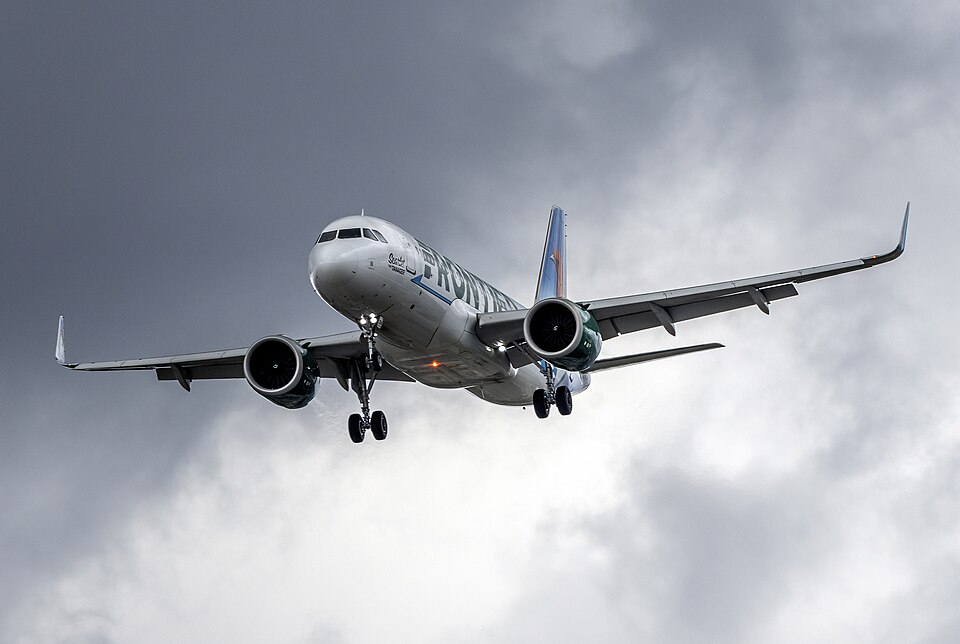
A Frontier Airlines flight from Houston to Orlando declared an emergency on Tuesday evening after the crew reported severe engine vibration during the climb.
The Airbus A320neo turned back to George Bush Intercontinental Airport in Houston and landed safely around 13 minutes after takeoff.
Engine Vibration on the Climb Out From Houston
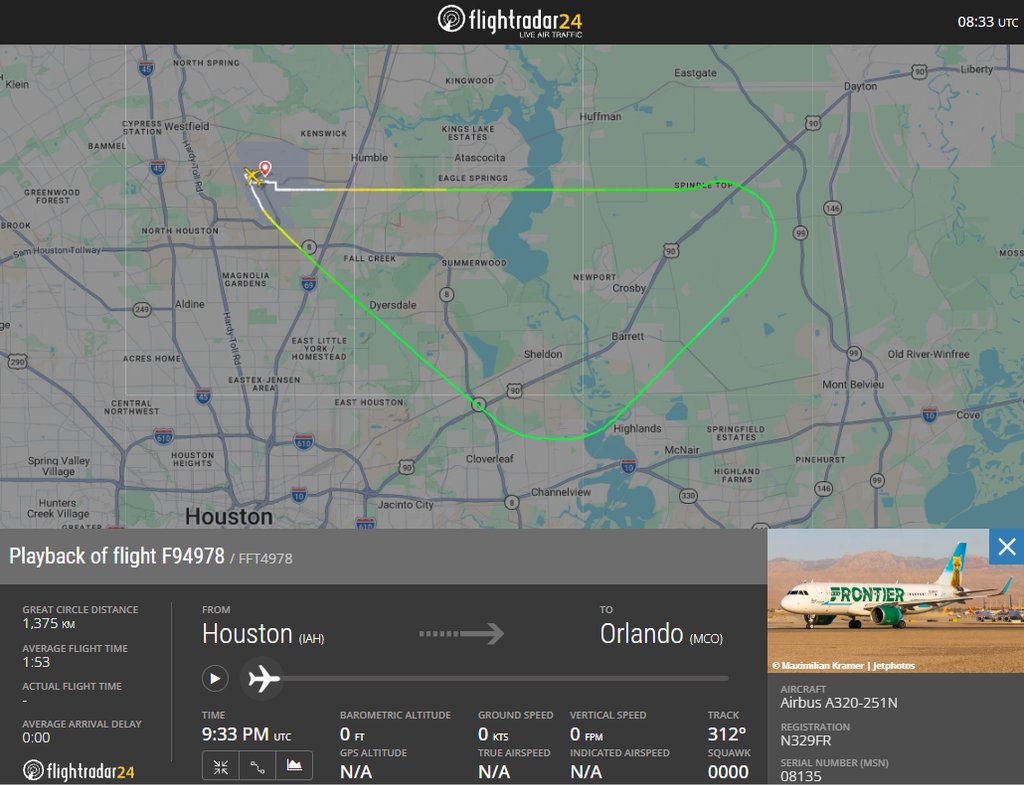
Flight F9 4978 was due to leave Houston at 16:21 local time on 3 November. However, the departure ran late, and the aircraft finally took off at 17:34.
The A320neo, registered N329FR, headed southeast before turning east and then northeast towards Florida. Then, at 17:39, Flightradar24 picked up the emergency transponder code 7700.
According to @FlightEmergency on X, the crew returned to Houston because of severe engine vibration on the climb out. The account later confirmed that the aircraft had landed safely.
Frontier Airlines had not commented publicly on the incident at the time of writing.
What the Flight Data Shows
Flightradar24 data shows the jet levelling off at around 4,000 feet shortly after departure from Houston. It then began to climb again and reached a peak of 4,950 feet at 17:40, moments after the emergency squawk appeared.
Soon afterwards, the crew began a descending left turn back towards Houston. The aircraft then settled on a westerly heading and touched down at 17:47. From takeoff to touchdown, the whole flight lasted just under 13 minutes.
In total, the A320neo never climbed above 5,000 feet. As a result, it stayed close to the airport throughout, which allowed the crew to make a quick and controlled return.
About the Aircraft
Planespotters.net lists N329FR, the aircraft involved in the Houston emergency, as manufacturer serial number 8135. The aircraft is 8.6 years old. Airbus built it in Hamburg, where it flew under the test registration D-AVVF.
Frontier took delivery in April 2018. On 20 April that year, the jet ferried from Hamburg to Tampa with a stop in Goose Bay, Canada. Today it carries 186 seats in an all economy layout and two CFM International LEAP-1A engines.
Like the rest of the fleet, it also wears a named animal on its tail. This one is Trixie the Fox, and it carries fleet number 329.
This is not the first time the airframe has made headlines, either. In July 2019, AeroInside reported a landing gear problem on N329FR during an approach to Windsor Locks, Connecticut.
Why Engine Vibration Prompts a Swift Return to Houston
Modern engines monitor vibration constantly and flag abnormal readings to the crew. High vibration can point to several problems, such as fan blade damage from a bird strike or foreign object, an imbalance in rotating parts, or a bearing fault.
For that reason, crews take severe vibration seriously, particularly so soon after departure. In many cases, they reduce thrust on the affected engine and head for the nearest suitable airport. Here, that airport was Houston itself.
Declaring an emergency also gives the crew priority from air traffic control. In addition, it puts airport fire crews on standby for the landing.
A Replacement Aircraft Takes Over
Frontier later assigned another A320neo, N396FR, to the Houston to Orlando service. Flightradar24 shows that aircraft leaving Houston at 01:29 local time on 4 November, more than nine hours behind schedule. That flight was still on its way to Orlando when this article went to press.
Meanwhile, engineers will need to inspect N329FR before it returns to service. Until then, the exact cause of the vibration remains unclear.
The Aviation Hub will update this story if Frontier or the FAA releases more detail. You can also follow every live emergency on our Squawk 7700 page.
Continue to follow The Aviation Hub for more analysis and insight.
Advertise with us Your brand, in front of an aviation audience Home page and in-article placements, sold directly, one advertiser per slot. From £250 a year. See the rates