The gulf airspace disruption that began in February 2026 is now the most consequential single shock to long-haul routing in a generation. IATA's June 2026 outlook, reported by Middle East Eye, projected that Middle Eastern carriers would swing from a $7.2bn net profit in 2025 to a $4.3bn net loss in 2026. The question the industry is now asking is not simply how much traffic was lost, but how much of it will ever come back.
How the Gulf Airspace Disruption Unfolded
The catalyst arrived on 28 February 2026, when, as Middle East Eye reported, the United States and Israel launched air strikes on Iran. The response was swift and severe. Iranian forces targeted areas close to US military installations in Qatar and the UAE, according to Middle East Eye, with airports at Dubai, Abu Dhabi, Kuwait and Bahrain all sustaining hits. Middle East Eye reported that Qatar, the UAE, Kuwait and Bahrain each shut their airspaces in consequence, with gradual reopening following roughly a week later.
The disruption did not end there. Our earlier analysis of the escalating Houthi campaign and its consequences for Gulf aviation set out the pattern of infrastructure strikes that had already been building through October 2026. OPS Group reported that on 16 October, missiles struck Aden airport (OYAA), landing around 500m from a passenger aircraft preparing to depart for Cairo. Riyadh (OERK) reopened on 18 October after more than a week of disruption, according to OPS Group, but continues to require prior permission from GACA and cannot serve as an alternate.
The Numbers Behind the Damage
The scale of the operational collapse at the three main Gulf hubs is striking. Between February and late October 2026, airlines cancelled 26,500 flights across Dubai International, Hamad International and King Khalid, a figure five times higher than in the prior year, as Asharq Business reported, repeated by Enterprise AM. King Khalid alone bore an extraordinary share of that burden: Asharq Business reported that approximately 94% of an estimated 4,400 scheduled departures were cancelled in the wake of deadly missile attacks, across the period running from 10 to 27 October.
Dubai International's passenger numbers reflect the cumulative damage. Asharq Business reported that DXB handled 31.5 million passengers in H1 2026, a fall of 31.3% year-on-year. Monthly volumes did recover from a low of 3.5 million in April to 5 million in June, which suggests some traffic returned once the initial airspace closures lifted. But the year-on-year gap remained wide. Our April 2026 piece on Dubai International's departure strain amid the Iran war documented the early operational pressure that those figures now confirm.
Who Captured the Redirected Flows
This is where the evidence becomes harder to read precisely, because no competing hub has yet published comparable traffic figures for the same period. What the routing data does show is a structural shift in overflights. The gradual restoration of that corridor suggests some traffic resumed its original path, but carriers operating via Istanbul, Colombo or Singapore had by then established alternative scheduling and codeshare arrangements that do not unwind overnight. OPS Group reported that Kuwait ultimately restored overflight access, bringing the central corridor via Turkey, Iraq, Kuwait, Bahrain, Qatar and the UAE back into use for flights at FL280 or above.
For passengers travelling between Europe and South or Southeast Asia, the Gulf's appeal has always rested on frequency and convenient connection times. When Emirates, Qatar Airways and Etihad simultaneously contracted their networks, those passengers did not stop travelling. They rerooked on Turkish Airlines via Istanbul, on carriers routing through Colombo, or on direct services where available. The commercial question is whether those booking habits have reset.
You can track how individual airlines' networks are evolving using our Airline Search tool, which covers scheduled services across the region.
What Emirates Said, and What It Means
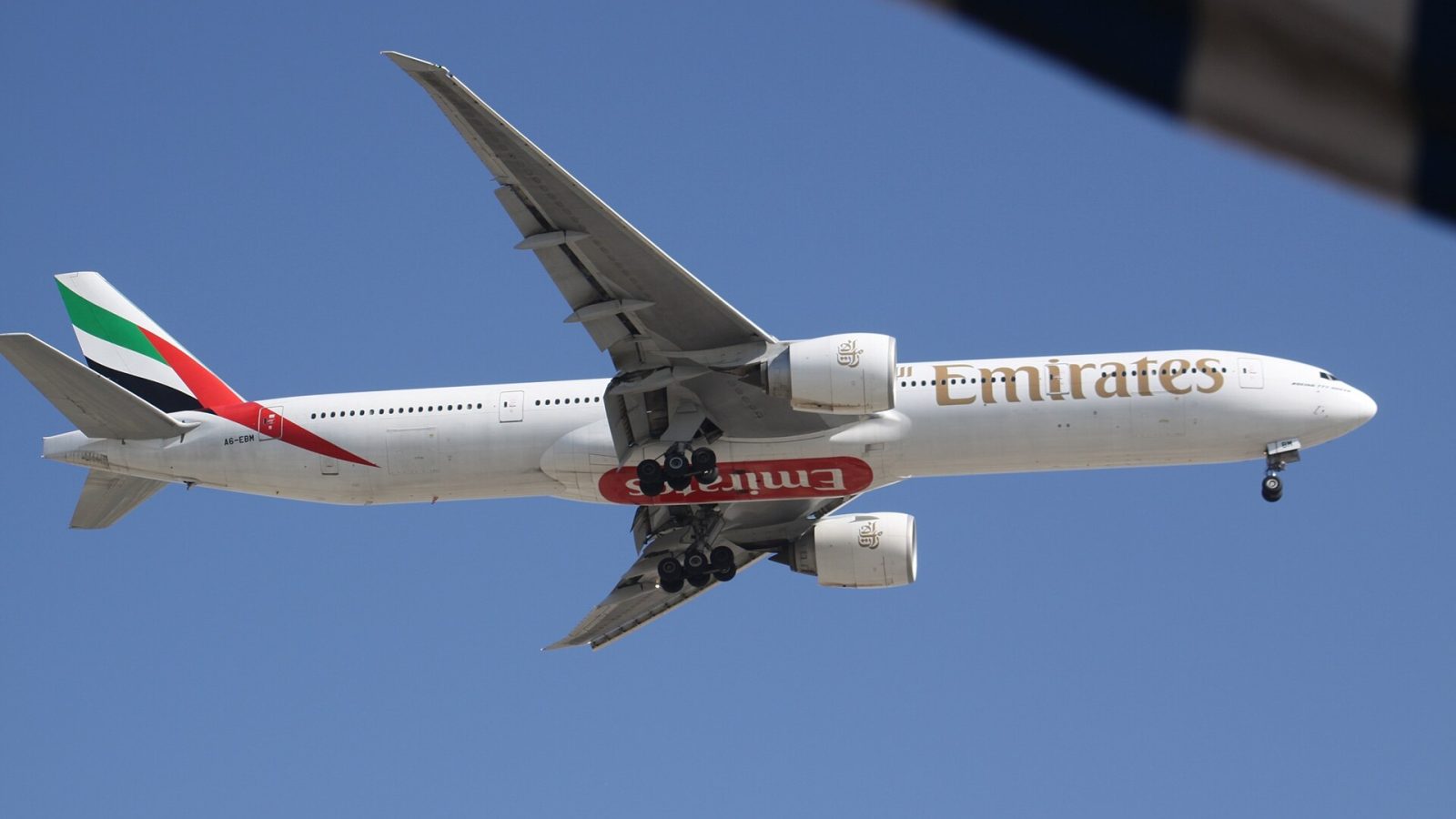
Emirates chief executive Tim Clark offered the clearest public signal of intent from any Gulf carrier. Middle East Eye reported that he said the airline "would get you back irrespective [of whether it's] on Emirates or not," a statement that positions the airline as a network steward rather than simply a commercial operator. It also implies that Emirates does not expect to recover every displaced passenger on its own metal, at least not immediately.
The scale of what needs recovering is formidable. A swing from $7.2bn in net profit to a projected $4.3bn net loss, as IATA's June 2026 outlook set out, leaves little financial headroom for the kind of capacity stimulus that typically accelerates a demand recovery.
What Is Still Uncertain
The central uncertainty is whether the structural rerouting proves temporary or permanent. Amandeep Kaur Ahuja, a MENA geopolitical risk consultant, told Enterprise AM that the disruption is "likely to be a short-term impact of the war rather than a long-term feature." She also cautioned, in the same interview, that "there is a real possibility that airports expand faster than the fleet is added," pointing to a supply constraint that could limit how quickly Gulf carriers rebuild even when security conditions allow it.
Both observations carry weight. Passenger loyalty is elastic over months but tends to calcify into habit over years. If alternative hubs sustain the frequencies they added during the disruption, recapturing the full pre-crisis flow will require Gulf carriers to outcompete on price, schedule and connectivity simultaneously.
The Bottom Line
The Gulf airspace disruption of 2026 has not simply delayed traffic: it has redistributed it, at least for now. The hubs that absorbed the displaced flows had an operational advantage measured not just in weeks but in booking cycles. Whether Dubai, Doha and Abu Dhabi recover their dominant share of the Asia-Europe corridor depends on how quickly security conditions stabilise, how fast fleets rebuild, and whether connecting passengers decide the restored convenience is worth switching back. Those are open questions, and the answers will define the shape of long-haul aviation for the rest of the decade.
This article draws on reporting by Enterprise AM, Middle East Eye and OPS Group.
Continue to follow The Aviation Hub for more analysis and insight.
Advertise with us Your brand, in front of an aviation audience Home page and in-article placements, sold directly, one advertiser per slot. From £250 a year. See the rates