IndiGo has pulled its 787s out of Heathrow and Manchester and pushed its first A350 back to 2028. Its new chief executive, the former British Airways boss, is betting that patience will pay off.

Willie Walsh has spent three months running IndiGo, India’s biggest airline. Speaking in Delhi last week, he set out what his first big strategic call looks like: slow down.
IndiGo now expects its first Airbus A350-900 in the second quarter of 2028, a year later than it had planned. It has 60 on firm order, with purchase rights for 40 more. The first ten will carry 16 lie flat business seats alongside premium economy and economy cabins.
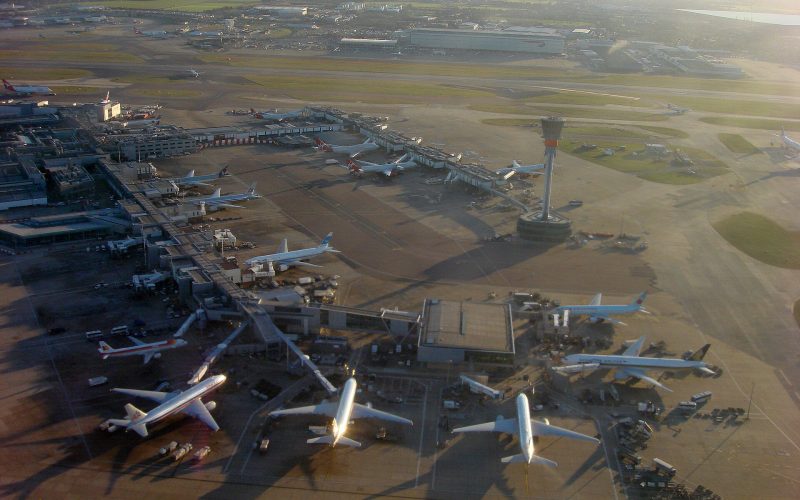
Until then, IndiGo has no widebodies at all. On 25 October it stopped flying the Boeing 787-9s it had leased from Norse Atlantic Airways. London Heathrow is suspended until the A350s arrive. Manchester has already gone. Mumbai to Amsterdam survives, but on a single aisle A321XLR.
For an airline that once looked set to challenge Air India, British Airways and Virgin Atlantic on flights between India and the UK, that is a significant retreat. It is also a very Walsh decision.
The Experiment That Did Not Work
IndiGo’s 787 programme was meant to be a shortcut. Under a damp lease agreed in early 2025, Norse supplied six 787-9s with pilots and maintenance, while IndiGo provided cabin crew, sold the seats and paid for the fuel. The aim was to build long haul experience and a brand presence in Europe before the A350s arrived.
The economics turned against it. IndiGo paid Norse in dollars and euros while earning mostly in rupees, and the rupee has weakened. Fuel costs fell entirely on IndiGo just as jet fuel prices doubled this year. Pakistan’s ban on Indian airlines using its airspace also forces longer routes to Europe, adding flying time and fuel to every sector.
Manchester closed first, and one aircraft went back to Norse early because of higher than expected costs. Copenhagen ended too. In July, IndiGo announced the whole programme would stop in October, citing a “significant escalation in costs”.
Abhijit Dasgupta, IndiGo’s senior vice president of planning and revenue management, said the project “was never solely about serving specific routes”. It was about laying the foundation for IndiGo’s future long haul operations.
Walsh’s Starting Point
Walsh took over in August after five years as Director General of IATA. Before that he ran Aer Lingus, British Airways and IAG. He arrived at an airline still repairing its reputation after December 2025, when IndiGo cancelled thousands of flights because it had not planned properly for pilot rest and duty rules.
He has been candid about his doubts. Walsh said he told IndiGo’s promoter, Rahul Bhatia, before joining that he was not sure a move into long haul would be wise. He has also made clear where his priorities lie. IndiGo will not compromise the efficiency of its narrowbody, short haul operation to support long haul flying, he said.
Walsh also put India’s international market in perspective. Only 78 million passengers travelled internationally from India last year, he said, fewer than Heathrow handles on its own.
The Numbers Behind the Caution
IndiGo is not in a position to take big risks. It lost ₹1,879 crore in the September quarter, which Walsh blamed on higher fuel costs and the weaker rupee. It is not hedging fuel, and Walsh expects the gap between jet fuel and crude prices to stay high even if oil keeps falling.
At home, IndiGo is dominant. It holds more than 65% of India’s domestic market, runs around 2,200 flights a day and operates more than 440 aircraft. That short haul machine is what pays the bills. Walsh’s message is that IndiGo will not risk it for a premature push into long haul.
The Narrowbody Bridge
In the meantime, the A321XLR is doing the work. IndiGo has four, expects a fifth by the end of this year and plans to have 14 by the end of 2027. They already fly to destinations such as Athens and Istanbul.
The Amsterdam route shows Walsh’s priorities. He said the XLRs will keep flying to Schiphol until the A350s arrive, so IndiGo retains its slots at one of Europe’s most constrained airports. Few airline bosses understand the value of slots better than the man who spent years building British Airways’ position at Heathrow.
The XLR has limits. Routings between Mumbai and Amsterdam can reach about 4,400 nautical miles, a distance on which the XLR may have to carry fewer passengers or less cargo.
The Ambition Has Not Changed
None of this means IndiGo has given up on the world. Its plan for 2030 still calls for about 3,000 daily departures, around 200 million passengers a year and international flying making up roughly 40% of capacity, up from 32% in the last financial year. Shareholders have approved a 57% increase in the airline’s borrowing limit to fund fleet growth through to 2035.
Walsh has called the A350’s arrival IndiGo’s most important milestone of the next five years. The difference is the route to that goal. Instead of learning long haul on borrowed aircraft at a loss, IndiGo will wait until it has its own widebodies and a product built for the job.
What It Means for the UK
In the short term, IndiGo’s retreat helps its rivals on routes between the UK and India. Air India is again the only Indian airline flying widebodies on scheduled international routes. British Airways and Virgin Atlantic are not covered by Pakistan’s ban on Indian airlines, which gives them more routing options.
The longer term picture looks different. When IndiGo returns to Heathrow with A350s in 2028 or later, it will arrive with a low cost base at home, flat bed seats at the front and a chief executive who knows British Airways’ business intimately. That is a more serious competitor than the damp leased operation that has just gone.
The Bottom Line
Walsh’s first big decision at IndiGo is a retreat that looks like discipline. He has removed a loss making experiment, protected the domestic business that funds everything else, and kept the slots and the brand presence IndiGo will need later.
The risk is time. Air India is rebuilding, Gulf carriers are not standing still, and 2028 is a long way off in an industry this volatile. If the A350 slips again, IndiGo’s European ambitions could stay on hold for years. If it arrives on time, Walsh may have given IndiGo a much stronger launch than the first attempt.
Continue to follow The Aviation Hub for more analysis and insight.
Advertise with us Your brand, in front of an aviation audience Home page and in-article placements, sold directly, one advertiser per slot. From £250 a year. See the rates