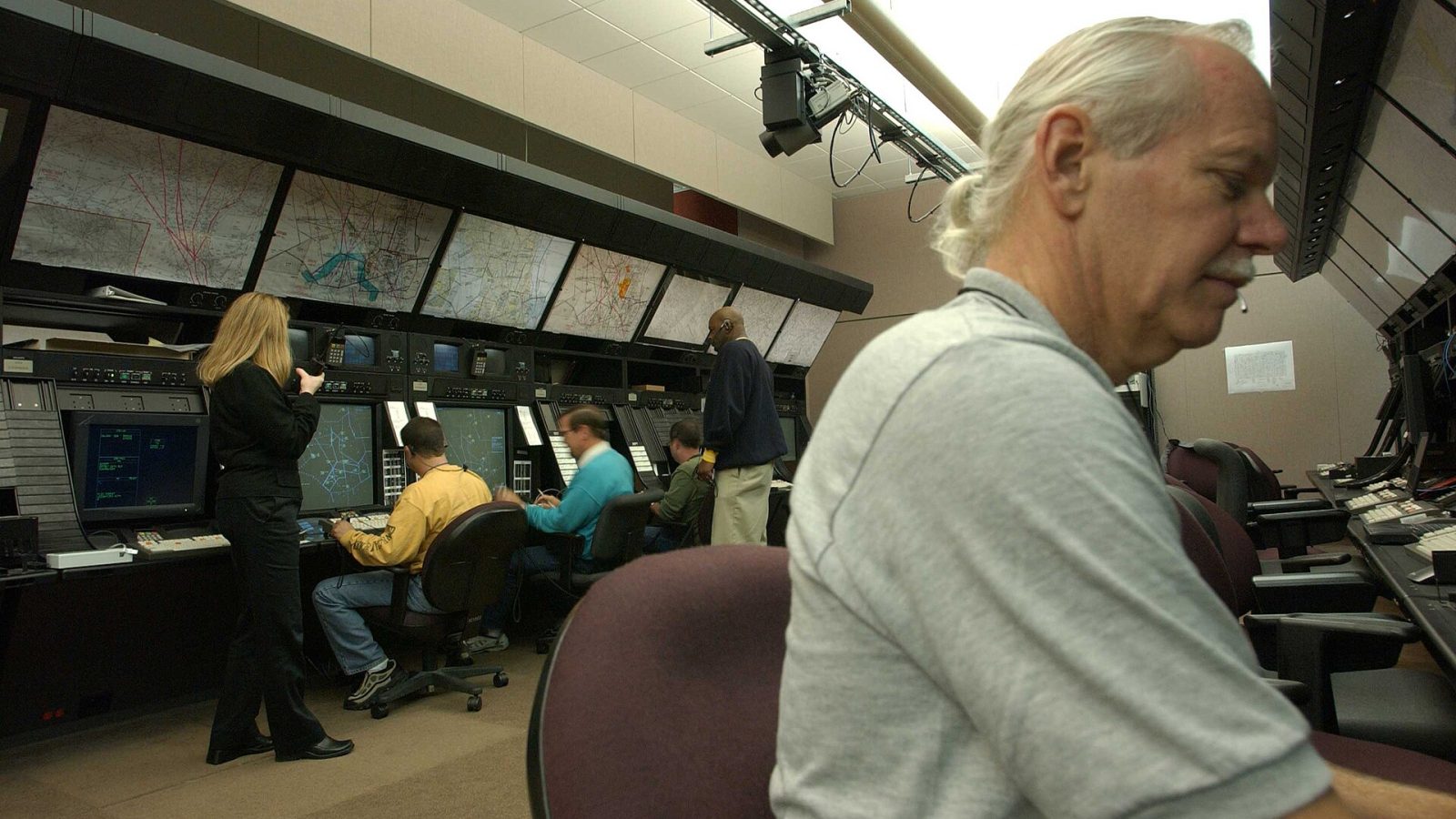
In September 2024, amid ongoing BNATCS-related reform efforts, the U.S. Government Accountability Office reported that more than 75% of the FAA's 138 air traffic control systems were either unsustainable or potentially unsustainable. That figure, covering the system that handles approximately 45,000 flights per day, is the clearest measure yet of how badly a generation of modernisation attempts has fallen short.
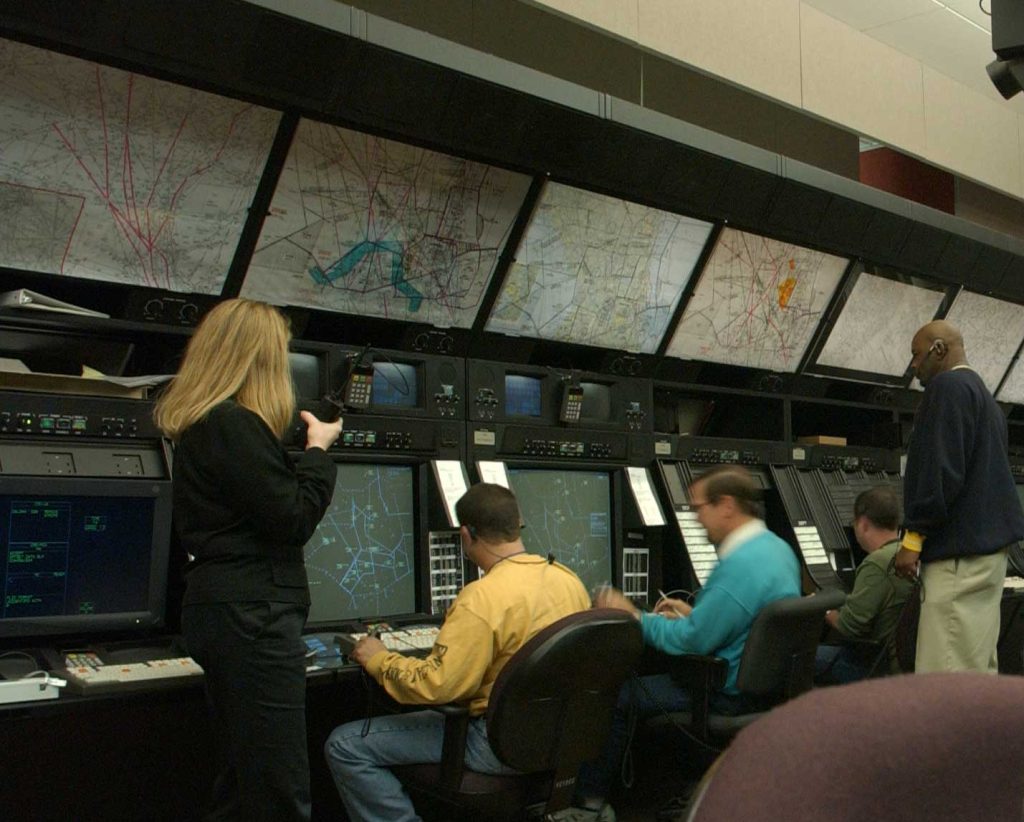
The question now is whether BNATCS, the Brand-New Air Traffic Control System, is a genuine break from that history or another ambitious programme that will struggle to deliver. The programme has real momentum but also real gaps. We examine both.
A Generation of Missed Targets
The scale of the problem has been building for decades. Infrastructure that was designed for a different era of aviation now underpins a system handling tens of thousands of flights every day, and the NBAA has stated plainly what is at stake. Kristie Greco Johnson, Senior Vice President for Government Affairs at NBAA, put it this way: "BNATCS is needed to replace aging telecommunications, radar and other infrastructure, address persistent controller staffing challenges and prevent outages that threaten the safety, reliability and efficiency of the National Airspace System."
Successive modernisation programmes, most notably NextGen, promised transformation and delivered incremental results at enormous cost and over stretched timelines. The pattern was consistent: ambitious scope, fragmented execution, and a system that remained substantially unchanged at the infrastructure level. The GAO's September 2024 findings confirmed the cumulative cost of that failure.
What BNATCS Is and What It Covers
Secretary of Transportation Sean Duffy announced the BNATCS plan on 8 May 2025, according to the NBAA. Congress then appropriated $12.5 billion for the programme in July 2025 through the One Big Beautiful Bill Act, as confirmed by both the GAO and the NBAA.
Phase 1 covers communications, surveillance, weather and training systems, among other areas, across approximately 4,600 sites nationwide, according to the NBAA. The GAO notes that Phase 1 targets completion by December 2028. Phase 2 carries an FAA estimate of approximately $10.2 billion, excluding facilities costs, though the GAO found the FAA has not set a start or completion date for it.
Holland & Knight LLP reported that the One Big Beautiful Bill Act allocated $4.75 billion for telecoms infrastructure, $3 billion for radar replacement and $1.9 billion for new Air Route Traffic Control Centres, with a further $1 billion for TRACON recapitalisation and $100 million for ARTCC realignment. Holland & Knight LLP also reported that the FAA selected Peraton, a Virginia-based defence contractor, as prime integrator on 4 December 2025.
The NBAA confirms that the FAA is building the first new Air Route Traffic Control Center in decades as part of the programme, a symbolic as much as a structural commitment to the scale of change intended.
Early Progress on the Ground
The delivery record so far is more encouraging than any predecessor programme managed in its opening phase. The NBAA reports that the FAA had installed 179 voice switches by the time of its latest update, exceeding the baseline target of 130. Nearly 400 radio sites had been upgraded with new equipment, running 100 units ahead of the agency's baseline target of 304.
On network infrastructure, the FAA told the GAO that as of May 2026 it had replaced 2,560 of 5,170 copper wire connections with fibre optic cables. The NBAA reports that as of August 2026 the FAA had converted over 3,320 TDM copper circuits to IP, representing 64% completion, with the full TDM-to-IP conversion targeted for 2027. The GAO also notes that the FAA plans to modernise voice radio systems nine years earlier than originally planned, which is an unusual sentence to write about an FAA infrastructure project.
For readers wanting to track how individual aircraft types interact with the systems being replaced, our Aircraft Search tool pulls together fleet and operational data that puts the NAS infrastructure picture in context.
Where the GAO's Concerns Land
The early delivery numbers are real, but the GAO's findings identify structural problems that go beyond pace of installation. The FAA's current cost estimate omits government costs, most Phase 1 operations costs and all Phase 2 costs. In June 2026, the GAO reports, the FAA provided high-level per-programme cost estimates but could not supply the supporting analysis behind them. The GAO found that the FAA has not developed a comprehensive lifecycle cost estimate for BNATCS.
The scheduling picture carries the same concern. The GAO identified that the FAA has 11,389 individual project schedules that are not integrated into a master schedule, and that individual project installations at the same sites are generally not optimised to reduce impact on controller operations. That is precisely the kind of fragmentation that derailed earlier programmes: projects delivered in isolation, without a coherent view of how they interact or what they collectively cost.
Why the Structure Here Might Matter
The honest answer is that we do not yet know whether BNATCS will succeed where NextGen did not. What we can say is that some of the conditions are different. The congressional appropriation of $12.5 billion in a single legislative act removes the cycle-by-cycle funding uncertainty that plagued earlier efforts. The appointment of a named prime integrator in Peraton, as reported by Holland & Knight LLP, creates clearer accountability than a loose coalition of programme managers. And the delivery targets in Phase 1 are, at this stage, being met or exceeded.
Against that, the GAO's core findings describe a programme without a reliable total cost estimate and without a schedule that ties its thousands of moving parts together. Those are not minor administrative shortcomings. They are the conditions under which large government technology programmes lose control of themselves.
The NBAA offered a framing that is as honest as any: "Foundations are never exciting, but they are critical for the longevity that allows the house to stand for the next 50-60 years."
The Bottom Line
BNATCS has stronger foundations than any previous FAA modernisation attempt, in terms of funding certainty, early delivery pace and programme structure. The GAO's findings, however, make clear that the programme does not yet have the cost visibility or integrated scheduling that would allow anyone to say with confidence how much it will ultimately cost or when Phase 2 will begin.
For the 45,000 daily flights that depend on the NAS, the stakes are not abstract. The question the GAO has put on the table is whether the FAA can sustain Phase 1's momentum and build the programme management discipline that Phase 2 will demand. That is the thing to watch.
This article draws on information from U.S. Government Accountability Office and National Business Aviation Association (NBAA) and reporting by Holland & Knight LLP.
Continue to follow The Aviation Hub for more analysis and insight.
Advertise with us Your brand, in front of an aviation audience Home page and in-article placements, sold directly, one advertiser per slot. From £250 a year. See the rates