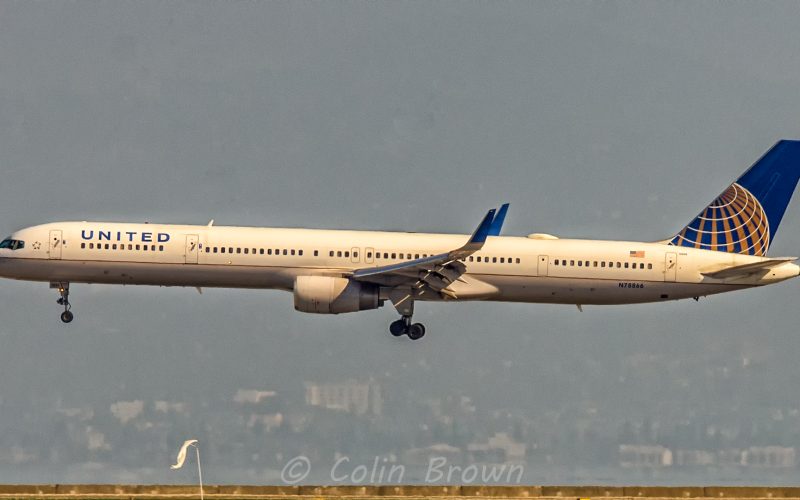
United Airlines AI agents are now banned under a contract of carriage update that prohibits third-party AI agents from booking, modifying or servicing reservations on behalf of customers, making it the first U.S. carrier to put such a restriction in writing.
The move adds a policy layer to a question the broader travel industry has been circling: what happens when automated tools, rather than passengers themselves, start making purchasing decisions? For a carrier that has been active on several commercial fronts lately, including new 2027 routes from San Francisco and expanded domestic first class access, the AI booking question carries real commercial weight.
What the New Rule Says
According to View from the Wing, United revised its contract of carriage on 11 November to introduce the prohibition. The ban is codified under Rule 6.J.6, and View from the Wing further notes that Rule 5.H entitles United to cancel any reservation touched by an AI agent in violation of the policy, whether that means it was made, modified or serviced by one.
The ban's reach is extensive. United Airlines confirmed that it applies both to direct use through United's own digital platforms and to indirect access via travel agencies and aggregators. In its own words: "United is taking steps to restrict access — directly within our digital platforms and indirectly via travel agencies and aggregators — to prohibit use by unauthorized, third-party personal AI agents or assistants."
Why United Says It Is Acting
United has put forward a number of justifications for the policy. The airline pointed to the security dangers that arise when customers hand their account credentials to third-party tools, warning that sensitive personal and financial data can be compromised as a result. It further highlighted concerns about purchases made in error, unwanted changes to accounts, and MileagePlus miles being used without the customer's full knowledge or consent.
Federal hazardous-materials regulations also feature in United's justification. Those rules require passengers to confirm, at the point of booking, that they understand what they may and may not carry. United's position is that an AI agent completing a booking on a passenger's behalf cannot reliably fulfil that legal requirement.
CEO Scott Kirby has framed the concern in blunter commercial terms. Speaking about AI intermediaries, he told View from the Wing: "To be honest, I don't want to create another middleman."
What It Means for Passengers
For most passengers searching for United fares on price-comparison platforms, little will change in practice. CBS News notes that United tickets remain available through tools such as Kayak, Hopper and Google Flights, because those platforms search and display fares rather than acting autonomously on a traveller's behalf.
The distinction the policy draws is between a tool that surfaces prices for a human to review and confirm, and an AI agent that completes a transaction autonomously. The former remains permitted; the latter does not.
Henry Harteveldt, aviation analyst at Atmosphere Research Group, told CBS News that "United is saying they don't want to add yet another, and potentially even more powerful, intermediary than they already face in terms of Google search, price-comparison metasearch sites and online travel agencies." He also told CBS News that "consumers shouldn't find it any more difficult to find good fares on the airline."
How Other Airlines Are Approaching United Airlines AI Agents
Other carriers are approaching the question differently. CBS News reports that Southwest has opened its flight inventory to ChatGPT users via its own website, positioning the AI tool as a way for customers to discover flights rather than as a mechanism for completing bookings.
That contrast illustrates the range of positions airlines are currently taking. United's approach is explicitly restrictive; Southwest's is more open, at least at the browsing stage. Where other major carriers land is not yet settled.
The Bottom Line
Among U.S. carriers, United's prohibition on third-party United Airlines AI agents is the clearest and most enforceable stance yet, with contract of carriage provisions that allow reservations made in breach of the rule to be cancelled. Travellers who book through standard price-comparison platforms will feel no impact, but those building or using autonomous travel agents will need to pay close attention.
You can track United's wider commercial activity using our Airline Search tool.
This article draws on reporting by CBS News, View from the Wing and Skift.
Continue to follow The Aviation Hub for more analysis and insight.
Advertise with us Your brand, in front of an aviation audience Home page and in-article placements, sold directly, one advertiser per slot. From £250 a year. See the rates