For decades, the safety of the people and processes that keep aircraft moving on the ground sat in a regulatory gap. Airlines were expected to oversee the companies they contracted, airports had their own requirements, and national authorities each did things their own way. That gap closes in 2028, when the EU's first-ever dedicated ground handling safety regulations become binding. The question worth asking now, three years before the deadline, is what the rules actually require and what it means to meet them.
Why Ground Handling Safety Needed Its Own Rules
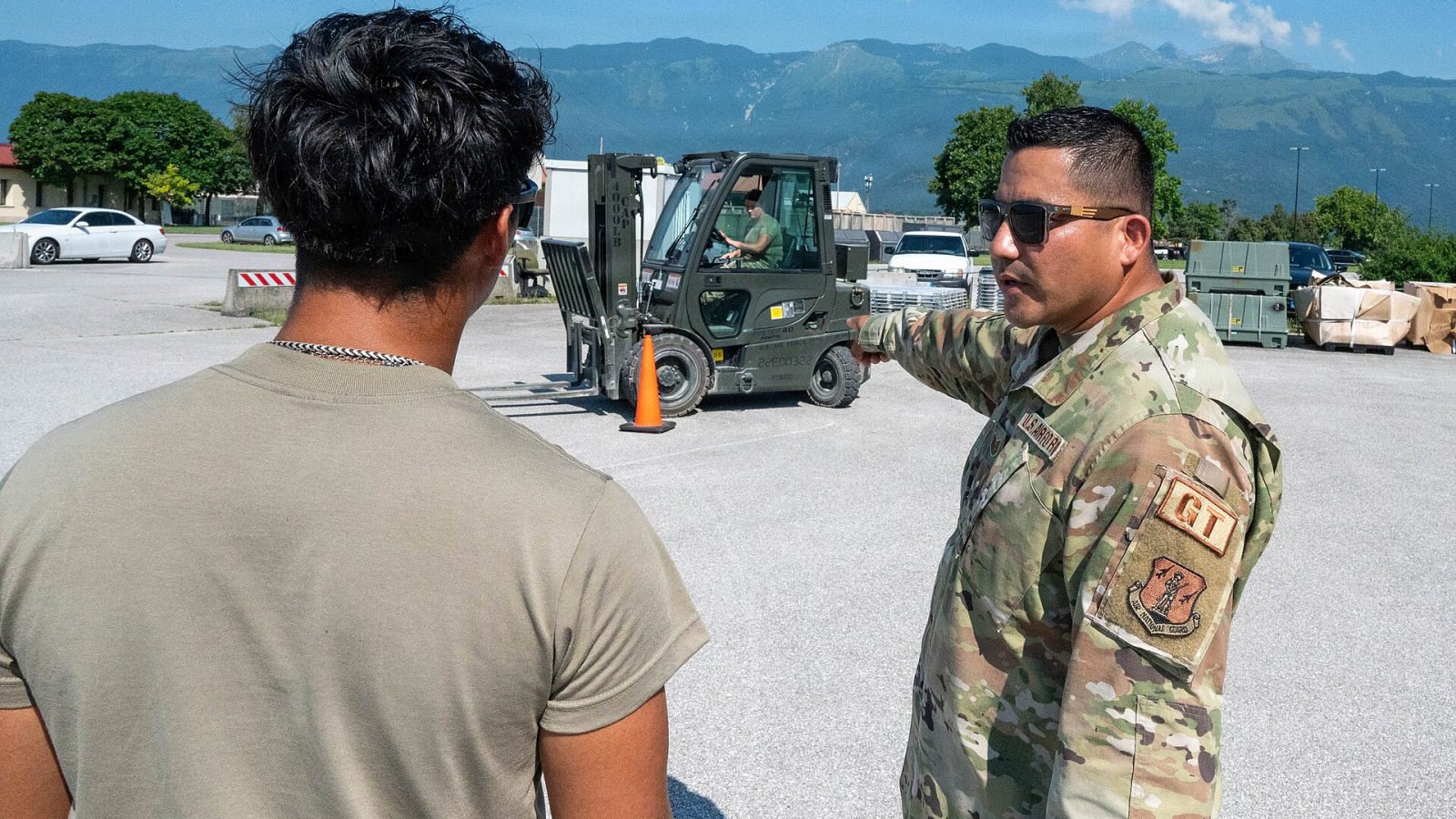
EASA puts the scale of the workforce plainly: more than 300,000 people work in ground handling at EU airports every day. The activities they perform, from loading and unloading to passenger boarding, refuelling, de-icing and turnaround coordination, sit at the centre of every safe departure. Yet until now, ground handling as a discipline had never been brought within the EASA regulatory framework.
The practical consequence of that absence was a system of oversight that fell on the wrong organisations. EASA explains that responsibility for supervising ground handling service providers (GHSPs) rested with the airlines and aerodrome operators that contracted them, not with the GHSPs themselves. A single GHSP operating across a large network could face as many as 600 industry audits in a single year under that arrangement, according to EASA, with each client conducting its own checks independently. That is an enormous administrative burden and, more importantly, it created no uniform standard.
As we have noted in our coverage of why flights get cancelled and why it is getting worse in Europe, pressure on the ramp has real consequences for passengers. Bringing ground handling into a coherent safety framework is a structural response to that pressure.
The Two Regulations and What They Cover
The European Commission published Commission Delegated Regulation (EU) 2025/20 and Commission Implementing Regulation (EU) 2025/23 on 7 March 2025. ERA (European Regions Airline Association) notes that three amending regulations, (EU) 2025/21, (EU) 2025/22 and (EU) 2025/24, were published alongside them, updating the existing Air Operations, Aerodromes and Cybersecurity frameworks. Ground handling is now explicitly brought within the scope of Regulation (EU) 2022/1645 on cybersecurity, EASA confirms.
ERA (European Regions Airline Association) reports that the regulations entered into force on 27 March 2025. Stakeholders have three years from that date to achieve full compliance, placing the operational deadline in March 2028, as EASA, ERA and Aviation Pros / Ground Support Worldwide all confirm.
The rules were developed by EASA working with an expert group that included national authorities, GHSPs, aircraft operators, aerodrome operators and a workers' trade federation, ensuring that the people closest to the ramp had a voice in shaping what is required of them.
How the Framework Is Structured
Aviation Pros / Ground Support Worldwide reports that EASA has structured the new rules across two annexes: Annex I, known as Part-ORGH, sets out the organisational requirements for GHSPs, while Annex II, Part-GH.OPS, covers the operational side.
On the organisational side, Aviation Pros / Ground Support Worldwide reports that under ORGH.DOC.110 every ground handling organisation must establish a manual that documents its activities and procedures. Flexibility is built in: Aviation Pros / Ground Support Worldwide also reports that ORGH.GEN.125 permits organisations to use their own procedures, industry standards such as IATA's IGOM and AHM, or a combination of both. That approach acknowledges the diversity of the sector without lowering the bar.
EASA and ERA confirm that the regulations introduce mandatory management systems, training standards and continued competence requirements for ground handling personnel. These are the kinds of provisions that have long existed for flight crews and maintenance engineers. Their arrival for ramp workers marks a genuine shift in how the EU treats the safety of the ground operation.
What Changes for Providers, Airlines and Authorities
The clearest structural change is where accountability sits. EASA and ERA confirm that GHSPs become formally responsible for safe service provision under the new rules. In parallel, air operators are relieved of oversight obligations for ground handling services at EU airports. Airlines no longer need to audit their handlers; the handlers are now responsible for demonstrating their own compliance.
The mechanism for that demonstration is a declaration of compliance submitted to the relevant National Aviation Authority, according to EASA. That shifts the oversight relationship from client-to-contractor to regulator-to-regulated, which is a more rational structure for a safety-critical industry.
For our readers who want to explore which airlines and operators are affected, the Airline Search tool is a useful starting point.
The Road to 2028
EASA's Flight Standards Director, Jesper Rasmussen, framed the task ahead clearly when the regulations were published: "The countdown has now officially started: EASA's task now is to work closely with the national competent authorities and industry to take the necessary measures for a smooth implementation of these regulations."
The agency is already engaged with the industry. ERA (European Regions Airline Association) reports that EASA was due to present to ERA members and take questions at the ERA Safety Group meeting on 3 April 2025, shortly after the regulations entered into force.
Three years is not a long time to build management systems, train tens of thousands of workers, write organisational manuals and file declarations across every EU member state. The framework is proportionate and the flexibility provisions are real, but the compliance workload is substantial for any GHSP operating at scale.
The Bottom Line
The EU has closed a long-standing gap in its aviation safety architecture. For the 300,000-plus people who work the ramp every day, the new rules bring formal safety obligations and training standards that their counterparts in flight operations have had for years. For the airlines that employ GHSPs, the removal of oversight duties is a genuine simplification, provided their handlers are ready. For national authorities, the job is now to work with EASA on consistent implementation before March 2028. The direction of travel is right; the work of getting there starts now.
This article draws on information from EASA (European Union Aviation Safety Agency) and reporting by ERA (European Regions Airline Association) and Aviation Pros / Ground Support Worldwide.
Continue to follow The Aviation Hub for more analysis and insight.
Advertise with us Your brand, in front of an aviation audience Home page and in-article placements, sold directly, one advertiser per slot. From £250 a year. See the rates