Three airlines on the same thin transatlantic route: that is what A321XLR thin routes look like in practice. Aerospace Global News reports that American Airlines debuted its A321XLR on New York JFK to Edinburgh, a city that Delta and JetBlue already serve. That one data point captures the central tension in the aircraft's transatlantic story. The A321XLR was supposed to open markets that widebodies cannot profitably serve. The schedules filed so far tell a more complicated story.

Where the Aircraft Is Actually Flying
American received its first A321XLR in October 2025 and its second in December 2025, with both initially operating domestically, Aerospace Global News reports. The transatlantic step came later, with Edinburgh as the launch route and plans for Barcelona, Lisbon and Amsterdam Schiphol in the winter programme. Each of those three European cities already has substantial transatlantic competition, including widebody services from legacy carriers.
Air Canada is pursuing a broader European expansion. Aviation Week reports that the carrier will operate Montreal to Berlin with an A321XLR from 2 July to 11 October 2026. The airline's Chief Commercial Officer, Mark Galardo, told Aviation Week: "We are strategically increasing new nonstop routes across Europe to bring convenient access to key destinations, while strengthening economic ties, and supporting tourism." He also said, in the same statement, that "Air Canada will offer North America's second largest transatlantic network by destinations next summer."
AeroRoutes reports that Air Canada has also filed A321XLR operations across North America and the Caribbean for Northern winter 2026/27, including Montreal to Bridgetown, Barbados at five weekly frequencies from 3 December to 31 December 2026. That Caribbean deployment shows the aircraft being used to thicken leisure markets, not only to pioneer thin transatlantic ones.
The Seasonal Pattern in the Filed Schedules
Look at the duration of the new routes rather than the destinations, and a pattern emerges. Aviation Week reports that Air Canada's Montreal to Berlin service runs from 2 July to 11 October 2026, covering the summer peak and little more. Halifax to Brussels, also reported by Aviation Week, runs from 18 June to 6 September 2026, a window of under three months. Montreal to Nantes, using a Boeing 737-8 rather than an A321XLR, Aviation Week reports, runs from 10 June to 12 October 2026.
None of those routes carries a published winter schedule. The filings show airlines confident enough in summer demand to commit aircraft and slots, but not yet willing to hold frequency through the low-demand months. That is not unique to the A321XLR, but it matters here because the aircraft's commercial case rests partly on the claim that it can sustain profitable frequencies where widebodies cannot, including outside the peak.
You can explore Air Canada and American Airlines schedules further using our Airline Search tool.
The Aer Lingus Withdrawals Add Context
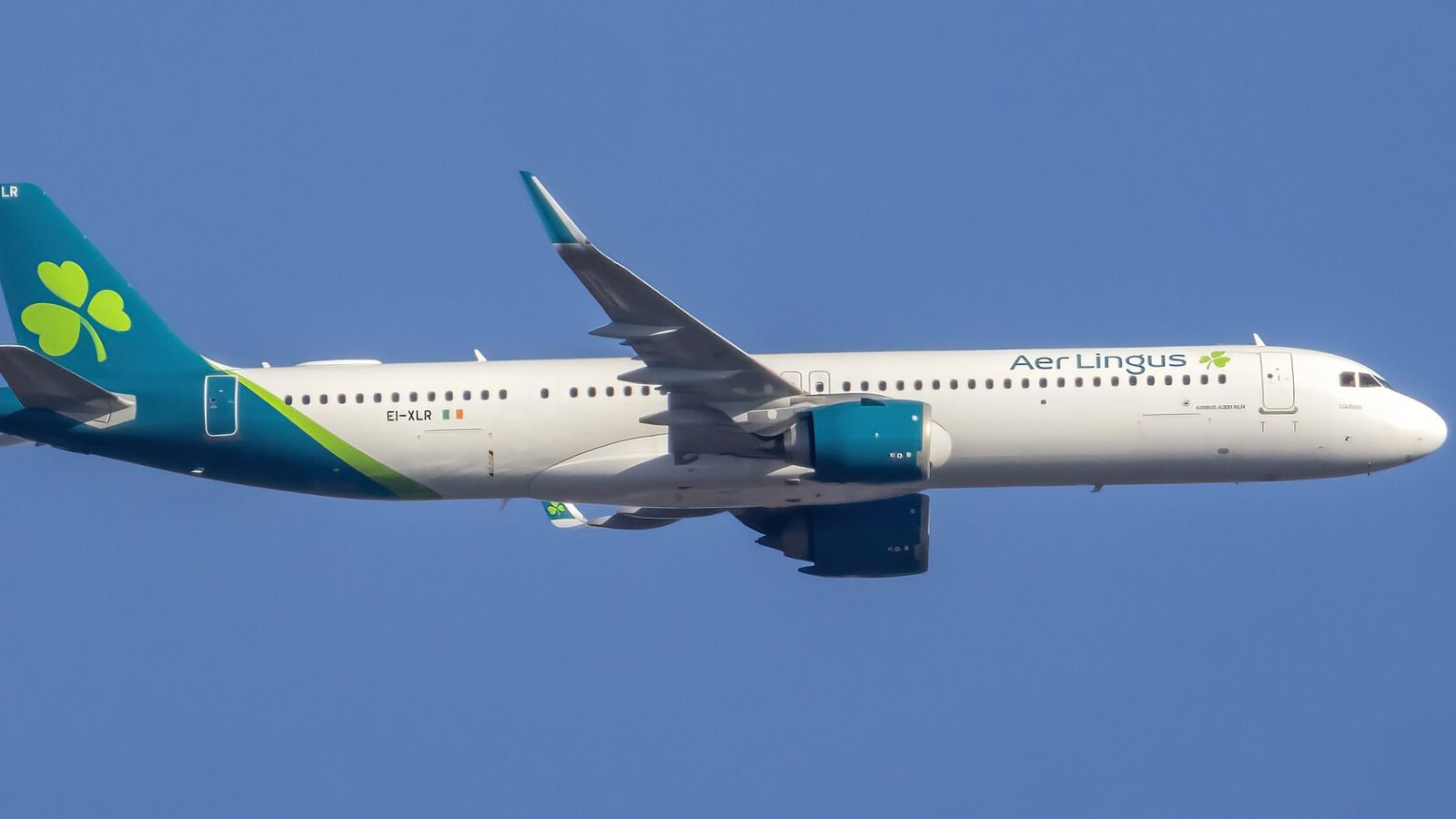
While Air Canada and American are adding A321XLR thin routes, Aer Lingus is simultaneously withdrawing from several secondary markets it opened with widebodies. TravelMole reports that Aer Lingus will end nonstop Dublin to Denver flights with a final service on 29 September 2026, end Dublin to Minneapolis-St. Paul service on 25 October 2026, and end Dublin to Las Vegas flights on 3 December 2026.
Those are not A321XLR routes; Aer Lingus served them with widebody equipment. Their closure does not say anything about the A321XLR's economics directly. What it does confirm is that secondary transatlantic markets carry real demand risk. An aircraft that is cheaper to operate on a thin route still needs enough paying passengers to cover its costs across all 12 months, not just July and August.
We examined this structural challenge in our earlier analysis of why the long-haul low-cost model is shrinking on the Atlantic, and the same logic applies here: lower seat costs reduce the break-even load factor, but they do not eliminate it.
One Domestic Number That Is Easy to Miss
Amid the transatlantic headlines, AeroRoutes reports that Air Canada will operate Montreal to Halifax four times weekly from 18 December 2026 on flights AC670 and AC665, using an A321XLR. That is a domestic route in a country with established short-haul competition. It suggests Air Canada sees the aircraft as flexible enough to fill with domestic flying during periods when transatlantic deployment makes less sense. That flexibility is commercially useful, but it also signals that year-round transatlantic commitments are not yet being made on every market the aircraft has entered.
The Bottom Line on A321XLR Thin Routes
The filed schedules confirm that A321XLR thin routes are real and growing. American, Air Canada and others are committing to cities that widebody economics would not normally support, and the aircraft is doing what its designers said it would. What the same schedules also show, clearly and without any need for inference, is that most of these routes are seasonal. Summer operations dominate; winter filings are sparse or absent.
That is not necessarily a failure. Many transatlantic routes have always been seasonal, and a thin market served in summer is better than no service at all. As we noted in our look at twenty-nine new Atlantic routes for 2027, the question for thin markets is always whether summer revenue is enough to justify the slot and the crew base. The A321XLR lowers that bar. Whether it lowers it enough to sustain year-round operations on genuinely secondary city pairs is the question the 2026/27 winter schedules will begin to answer.
This article draws on reporting by AeroRoutes, Aviation Week, TravelMole and Aerospace Global News.
Continue to follow The Aviation Hub for more analysis and insight.
Advertise with us Your brand, in front of an aviation audience Home page and in-article placements, sold directly, one advertiser per slot. From £250 a year. See the rates