An American lawyer is suing Aer Lingus over an armed security response at a Dublin Airport gate. The Aer Lingus lawsuit will turn on a 1999 treaty, and on whether a court treats what happened as an accident, during boarding, that caused a bodily injury.
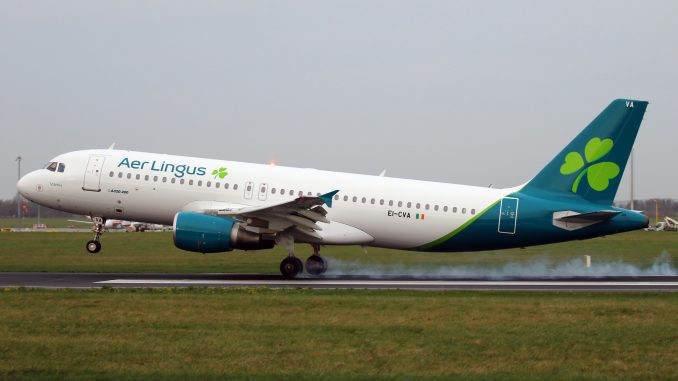
A Kansas lawyer, William Pierce Honnold, is suing Aer Lingus for $5m (€4.5m) over his treatment during a security alert at Dublin Airport, The Irish Times reported on Monday. The Irish Independent first reported the case.
Searches for the lawsuit jumped by 1,000% in Ireland within hours, according to Google Trends, with related searches for “us lawyer sues aer lingus” and “dublin airport”.
The claims are allegations in court documents and have not been tested. Aer Lingus said it was “unable to comment”, and daa, which runs Dublin Airport, did not wish to comment.
What Happened at the Gate
The incident took place on 20 September 2025. Dublin Airport’s Terminal 2 was evacuated as a precaution after what gardaí called “a report of an item of airline luggage of concern”. The Army’s bomb disposal team was called, and the luggage was later declared safe.
According to the court documents, Honnold was connecting from London to a Dublin to New York flight. Aer Lingus staff scanned his boarding pass, kept his passport and ID, and told him to wait. The aircraft then left without him.
The documents say about 15 armed security and police personnel then surrounded him at the gate, with weapons pointed at him. He was escorted across a passenger loading bridge to the airfield and put in a vehicle with gardaí and an airport police officer.
He reports episodes of lost consciousness, neck pain and other physical symptoms, as well as post traumatic stress disorder. The documents argue that what Aer Lingus staff did and said during boarding “initiated or materially contributed to the ensuing airport security intervention.”
The Treaty That Decides It
Whatever the facts, this case will not be decided by ordinary personal injury law. International air travel is governed by the Montreal Convention of 1999.
Article 29 makes the convention the exclusive route for such claims. Any action for damages, “however founded”, can only be brought subject to its conditions and limits, and punitive damages are not recoverable.
Article 17 sets out when an airline is liable for injury. It must be caused by an accident, the injury must be a bodily injury, and the accident must happen on board or “in the course of any of the operations of embarking or disembarking”. Each of those three tests could be contested here.
Was He Embarking?
The first question is where boarding begins. US courts often use the test from Day v Trans World Airlines, which looks at what the passenger was doing, who was in control and where it happened.
Ireland has its own authority. In Galvin v Aer Rianta, an Irish court said embarkation requires the accident to relate to a specific flight and to happen while the passenger was entering or about to enter the aircraft, or at a place they were obliged to be as part of boarding.
A scanned boarding pass at the gate for a specific flight points towards embarkation. But the passenger was held back, the aircraft departed, and the security operation was run by police and the army. A court will have to decide whether boarding had begun, or had already ended.
Was It an Accident?
The second test comes from the US Supreme Court. In Air France v Saks, it defined an accident as “an unexpected or unusual event or happening that is external to the passenger.”
Being surrounded by armed officers at a boarding gate is plainly unusual. The harder question is causation. The claim argues that Aer Lingus staff set the security response in motion. A defence would be likely to point out that the alert concerned luggage and that the response was carried out by the state, not the airline.
Does the Injury Count?
The third test may matter most, and the answer depends on where the case is heard.
In the US, the Supreme Court held in Eastern Airlines v Floyd that the convention “does not allow recovery for purely mental injuries”. According to Bird & Bird, later US cases following Floyd denied recovery for post traumatic stress disorder even where it produced physical symptoms.
The UK took a similar line in King v Bristow Helicopters in 2002, holding that a psychiatric condition alone was not a bodily injury, although a demonstrable physical symptom could be.
Europe has moved further. In BT v Laudamotion in October 2022, the Court of Justice of the European Union held that psychological injury can be compensated without a bodily injury. The passenger must show an adverse effect on psychological integrity serious enough to affect their general health and needing medical treatment, according to Clyde & Co.
That split gives the case its real interest. Ireland follows the European court, but The Irish Times describes the claim as being brought through US court documents. The convention allows injury claims in the country where the passenger lives, provided the airline serves it, and Aer Lingus flies to the United States.
The Money Question
Even a successful claim does not guarantee €4.5m. Since 28 December 2024, airlines have been strictly liable for proven injury damages up to 151,880 Special Drawing Rights per passenger, an IMF basket currency.
Above that level, the convention lets an airline avoid paying if it proves the damage was not caused by its own negligence, or was caused solely by a third party. In a case where the armed response came from gardaí and the army, that defence could become central.
Timing is not a problem for the claimant. The convention gives passengers two years to bring a claim, and the incident took place in September 2025.
Why Airlines Will Watch
Security alerts at airports are routine, and most end with nothing found. This case asks what happens when an airline’s handling of a passenger at the gate is said to have triggered an armed response.
If the claimant shows that staff actions started the chain of events, airlines may need to look at how gate agents escalate concerns and how they record what they tell security. If the court finds the response was the state’s alone, the case will reinforce the limits of airline liability under the convention. None of this is legal advice, and the facts are yet to be tested.
The Bottom Line
The Aer Lingus lawsuit is not really about one passenger at one gate. It is a test of a treaty written to give airlines predictable liability in an age when security interventions at airports are common.
The three questions are whether boarding had begun, whether the episode was an accident and whether the injuries count. Each could go either way, and the answer to the last may depend more on which side of the Atlantic the case is heard than on what happened in Terminal 2.
Continue to follow The Aviation Hub for more analysis and insight.
Advertise with us Your brand, in front of an aviation audience Home page and in-article placements, sold directly, one advertiser per slot. From £250 a year. See the rates