New union contracts have pushed cabin crew pay sharply higher at some US airlines, including pay for boarding time for the first time. Here is what the average flight attendant salary is in the US, how pay works and what it takes to get the job.
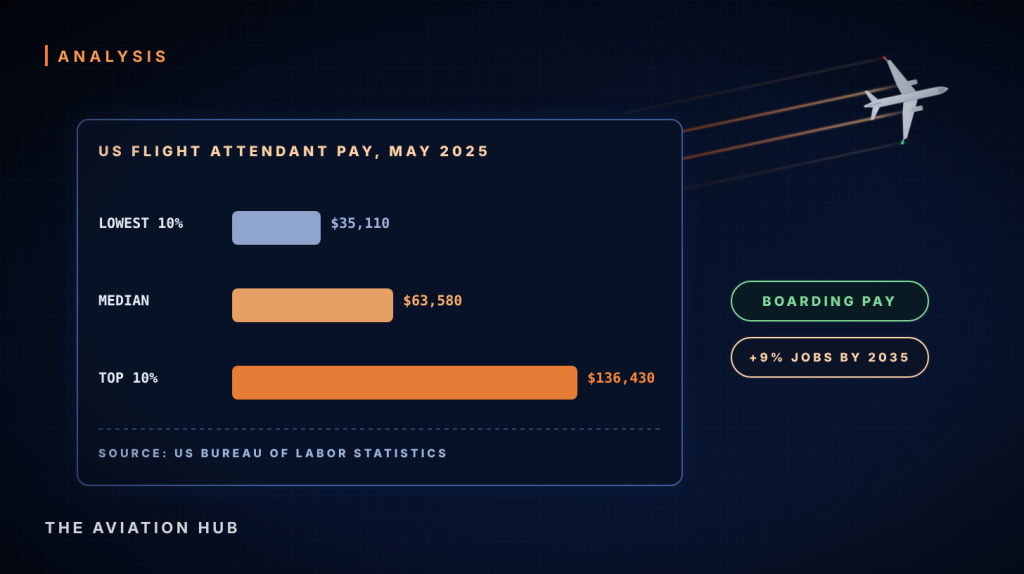
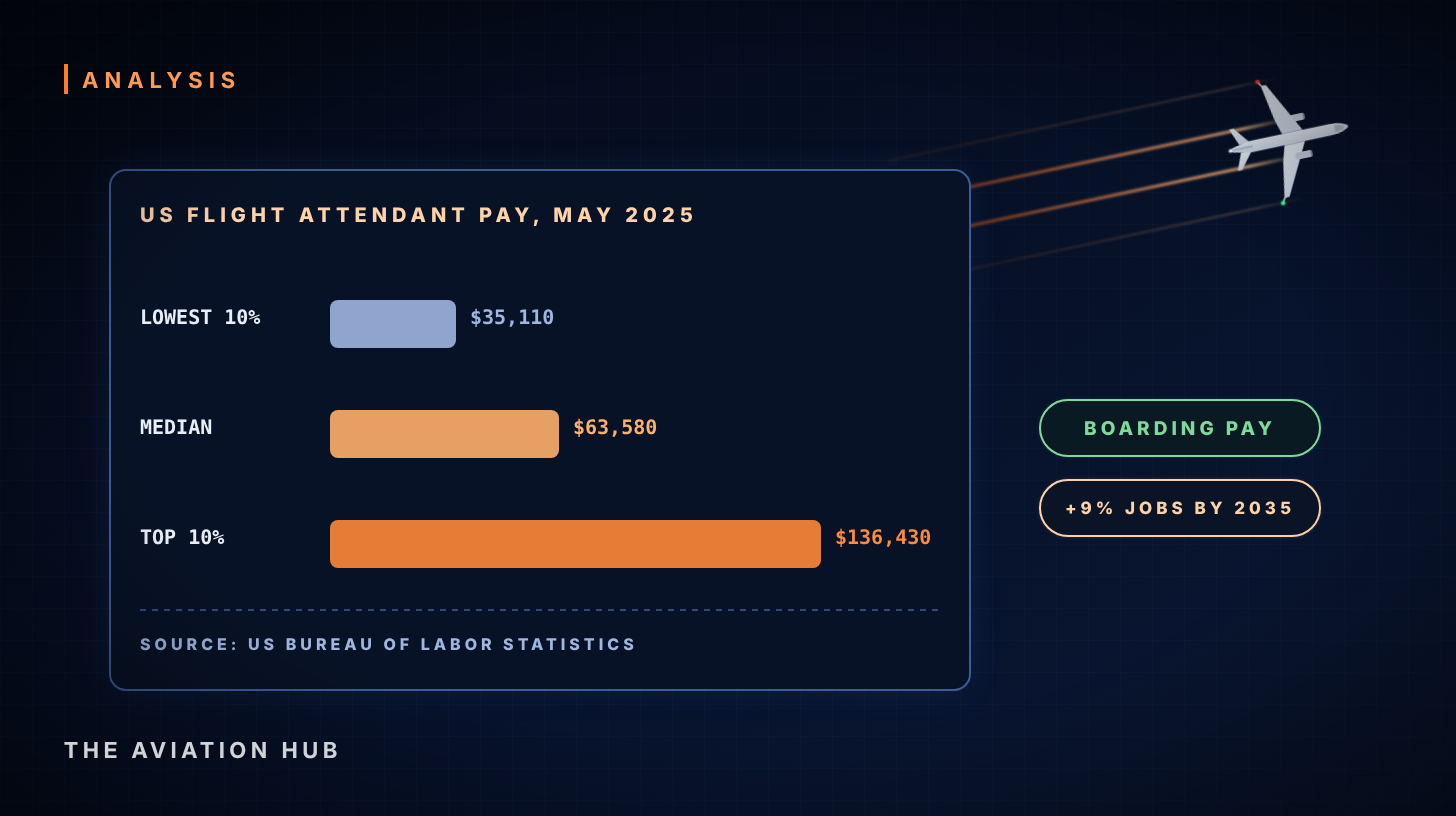
The typical flight attendant salary in the US was $63,580 a year in May 2025, according to the Bureau of Labor Statistics. The lowest paid 10% earned less than $35,110, while the highest paid 10% earned more than $136,430.
That wide range reflects how pay works in the industry, where seniority and the airline you work for make an enormous difference.
How Flight Attendants Are Paid
Most flight attendants are paid by the hour, but only for flight time, typically from when the aircraft door closes to when it opens again. Time spent on the ground between flights has traditionally gone unpaid.
New recruits usually start on reserve, meaning they are on call and fill in for absent colleagues, BLS says. As they gain seniority, they can bid for better routes, schedules and pay.
The Boarding Pay Breakthrough
The biggest change in recent years is boarding pay. In May 2026, United Airlines flight attendants ratified a five year contract with an average 31% pay increase and boarding pay worth an additional 7% to 8% in compensation on average, according to CBS News.
The deal covers nearly 30,000 flight attendants and included $741 million in retroactive pay. The union said the contract “now leads the industry in total value for Flight Attendants.”
Delta introduced boarding pay in 2022, and flight attendants at American and Alaska won it in new contracts in 2024. It is fast becoming a standard demand in negotiations.
What It Takes to Get the Job
Flight attendants typically need a high school diploma, and some airlines prefer applicants with college study or a degree. Most have one or two years of experience in a customer service role.
Applicants usually must be at least 18 years old, be eligible to work in the US, hold a valid passport and pass a background check and drug test, BLS says. After being hired, they complete several weeks or months of airline training and must pass an exam to receive FAA certification.
The Job Outlook
Demand for cabin crew is strong. BLS expects employment to grow by 9% between 2025 and 2035, much faster than the average for all occupations, with about 18,500 openings each year.
There were about 133,700 flight attendant jobs in 2025, projected to rise to 145,500 by 2035.
The Downsides
The job is demanding. Schedules include nights, weekends and holidays, and duty days can be long, especially on international routes. Flight attendants may spend several nights a week away from home.
Cabin crew are also the people most at risk of injury from severe turbulence, as they spend much of each flight on their feet.
The Bottom Line
The typical flight attendant salary in the US is $63,580, but pay ranges from under $36,000 for new starters to more than $136,000 for senior crew at major airlines.
New contracts that include boarding pay are lifting earnings, and strong demand means more jobs ahead. For those willing to work unsociable hours, it remains a well paid route into aviation.
Continue to follow The Aviation Hub for more analysis and insight.
Advertise with us Your brand, in front of an aviation audience Home page and in-article placements, sold directly, one advertiser per slot. From £250 a year. See the rates