Long haul trips over Christmas mean many hours in a cramped seat, and that brings a small but real risk of blood clots. Here is what the NHS says about DVT on flights, who is most at risk and the simple steps that help.
DVT on flights is a small risk, but it is one worth understanding. Deep vein thrombosis is a blood clot in a vein, usually in the leg, and the NHS lists long journeys of more than four hours by plane, car or train among its risk factors, according to its DVT guidance.
The risk comes from sitting still for long periods, which slows the flow of blood in your legs.
Who Is Most at Risk
Most healthy travellers are unlikely to develop a clot. The risk is higher for people who are over 60, overweight, smoke or have had a DVT before, the NHS says.
Other risk factors include pregnancy or having had a baby in the last six weeks, recent surgery or a hospital stay, some hormone treatments such as HRT and the combined pill, cancer, heart failure and varicose veins. Dehydration also raises the risk.
How to Reduce the Risk on a Flight
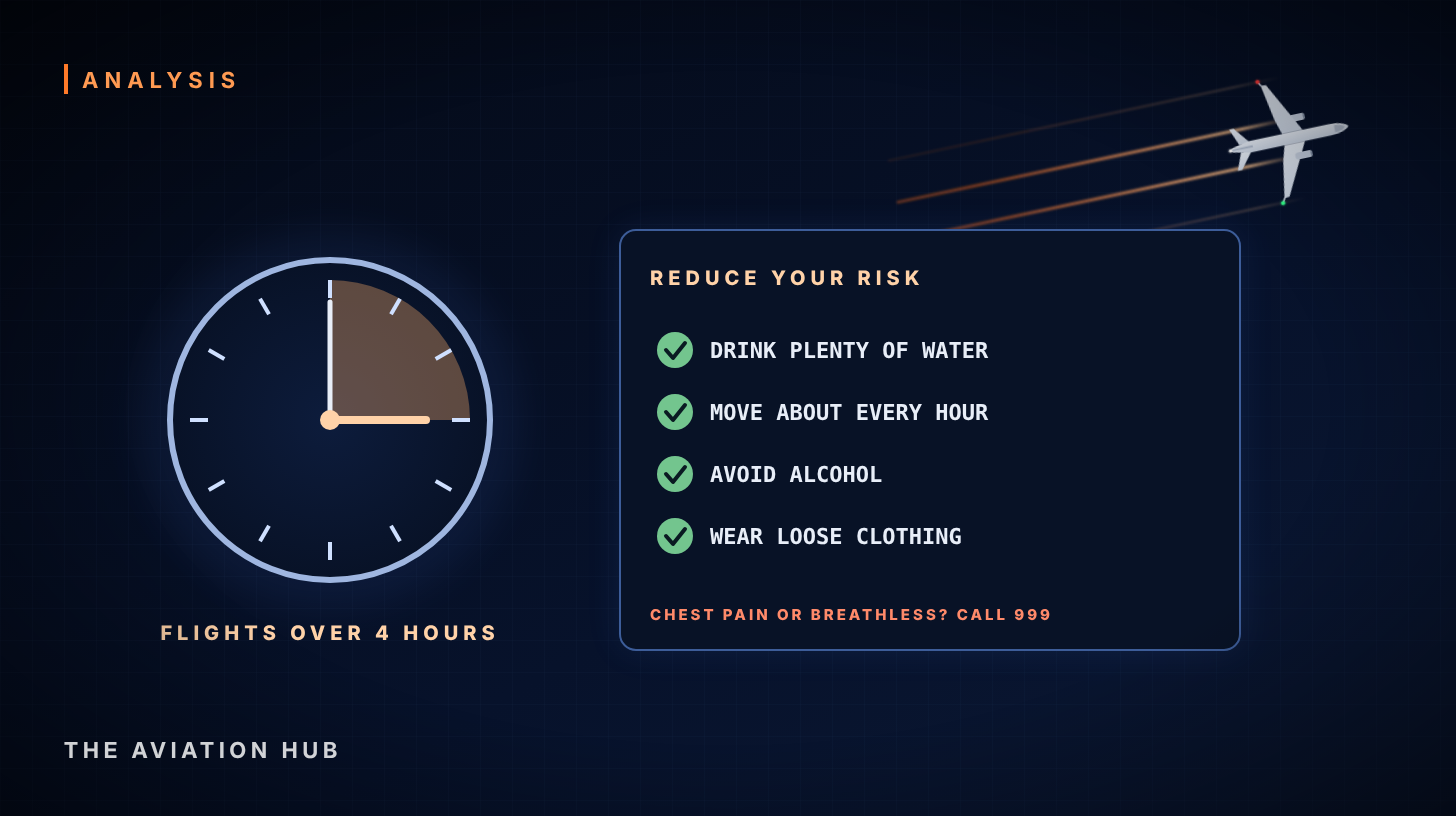
The NHS advises wearing loose clothing and drinking plenty of water. Avoid alcohol, which can leave you dehydrated.
Get up and move about roughly every hour where you can, and walk around the cabin when the seatbelt sign is off. An aisle seat makes this easier.
Exercises in Your Seat
When you cannot get up, keep your legs moving. Simple movements such as flexing your ankles and rotating your feet every so often can help keep the blood flowing.
Avoid sitting with your legs crossed for long periods, and do not store bags under the seat in front if they stop you stretching your legs.
Compression Stockings
Compression stockings can help some people. The NHS says graduated compression or support stockings from a pharmacy can reduce leg swelling for pregnant travellers on long flights, in its pregnancy travel advice.
If you have other risk factors, speak to your GP or pharmacist before a long flight about whether stockings or other measures are right for you.
Symptoms to Watch For
DVT symptoms usually affect one leg. They include throbbing pain in the calf or thigh, swelling, red or darkened skin around the painful area and swollen veins.
Symptoms may not appear until after you land. If you think you have DVT, the NHS advises getting an urgent GP appointment or contacting NHS 111.
When It Is an Emergency
A clot can travel to the lungs, causing a pulmonary embolism. Call 999 or go to A&E if you have DVT symptoms along with shortness of breath or chest pain, the NHS says, as it can be life threatening and needs treatment straight away.
If you are abroad, seek emergency medical help locally and contact your travel insurer.
The Bottom Line
DVT on flights is uncommon, but anyone flying for more than four hours should take simple precautions. Drink water, avoid alcohol, move around regularly and keep your legs active in your seat.
If you have extra risk factors, talk to your GP before you fly, and know the warning signs so you can act quickly if needed.
Continue to follow The Aviation Hub for more analysis and insight.
Advertise with us Your brand, in front of an aviation audience Home page and in-article placements, sold directly, one advertiser per slot. From £250 a year. See the rates