Singapore Airlines carried more passengers than ever in the first half of its financial year, but soaring jet fuel prices cut its profit almost in half. Here is what the latest results mean for Singapore Airlines shares and what investors should watch next.
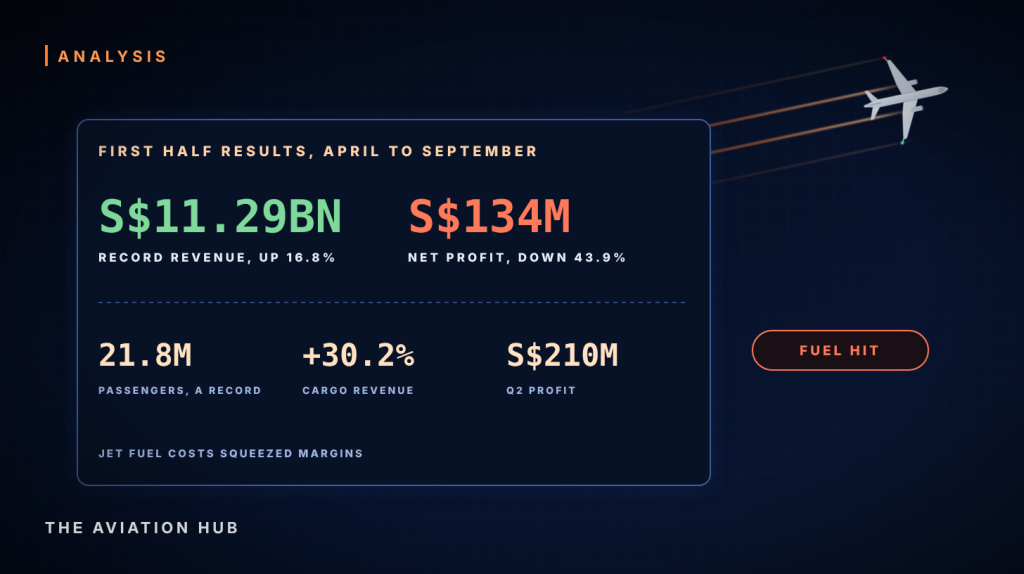
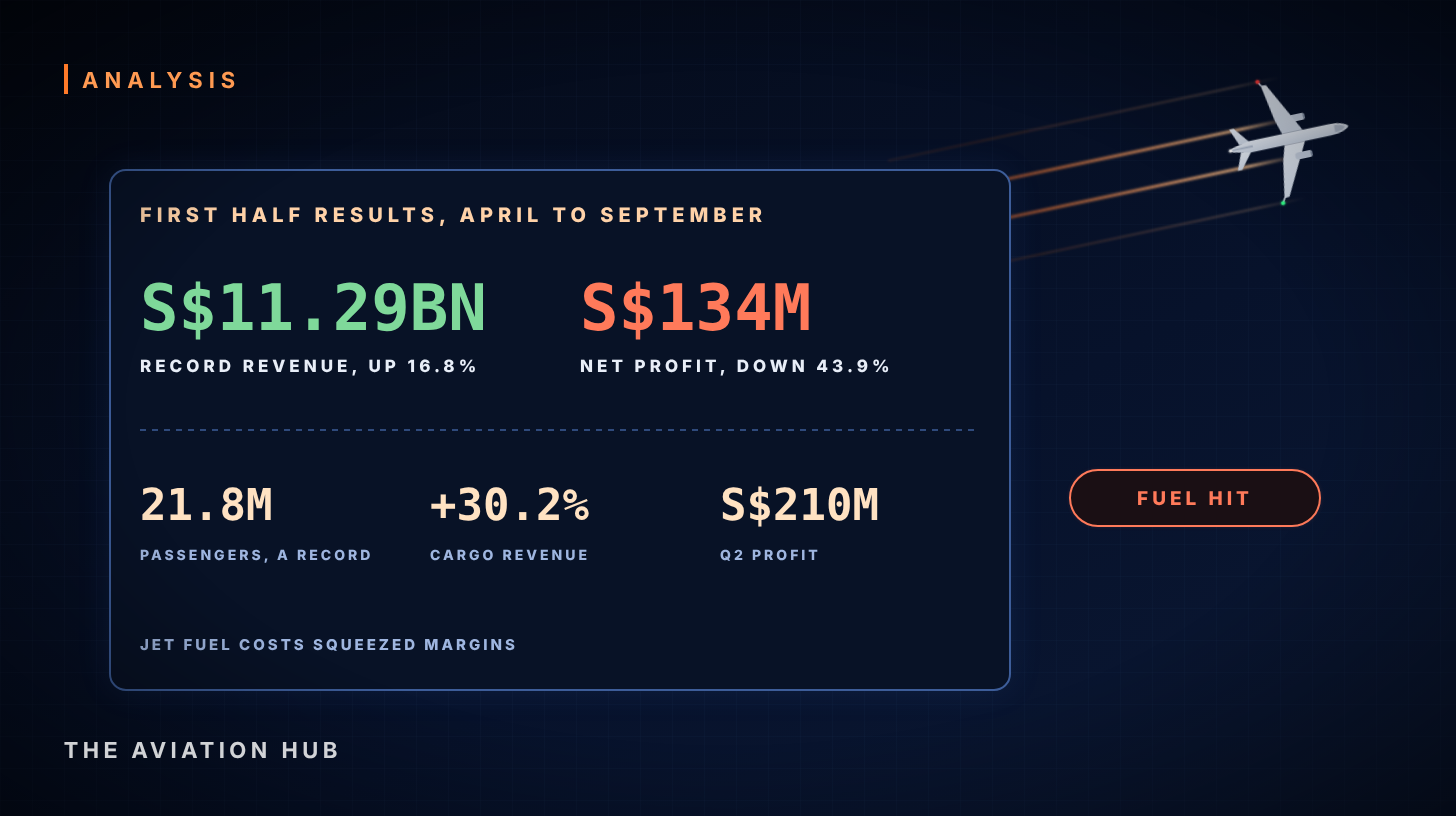
Singapore Airlines shares are in focus after the group reported a 43.9% fall in first half net profit, to S$134 million, for the six months to September, Malay Mail reports. A year earlier, it made S$239 million.
The fall came despite record revenue. The airline blamed high jet fuel prices linked to the conflict in West Asia.
Record Revenue and Passengers
Group revenue rose 16.8% to S$11.29 billion, a record for the period. Singapore Airlines and its low cost arm Scoot carried 21.8 million passengers between them, a half year record and 5% more than a year earlier.
Passenger capacity grew 4.9%, which the group said showed its ability to respond with agility and capture opportunities in an uncertain environment.
Cargo Was a Bright Spot
Cargo revenue jumped 30.2% to S$1.39 billion, helped by a 25.4% rise in yields. The cargo load factor rose two percentage points to 58.5%.
Strong demand for air freight across Asia has helped several carriers offset some of the pain from higher fuel bills this year.
A Stronger Second Quarter
The quarterly figures tell a more encouraging story. Net profit for the three months to September rose to S$210 million, up from S$52 million in the same quarter last year, as revenue climbed to S$5.58 billion.
That suggests the group was absorbing higher costs more effectively as the half went on.
The Air India Factor
Singapore Airlines owns a stake in Air India, and its share of Air India’s losses has weighed on results. In this half, those associate losses were lower than a year earlier, which helped offset part of the fall in operating profit, Malay Mail reports.
Middle East Disruption
The conflict continues to affect the network. Scoot’s flights to Jeddah and Singapore Airlines’ flights to Dubai remain suspended, and the launch of a planned Riyadh service has been deferred to March 2027.
The group says it is well positioned to navigate uncertainty and will adjust schedules as needed.
What Investors Should Watch
Fuel is the biggest swing factor. If jet fuel prices ease, the strong revenue and record passenger numbers could flow through to profit more quickly. If they stay high, margins will remain under pressure.
Investors should also watch the recovery at Air India, the reopening of Middle East routes and whether cargo demand holds up into 2027.
The Bottom Line
Singapore Airlines shares reflect a business that is growing strongly but being squeezed by fuel costs. Revenue and passenger numbers are at record highs, while first half profit fell by almost half.
The improving second quarter offers some encouragement, but the outlook depends heavily on fuel prices and events in the Middle East.
This article is for information only and is not investment advice.
Continue to follow The Aviation Hub for more analysis and insight.
Advertise with us Your brand, in front of an aviation audience Home page and in-article placements, sold directly, one advertiser per slot. From £250 a year. See the rates