
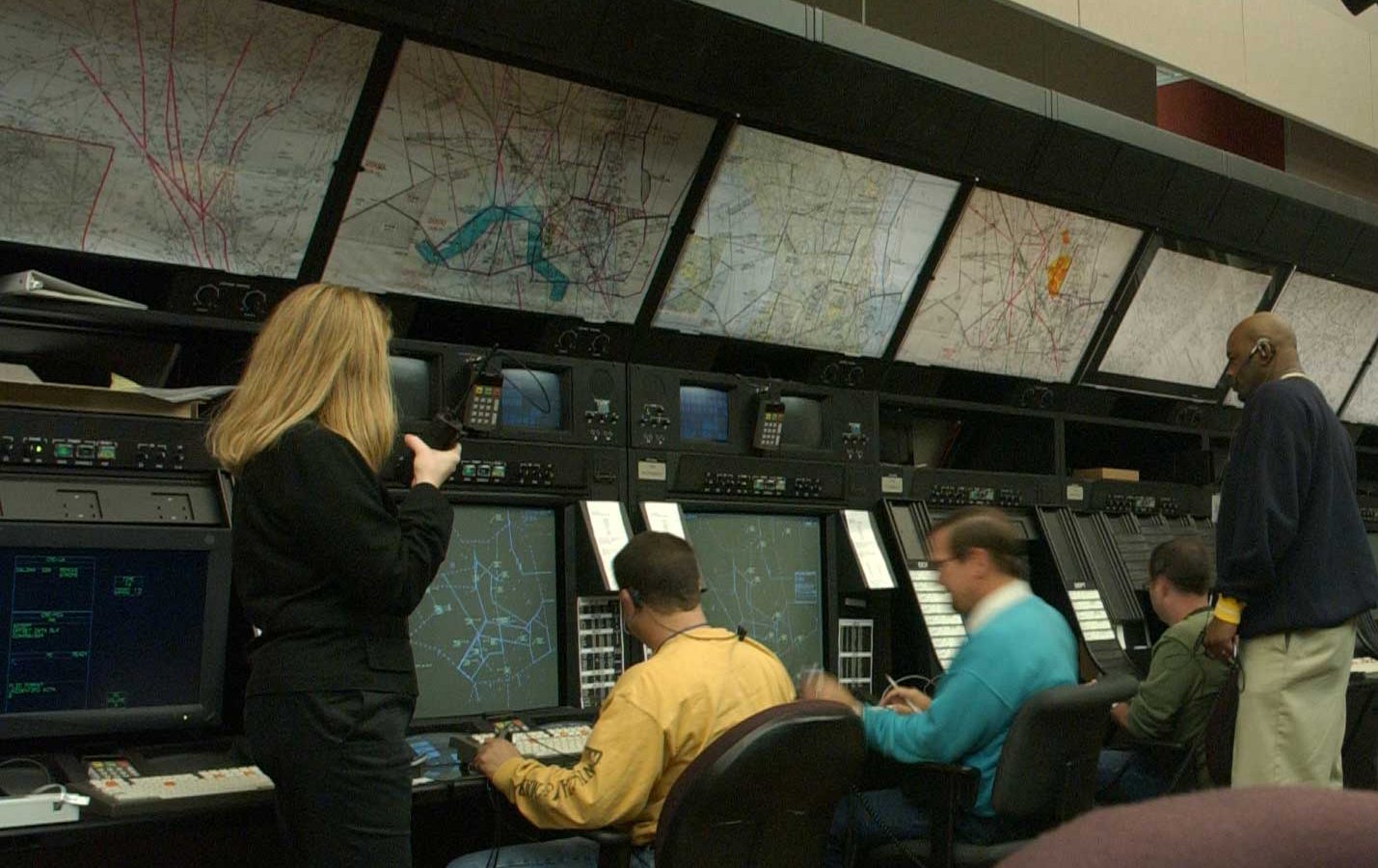
The single most striking figure in the Government Accountability Office's September 2026 audit of the FAA ATC overhaul is not the headline price. It is this: the GAO found that over 75 per cent of the FAA's 138 air traffic control systems were rated unsustainable or potentially unsustainable as of September 2024. The system managing up to 45,000 flights a day in US airspace was, by the regulator's own reckoning, already beyond its limits before a single dollar of the new programme had been spent.

That programme is the Brand New ATC System, known as BNATCS. Congress appropriated $12.5 billion for it in July 2025, two months after the Secretary of Transportation announced it. Phase 2 carries an additional cost estimate of approximately $10.2 billion, according to the FAA, meaning the total commitment could exceed $22 billion before facilities costs are added to Phase 2.
What the FAA ATC Overhaul Is Actually Doing
BNATCS is not a software refresh. The FAA describes it as the modernisation of approximately 12,000 individual projects spanning more than 4,600 sites across the country. Communications, surveillance, weather and training systems are among the elements addressed in Phase 1, which carries a target completion date of December 2028. Phase 2 will introduce new automation systems to handle aircraft tracking and traffic flow optimisation, though the FAA has yet to establish an estimated start or completion date for that phase.
The scale is not in doubt. Radios and control equipment are being replaced at 1,581 ATC facilities. The copper-to-fibre transition is well underway: as of May 2026, the FAA had replaced 2,560 of 5,170 copper wire connections with fibre optic cables, and by August 2026 more than 3,320 circuits had been converted, representing 64 per cent completion of the copper-to-IP transition, scheduled to finish in 2027. Voice switch installations stood at 179 against a baseline target of 130, and nearly 400 radio sites had been upgraded against a baseline of 304. On several measures, the programme is running ahead of its own targets.
Rebecca Guy, the FAA's Chief Technology Officer, told the National Business Aviation Association (NBAA): "So far, we are on schedule and, in several areas, ahead of schedule. We have accomplished quite a bit this year."
NBAA Senior Vice President Kristie Greco Johnson has described the need plainly: "BNATCS is needed to replace aging telecommunications, radar and other infrastructure, address persistent controller staffing challenges and prevent outages that threaten the safety, reliability and efficiency of the National Airspace System."
FAA is also nearly halfway through its Surface Awareness Initiative to install 220 surveillance tools at airports that lack ASDE-X surface detection equipment. The agency plans to modernise voice radio systems nine years earlier than originally planned, a point the FAA has used to argue that this modernisation differs in pace from anything attempted before.
What the GAO Found Missing
Those early delivery figures, however, sit alongside planning gaps the GAO regards as substantial. Central among the audit's findings is that 11,389 individual project schedules remain unconnected to any master schedule. That absence of integration makes it impossible to trace how a delay in one project ripples through the rest, or to understand how work sharing the same site is being sequenced. The GAO highlighted in particular that individual projects are being scheduled for the same sites without optimising to reduce impacts on controller operations.
On cost, the picture is similarly incomplete. In June 2026, the FAA provided high-level Phase 1 cost estimates but could not supply the supporting analysis behind them. The Phase 1 estimate itself excludes government costs, most operations costs and all Phase 2 costs. No comprehensive lifecycle cost estimate for BNATCS exists, the GAO confirmed.
These are not minor administrative shortcomings. A programme of this complexity, running across more than 4,600 sites, needs cost and schedule integration to catch problems before they compound.
The NextGen Comparison the GAO Invites
A direct historical parallel exists against which the GAO's BNATCS audit can be measured. An earlier GAO examination of 30 major ATC acquisition programmes found that costs rose by a combined $4.2 billion across 11 of them, while 15 encountered delays. Those 11 programmes alone represented more than 60 per cent of the FAA's total acquisition spending at the time, amounting to $11 billion of a $17.7 billion portfolio. Across all 30 programmes, schedule delays ranged from two months to more than 14 years, with an average of 48 months.
That four-year average slippage is the number that most directly tests the question of whether BNATCS is genuinely different. The ambition clearly is. Secretary of Transportation Sean Duffy said at the programme's launch: "We're taking bold action to build a brand-new, state-of-the-art air traffic control system that benefits everyone, airline passengers, business aviation, general aviation pilots and the hard-working controllers who keep our skies safe."
The early delivery numbers suggest that ambition is being translated into action on the ground. But the structural conditions that produced those historical overruns, fragmented scheduling, incomplete cost accounting and poor sequencing, are features the GAO has found in BNATCS too. The absence of a master schedule and a lifecycle cost estimate means there is currently no programme-wide mechanism to detect whether the same pattern is beginning to repeat.
What This Means for Passengers and the Industry
For passengers, the status quo is the immediate risk. The FAA's own assessment that more than three-quarters of its ATC systems were unsustainable as recently as September 2024 explains the pressure behind BNATCS. The fatal mid-air collision near Reagan Washington National Airport in January 2025, which the NBAA cited in its own coverage, occurred against that backdrop. Modernisation is not optional.
For airlines and business aviation operators, the planning gaps matter most in the medium term. Without a master schedule, the industry cannot see how 12,000 projects across 4,600 sites will interact, or when the operational benefits of Phase 2's new automation systems will arrive. Phase 2 has a price of $10.2 billion and no dates attached to it at all.
Our analysis of how airlines and operators adapt to systemic infrastructure changes has run across several pieces, including our look at how loyalty programmes evolved as airlines adapted their commercial models. Infrastructure modernisation tends to reshape the industry around it, and BNATCS, if it delivers, would be the most significant reshaping of US airspace management in a generation. For now, the GAO's audit says the foundations of that delivery still need work.
Readers tracking US aviation policy and airspace news can use our Airline Search to follow how carriers are responding to the modernisation programme.
The Bottom Line
The early production numbers from BNATCS are real and they are ahead of target. That matters. But the GAO has identified the same structural weaknesses that turned previous FAA programmes into cautionary tales: no integrated master schedule, no lifecycle cost estimate and a Phase 2 costing $10.2 billion with no timeline at all. Whether this programme is genuinely different from NextGen will not be settled by the figures from August 2026. It will be settled by whether the FAA addresses those gaps before Phase 1's December 2028 deadline, and before Phase 2 is launched without dates or a full cost basis. The GAO has drawn the line clearly. The FAA now has to show it can cross it.
This article draws on information from U.S. Government Accountability Office and National Business Aviation Association (NBAA).
Continue to follow The Aviation Hub for more analysis and insight.
Advertise with us Your brand, in front of an aviation audience Home page and in-article placements, sold directly, one advertiser per slot. From £250 a year. See the rates