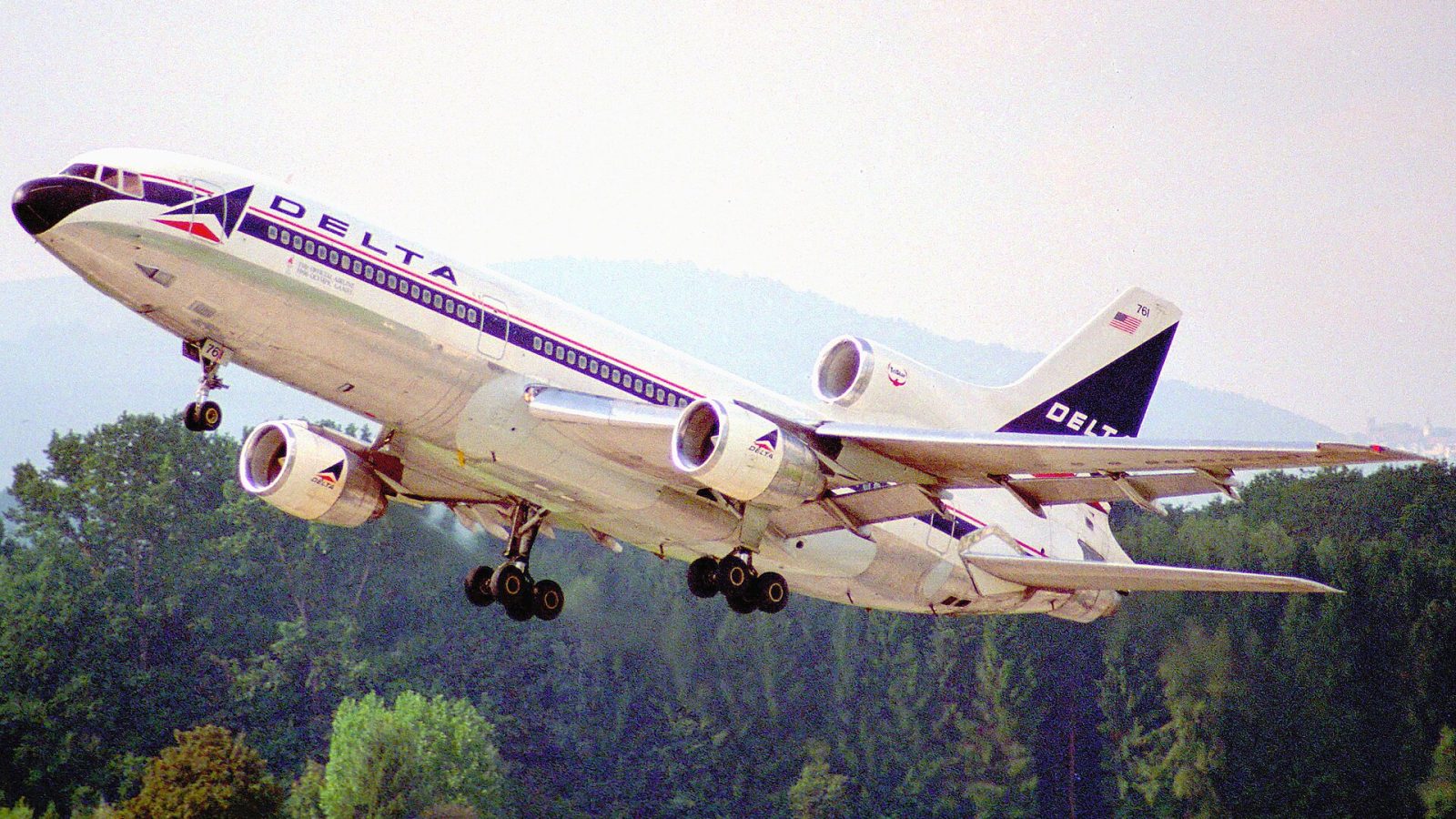
The L-1011 TriStar was, by most technical measures, the finest widebody airliner of its era. It was also, by every financial measure, a catastrophe for the company that built it. Fifty-six years on, the gap between those two verdicts still has things to teach anyone who follows aircraft programmes.
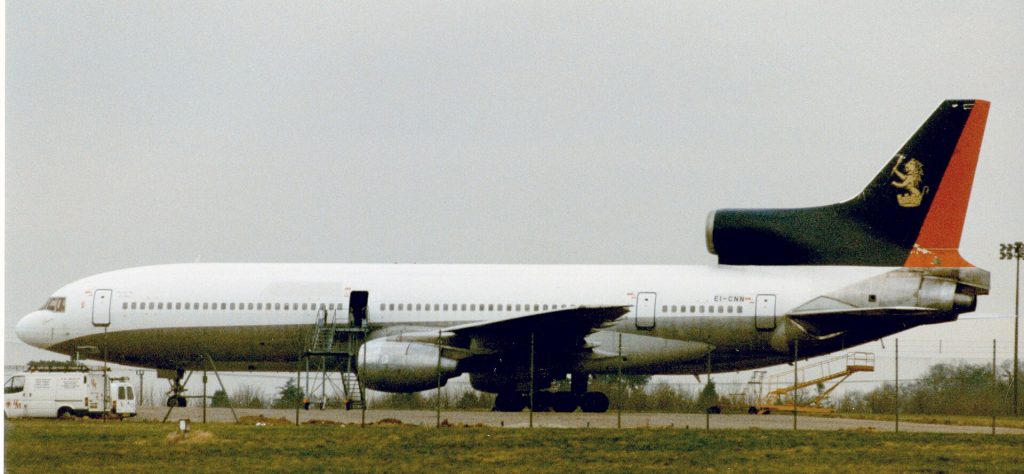
A Long Road Back to Commercial Aviation
Lockheed's last commercial passenger aircraft before the TriStar was the L-188 Electra, a programme that wrapped up in 1961. Re-entering the market roughly ten years later meant staking everything on a single new type, with no recent foothold in commercial aviation and no secondary programme to absorb any losses.
The trigger came from American Airlines, which approached both Lockheed and McDonnell Douglas in the 1960s seeking a widebody capable of carrying around 250 passengers on transcontinental routes. Lockheed's response became the L-1011. The name itself came from an internal employee naming contest.
The design began as a twin-engine aircraft, but rules at the time restricted twin-engine airliners to routes no more than 60 minutes from a diversion airport, so the configuration was changed to three engines. That decision shaped everything that followed.
What the L-1011 TriStar Could Actually Do
The way the two aircraft handle their centre engines tells you a great deal about each design philosophy. On the DC-10, the engine is mounted externally, integrated into the vertical tail structure above the fuselage. Lockheed's solution was to tuck the engine inside the rear fuselage entirely, drawing air down through an S-duct from an intake on the fuselage crown. The result is both mechanically tidier and aerodynamically superior, and it speaks to the engineering ambition woven through the whole design.
According to Aviation Week, the L-1011 earned the distinction of being the first widebody to gain Category 3B autoland certification, and the first large commercial airliner able to complete a fully automated flight from takeoff through to touchdown. These are not minor footnotes: Category 3B authorisation covers approaches in visibility conditions so extreme that many airports lack the infrastructure to support them at all. Modern Airliners reports that during a promotional tour in 1972, a TriStar flew entirely on autopilot from Palmdale to Dulles, covering the route in four hours and thirteen minutes.
Among the aircraft's other advances were direct lift control, a below-deck galley, and an early fly-by-wire primary flight control system, all of which put it meaningfully ahead of rival designs of the era. Modern Airliners notes that Eastern Air Lines marketed their TriStars as "Whisperliners," a reflection of how quiet the cabin was. Wikipedia records that the aircraft could seat around 400 passengers and fly more than 4,000 nautical miles. Two fuselage lengths reached production: the L-1011-500, a shorter, longer-range derivative, and the baseline L-1011-1 from which it was developed.
Modern Airliners reports that FAA certification came through on 14 April 1972. The first aircraft handed to Eastern Air Lines on 26 April 1972 marked the TriStar's entry into commercial service, where it became the third widebody type to operate revenue flights, following the Boeing 747 and the McDonnell Douglas DC-10 into service.
The Engine Bet That Broke the Programme
Every L-1011 ever built flew on Rolls-Royce RB211 engines. There were no alternatives, no fallback powerplant, no provision in the design for a competitor's engine. That exclusivity was the TriStar's undoing.
According to Wikipedia, the RB211 was originally designed around a carbon fibre fan and a three-spool configuration. The carbon fibre fan proved impossible to manufacture reliably at the time, forcing a costly redesign. The cumulative pressure on Rolls-Royce was severe enough that the company entered bankruptcy and was placed in receivership in early 1971, before a single L-1011 had entered commercial service.
The consequences for Lockheed were immediate. The L-1011's sales campaign was delayed by approximately two years while both governments intervened to keep the programme alive. The British government nationalised Rolls-Royce, and the US government provided loan guarantees for Lockheed. The aircraft survived, but the commercial window had partly closed. American Airlines, waiting for a widebody and unwilling to absorb the uncertainty, chose the DC-10 instead.
That decision mattered enormously. The DC-10 and the L-1011 were competing for the same pool of orders, and every airline that chose Douglas was an airline Lockheed could not win back. The two-year delay, the financial turbulence and the loss of American Airlines together meant the L-1011 entered service already behind.
The Numbers That Could Not Be Fixed
A total of 250 L-1011s were built between 1968 and 1984. The break-even figure required something in the region of 500 aircraft. No amount of technical excellence could bridge that gap. Aviation Week reports that Lockheed sustained 2.5 billion dollars in losses across the programme's life. Lockheed shut down the production line and exited commercial aviation entirely in 1983 and 1984. The company that had produced the Constellation, the Electra and the TriStar has never returned to the airliner business.
The irony is sharp. The aircraft that ended Lockheed's commercial ambitions was, by the account of those who flew and maintained it, the better-engineered machine. Its automated flight systems, its cabin environment and its buried centre-engine installation were all superior in design to what the DC-10 offered. None of that could compensate for two lost years and a sales campaign built on a single supplier that collapsed before the first aircraft reached a passenger.
What It Still Teaches Aircraft Programmes Today
The L-1011's story is not simply about one airline manufacturer's misfortune. It is a precise illustration of what a single-source supply chain can cost when the supplier fails. The lesson applies just as directly to current widebody programmes, where engine development schedules and airframe certification timelines remain tightly coupled and delays in one cascade immediately into the other.
You can search our Aircraft Search to explore the TriStar's variants and the aircraft types that followed it into service.
The Bottom Line
The L-1011 TriStar was, in engineering terms, a genuine achievement: the first airliner to offer fully automated flight end to end, the quietest widebody cabin of its generation, and a centre-engine installation that remains the neatest solution to that problem ever put into production. It was also the aircraft that ended Lockheed's presence in commercial aviation, buried under losses that Aviation Week puts at 2.5 billion dollars, produced at less than half the volume needed to break even.
The single-source engine arrangement was not unique to Lockheed, but the consequences of it failing at exactly the wrong moment were fatal for the programme. That is the fact that makes the TriStar worth studying now, not as a curiosity from early widebody aviation, but as a standing reminder that technical excellence and commercial survival require different things, and that a programme which neglects the second will not long benefit from the first.
This article draws on reporting by Aviation Week, Wikipedia and Modern Airliners.
Continue to follow The Aviation Hub for more analysis and insight.
Advertise with us Your brand, in front of an aviation audience Home page and in-article placements, sold directly, one advertiser per slot. From £250 a year. See the rates