
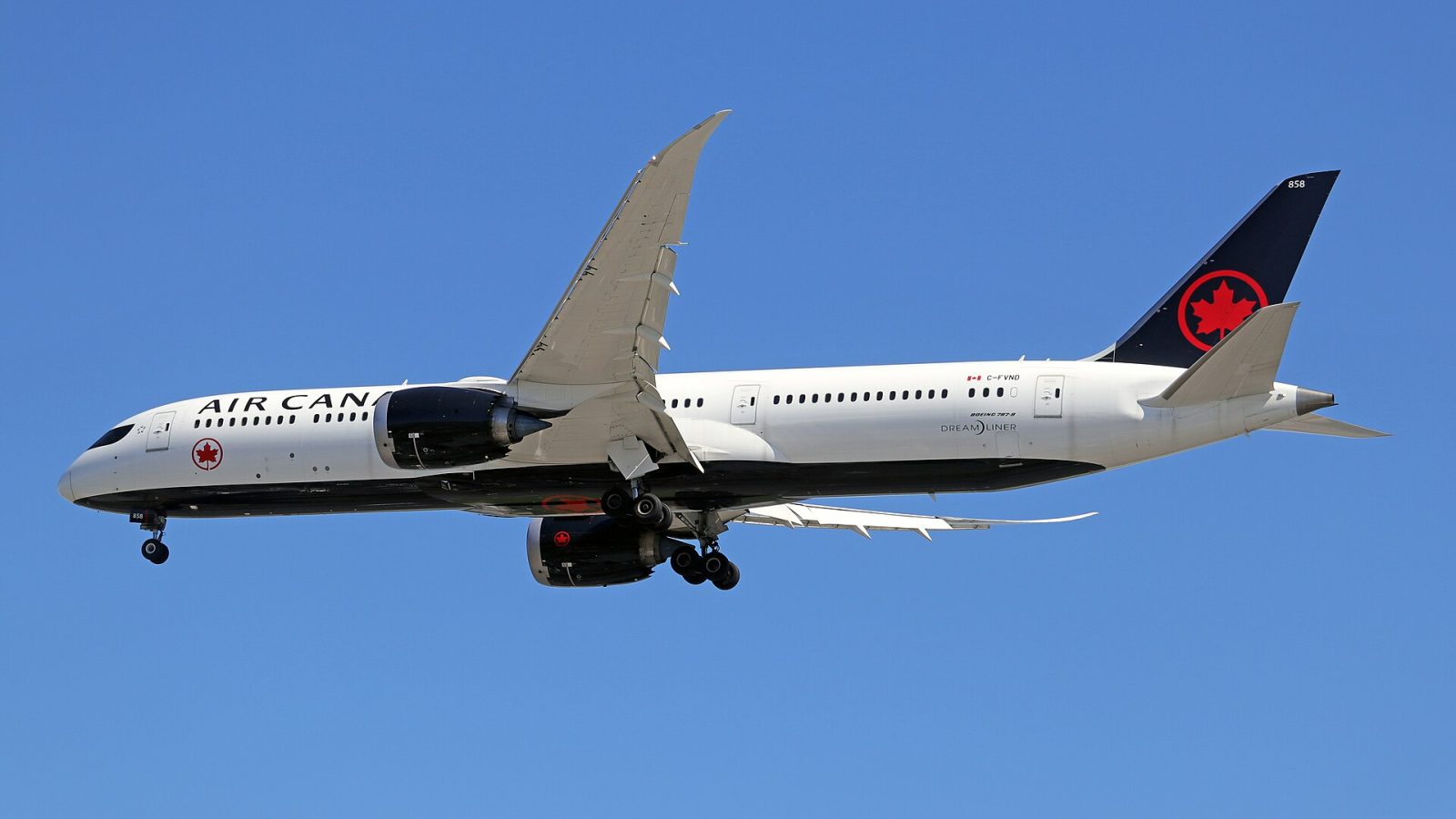
Air Canada has removed five Canada–United States routes from its 2027 schedule while simultaneously announcing three new transborder services. The moves, reported by Aviation A2Z, amount to the most visible reshaping of the airline's transborder network in recent planning cycles.
Why Air Canada's Transborder Rebalancing Matters
Route cuts at a network carrier are rarely straightforward retrenchments. When an airline simultaneously withdraws five services and announces three replacements, the pattern tells a more nuanced story than simple decline. The specific markets being abandoned, and those being entered, reveal where Air Canada believes commercial conditions are improving and where they are not.
For travellers, the practical effect is a loss of nonstop options on certain corridors. Aviation A2Z notes that the Toronto Pearson–Charleston route was Air Canada's only nonstop link between Canada and South Carolina, so its removal leaves that market entirely without a direct Canadian feed.
What the Five Cuts Tell Us
The discontinued services span three Canadian gateways: Montréal (YUL), Vancouver (YVR) and Toronto. The routes affected connect those cities with Seattle (SEA), Nashville (BNA), Raleigh-Durham (RDU), Boston (BOS) via Toronto Billy Bishop (YTZ), and Charleston (CHS).
The Toronto Billy Bishop–Boston service faces the earliest closure. According to Aviation A2Z, that route ends on 1 December 2026, rather than returning for summer 2027, making it the most immediate disruption for passengers.
The remaining four routes had been expected to operate in summer 2027 before being pulled from the schedule. That timing matters: decisions taken this far in advance of a season reflect demand modelling and commercial forecasting, not reactive crisis management.
The Demand Picture Behind the Decisions
The statistical backdrop is sobering. Aviation A2Z reports that Statistics Canada recorded approximately 1.89 million return trips by Canadian residents from the United States in September 2026, which represents a 6.8% increase on September 2025. That sounds encouraging.
But the same data contains a significant caveat. Air travel specifically rose 11.6% year over year yet remained 18.7% below September 2024 levels. The year-on-year recovery, in other words, is real but incomplete. The airline is operating in a market that is growing again from a low base, not one that has returned to its earlier trajectory.
Aviation A2Z links the weakness in Canadian outbound travel to political tensions, trade disputes and tariff measures introduced under US President Donald Trump, which have affected travel sentiment among Canadian consumers. Air Canada has characterised its network reviews as driven by commercial conditions and the alignment of capacity with demand.
Three New Routes: Where Air Canada Does See Opportunity
Against the five cuts, the airline is opening services between Toronto Pearson and Louisville (SDF), Montréal and Indianapolis (IND), and Edmonton (YEG) and Newark (EWR). Aviation A2Z reports that Toronto–Louisville begins on 28 April 2027 and will operate daily during the season, Montréal–Indianapolis runs daily from 1 June through 30 September, and Edmonton–Newark will operate four times weekly from 1 June through 17 October.
These are second-tier US cities rather than major hubs, which suggests Air Canada is targeting markets where competition is thin and yield potential is higher, rather than trying to recover share on heavily contested corridors. The Edmonton–Newark pairing is particularly notable as a link from western Canada to the US east coast that bypasses Toronto entirely.
We reported the full schedule detail in our own coverage of the route changes when they were announced. This piece focuses on what the pattern implies.
What Remains Uncertain
Air Canada has not disclosed load factors, revenue projections or the specific commercial thresholds that triggered each withdrawal. Without those figures, it is not possible to say whether any of these routes were marginally unprofitable or deeply so, or how close some of the new services are to breakeven.
It is also unclear whether routes such as Montréal–Seattle or Vancouver–Nashville will return in future planning cycles if demand recovers, or whether their removal reflects a more permanent view that those markets cannot support nonstop service from Canadian points.
Aviation A2Z notes that WestJet has also reduced its US network, which points to an industry-wide response to the current environment rather than an Air Canada-specific difficulty. How far that parallel retreat runs, and whether either carrier reverses course, is not yet known.
What to Watch
The 18.7% gap between current air travel volumes and September 2024 levels is the figure to track. If that deficit narrows materially through winter 2026 and into the spring planning window, Air Canada may find commercial justification to reinstate some of the withdrawn routes, particularly on leisure-oriented corridors.
The three new services launching in spring and summer 2027 will themselves be scrutinised. If Louisville, Indianapolis and Newark perform well, they will validate the strategy of pivoting to underserved secondary markets. If they do not, the airline faces the same process of withdrawal a year from now.
You can research Air Canada's broader network and fleet through our Airline Search tool.
The Bottom Line
Air Canada is not retreating from the United States. It is redirecting capacity toward markets it believes will perform better, while walking away from routes where the demand recovery has been too slow or too shallow to sustain nonstop operations. The overall capacity change is modest: five routes out, three in. But the geographic logic, favouring secondary US cities over established leisure and business corridors, signals a meaningful shift in commercial philosophy. The test of that philosophy arrives when the summer 2027 schedule goes live.
Continue to follow The Aviation Hub for more analysis and insight.
Advertise with us Your brand, in front of an aviation audience Home page and in-article placements, sold directly, one advertiser per slot. From £250 a year. See the rates