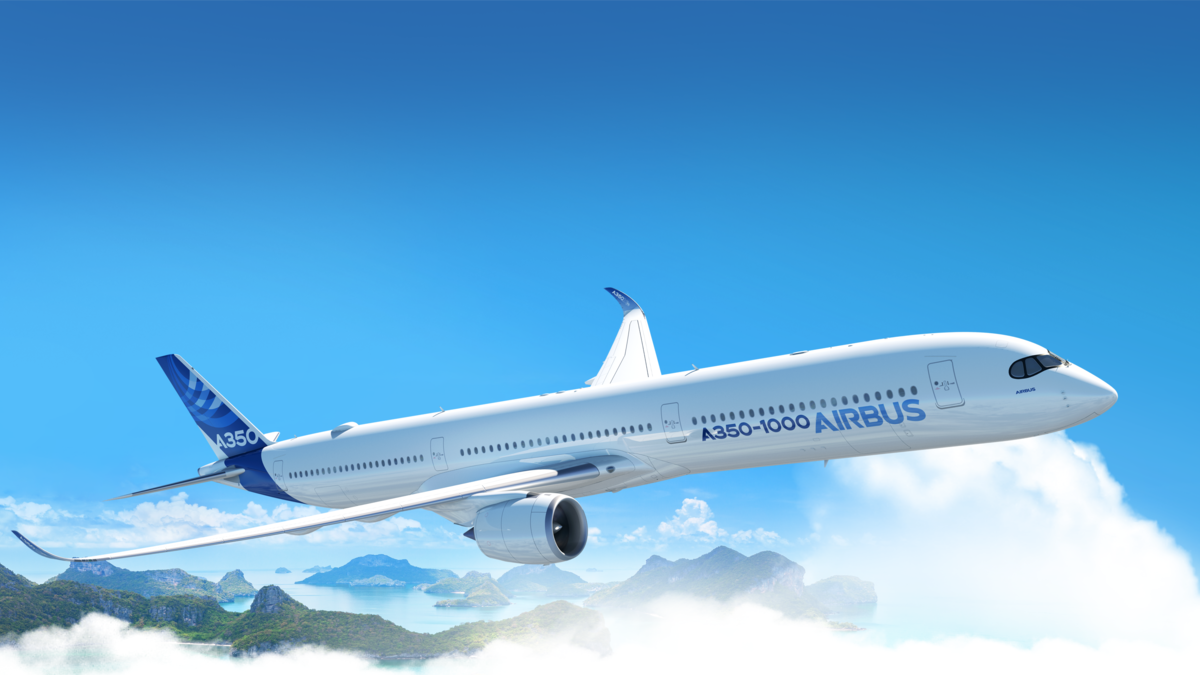
Ten years ago today, the first Airbus A350-1000 lifted off from Toulouse on a flight that lasted just over four hours. A decade later, it carries the business class suites of British Airways, Virgin Atlantic and Qatar Airways, and is set to fly the longest route in the world. Here is the story of the Airbus A350-1000, from first flight to ultra long haul flagship.
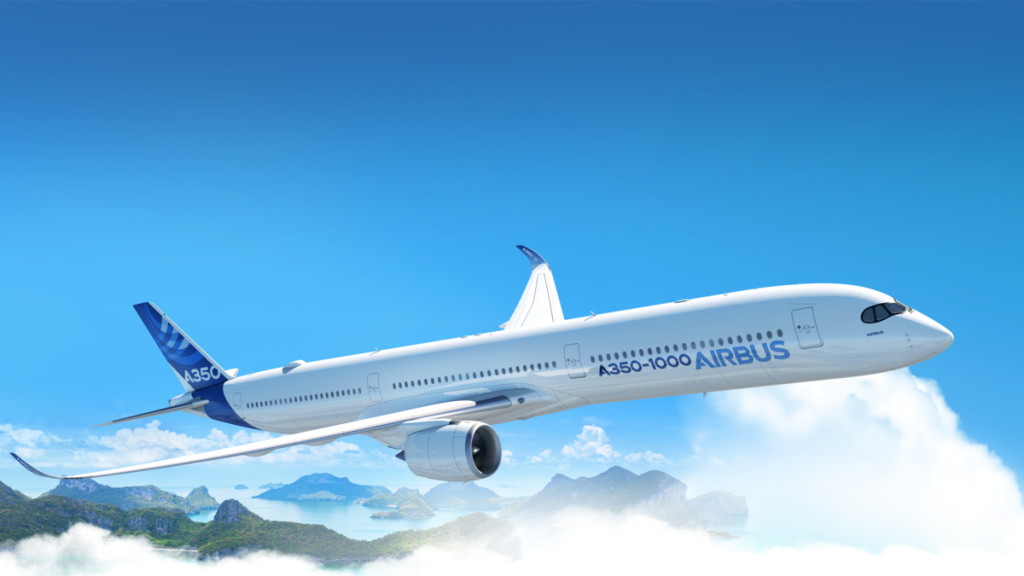
On 24 November 2016, the first Airbus A350-1000 took off from Toulouse Blagnac Airport in southern France. The aircraft, known by its manufacturer serial number MSN059, landed back at Toulouse at 15:00 local time after a flight of 4 hours and 18 minutes, according to Airbus.
It was the start of a programme that would give airlines their most efficient large twin engine jet, and give Airbus a strong answer to Boeing’s 777 family. Ten years later, the Airbus A350-1000 is in service across Europe, the Middle East and Asia, and is about to begin a new chapter as the aircraft for Qantas’s record breaking nonstop flights between Sydney and London.
The Stretch That Completed the Family
The A350-1000 is the largest member of the A350 XWB family. Airbus launched the A350 XWB programme in 2006 as a clean sheet design built largely from carbon fibre composites, and the first version, the A350-900, flew in June 2013 before entering service with Qatar Airways in January 2015.
The A350-1000 was designed as the stretch. Its fuselage is about seven metres longer than the A350-900, allowing it to carry around 40 more passengers in a typical three class layout.
Stretching an aircraft is never just a case of adding fuselage sections. Airbus modified the trailing edge of the wing, fitted new six wheel main landing gear to carry the extra weight and chose a more powerful engine, the Rolls Royce Trent XWB-97, rated at 97,000 pounds of thrust.
Crucially for airlines, about 95% of systems part numbers are common with the A350-900, and the two variants share a pilot type rating, Airbus said when the aircraft was certified in 2017. That means crews can fly both with minimal extra training, and airlines can mix the two sizes in one fleet.
The First Flight
The first flight was a carefully choreographed test. Six people were on board MSN059. In the cockpit were two experimental test pilots and a test flight engineer, while three more specialists sat at the flight test instrumentation station in the cabin, monitoring the test parameters.
During the flight, the crew explored the aircraft’s handling and flight envelope while a chase plane filmed the manoeuvres. Engineers on the ground followed every move in real time through a direct telemetry link.
Customers watched the milestone from Airbus headquarters in Toulouse. At the time, 11 airlines on five continents had ordered 195 A350-1000s between them, and Qatar Airways was the largest customer with 37 on order. Airbus’s chief executive at the time, Fabrice Brégier, praised the aircraft as the world’s most modern and efficient passenger jet.
Less Than a Year to Certification
Airbus set itself an ambitious goal of completing flight testing in under a year, using three test aircraft with different jobs.
MSN059 focused on the flight envelope, handling qualities, loads and braking. MSN071 evaluated performance, including braking, the engines, systems and the autopilot. MSN065, fitted with a full cabin, tested cabin and air systems and flew early long flights and route proving.
Together the three aircraft logged more than 1,600 flight hours, including 150 hours in an airline style operational environment. Europe’s aviation safety agency, EASA, and the US Federal Aviation Administration granted type certification on 21 November 2017, less than a year after the first flight.
Qatar Airways Goes First
Qatar Airways took delivery of the world’s first A350-1000 on 20 February 2018 and put it into commercial service four days later, on 24 February 2018, according to Airbus’s A350 facts and figures. Its first route was between Doha and London Heathrow.
Qatar fitted the aircraft with 327 seats, including 46 of its Qsuite business class seats, some of which could be combined into double beds or private quad suites, Business Traveller reported at the time. In Qatar’s layout, the A350-1000 carried 44 more seats than its A350-900.
A British Favourite
The A350-1000 became one of the most important aircraft for British travellers in 2019, when both of the UK’s biggest long haul airlines used it to launch new business class cabins.
British Airways took delivery of its first A350-1000 in July 2019. It was the first aircraft to carry Club Suite, the airline’s first new business class seat in 13 years, with direct aisle access and a privacy door for every passenger, ADS reported. The aircraft carried 56 Club Suites, 56 premium economy seats and 219 economy seats.
British Airways now operates 18 A350-1000s with 331 seats, according to its fleet facts.
Virgin Atlantic followed later in 2019. It ordered 12 A350-1000s, worth an estimated $4.4 billion at list prices, and used them to introduce its Upper Class Suite and a new social space called The Loft, according to Virgin Atlantic. Its first A350-1000 was scheduled to fly between Heathrow and New York JFK in August 2019.
Virgin said the aircraft was 30% more fuel and carbon efficient than the aircraft it replaced, and would cut its noise footprint around airports by more than half.
The Numbers Behind the Jet
The A350-1000 is 73.78 metres long, with a wingspan of 64.75 metres and a height of 17.08 metres. It typically seats between 350 and 410 passengers in three classes, with a maximum certified capacity of 480.
Its range is 8,700 nautical miles, about 16,100 kilometres, and its maximum takeoff weight is 322 tonnes. Airbus says the A350 family offers about a 25% advantage in fuel burn, operating costs and carbon emissions compared with previous generation competitors.
By the end of September 2024, Airbus had delivered 88 A350-1000s out of 621 A350s in total. Demand for the family has continued to grow. By the end of October 2026, the A350 family had 1,628 orders from 70 customers worldwide, Airbus said this month.
A Head Start Over the 777X
The A350-1000’s timing has worked in its favour. Its closest rival, the Boeing 777-9, was originally due to enter service in 2020, but certification is now expected in 2027, One Mile at a Time reports.
That has left the A350-1000 as the main new generation option for airlines looking to replace ageing Boeing 777-300ERs. Some airlines that ordered the 777-9, including Lufthansa and Cathay Pacific, also operate or have ordered the A350-1000, giving them a modern large twin while they wait.
Delta Air Lines is another newer customer. It ordered 20 A350-1000s in January 2024, with options for 20 more, although its first delivery has slipped to 2027, One Mile at a Time reports.
Not Without Bumps
The programme has had its challenges. In 2021, Qatar Airways grounded part of its A350 fleet over surface degradation on the fuselage, leading to a public legal dispute with Airbus in London that was settled in early 2023.
More recently, supply chain problems across the industry have delayed deliveries of new widebody aircraft, including several A350-1000s. Customers including Delta and Qantas have had to wait longer than planned for their first aircraft.
Lufthansa Joins the Club
The newest operator is Lufthansa. It took delivery of its first A350-1000 on 10 November 2026, the 700th Airbus aircraft delivered to the Lufthansa Group, according to Airbus.
The aircraft carries Lufthansa’s latest Allegris cabin, with 300 seats across first, business, premium economy and economy. It will fly from Munich to destinations such as Tokyo, Shanghai and Singapore, and Lufthansa has 15 A350-1000s on order.
A New Chapter: Ultra Long Haul
The next decade of the Airbus A350-1000 will be defined by distance. In July 2026, Qantas’s first A350-1000ULR flew nonstop from Toulouse to Melbourne in more than 19 hours on its delivery flight, BNN Bloomberg reported.
The aircraft has an extra fuel tank and will carry 238 passengers across four cabins, according to Flight Delayed. Qantas plans to use it to launch nonstop flights between Sydney and London in October 2027 under Project Sunrise. At up to 22 hours, they would be the longest scheduled passenger flights in the world, with nonstop Sydney to New York flights expected to follow.
Airbus is also building a freighter version, the A350F, which was launched in 2021 and draws heavily on the A350-1000’s design.
The Bottom Line
Ten years after its first flight from Toulouse, the Airbus A350-1000 has become one of the most important long haul aircraft in the world. It launched new business class cabins at British Airways, Virgin Atlantic and Qatar Airways, and has given airlines a fuel efficient alternative while the Boeing 777-9 remains years late.
Its biggest test is still to come. If Project Sunrise succeeds, the jet that first flew for just over four hours in 2016 will soon be flying passengers nonstop for almost a full day.
Continue to follow The Aviation Hub for more analysis and insight.
Advertise with us Your brand, in front of an aviation audience Home page and in-article placements, sold directly, one advertiser per slot. From £250 a year. See the rates