
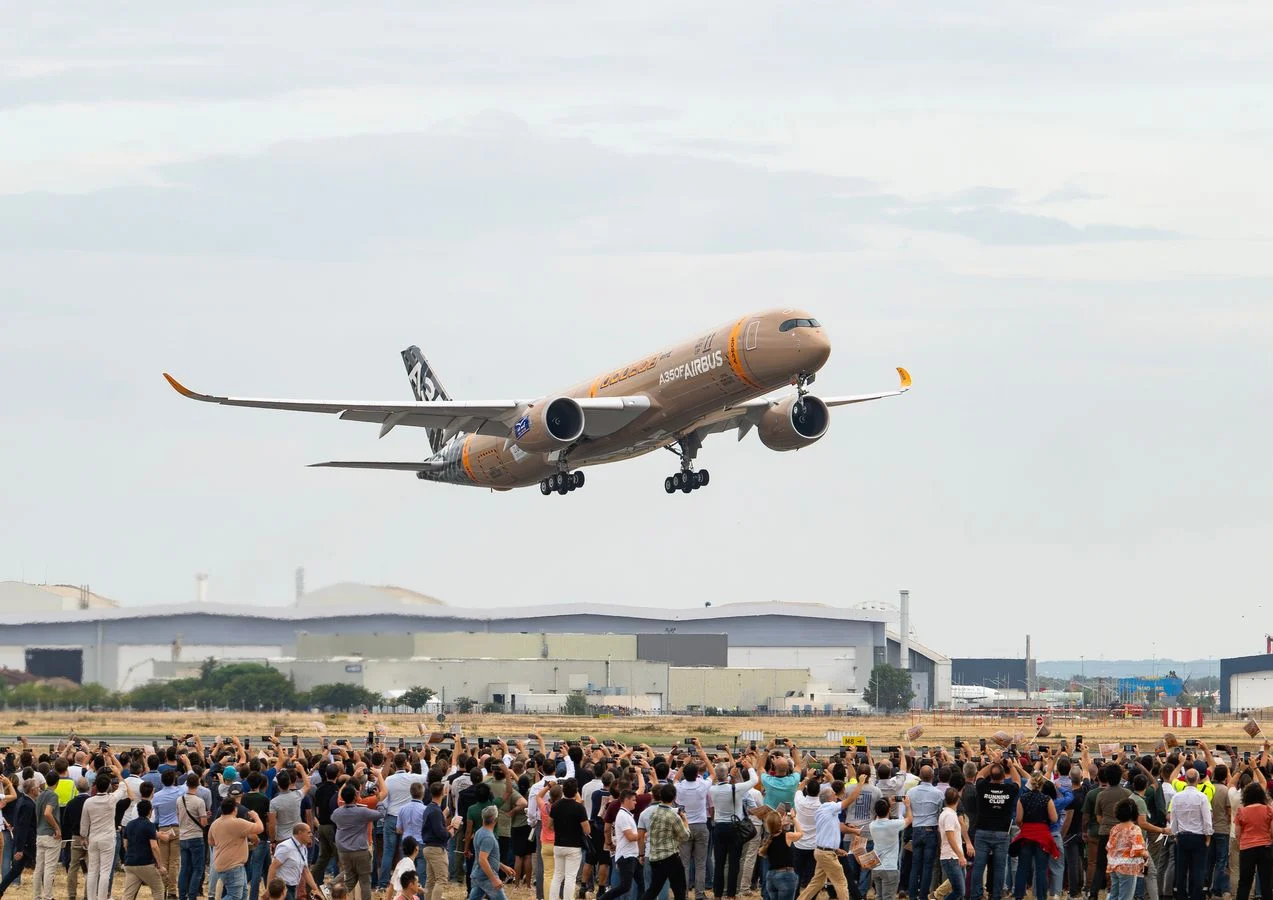
The Airbus A350F took to the skies for the first time today, lifting off from Toulouse Blagnac Airport shortly after 10:30 local time.
The flight moves the programme from promises on paper to real metal in the air.
It also marks the moment Airbus finally enters the large freighter market with a purpose built challenger to Boeing.
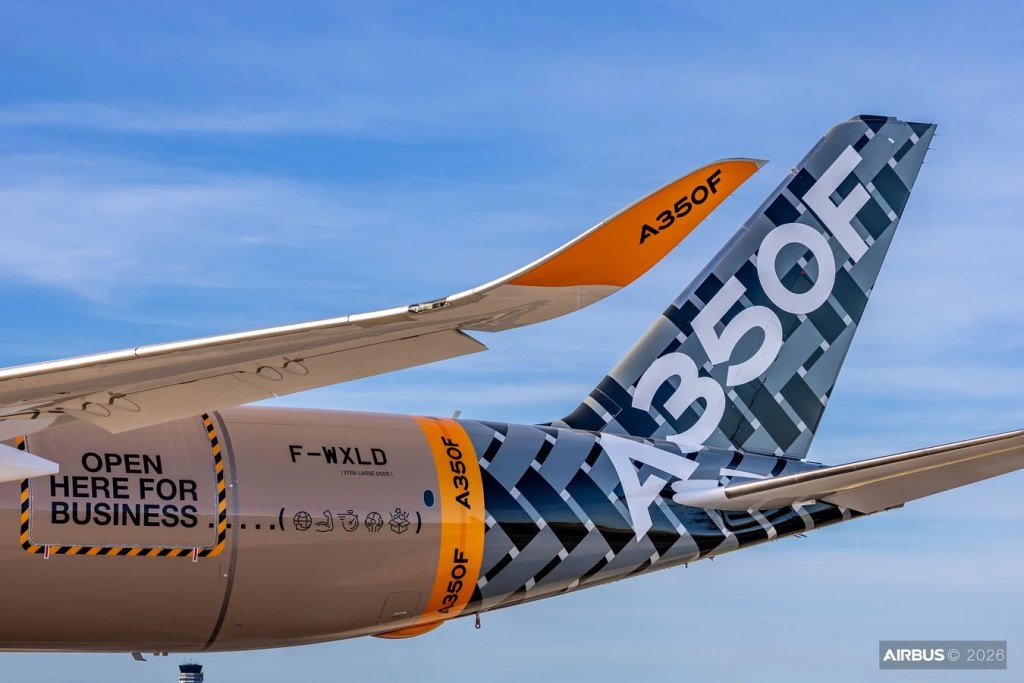
The aircraft involved is MSN 700, registered F-WXLD and operating under the callsign AIB01LD, according to Flightradar24 data.
A crew of five sat on the flight deck and in the cabin, made up of two test pilots, one test flight engineer and two flight test engineers.
A Dassault Falcon chase aircraft flew alongside to monitor the new freighter throughout the sortie.
Public interest was enormous.
According to Air Cargo Week, the A350F became the most tracked flight in the world on Flightradar24, with more than 17,000 people following it live at once.
A350F First Flight Caps Five Years of Work
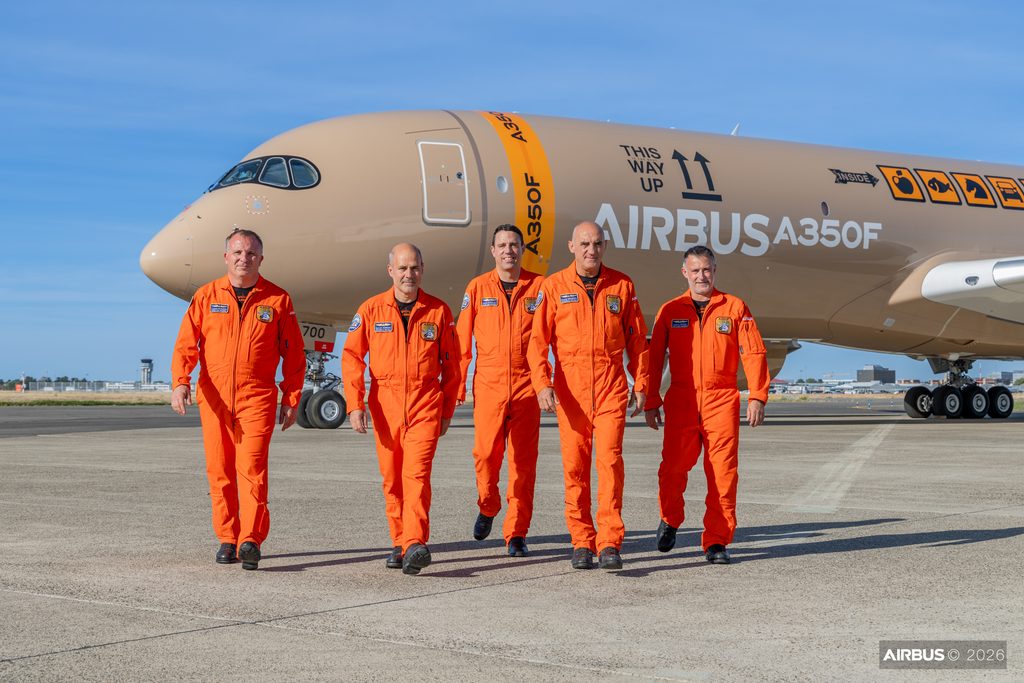
Today’s milestone did not come quickly.
Airbus launched the A350F in 2021 and originally targeted service entry in 2025.
That date slipped several times, and the manufacturer now aims for first deliveries in the second half of 2027.
The final weeks before first flight focused on ground testing in Toulouse.
Engineers ran engine tests, taxi trials and high speed rejected takeoffs.
Test crews also flew “virtual first flights” in simulators to rehearse every stage of the sortie.
Crawford Hamilton, Head of Freighter Marketing at Airbus, told Air Cargo Week that the moment was “the culmination of years of activity.”
He added that “it has been a huge team effort.” That effort stretched across Airbus sites in the United Kingdom, Spain, Germany and France.
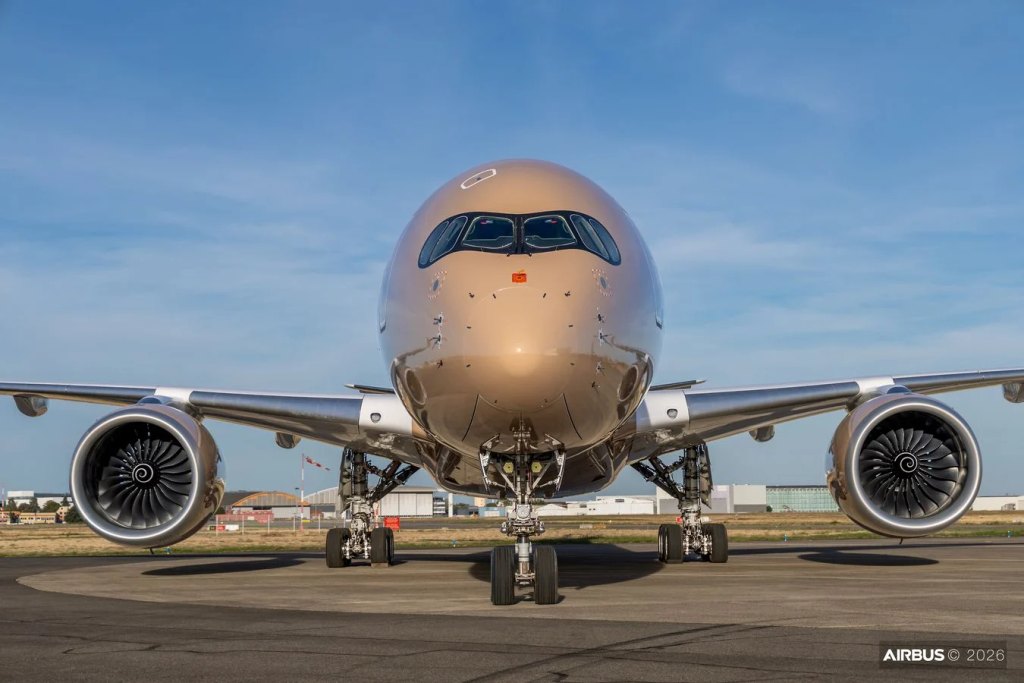
The livery also carries a story. Airbus ran a public competition in 2022 that attracted more than 4,000 entries.
The final scheme combines two winning designs.
What Makes the Airbus A350F Different
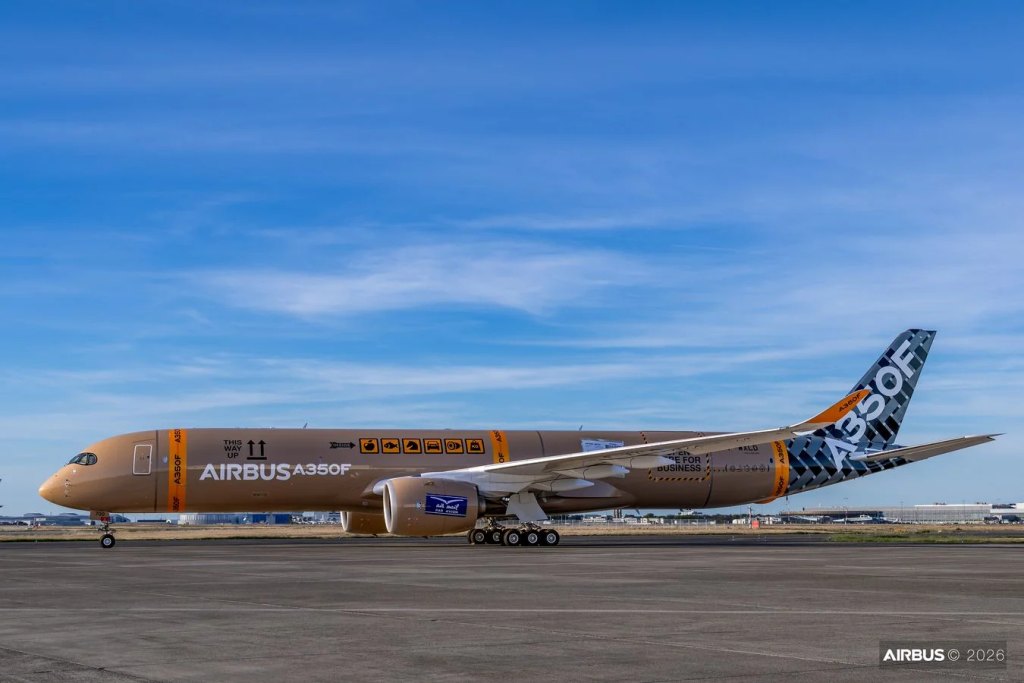
The A350F is not simply a converted passenger jet.
Airbus mated the forward fuselage of the A350-900 to the rear fuselage and wings of the larger A350-1000.
The result sits neatly between the two passenger variants.
Laurent Bussiere, Lead Flight Test Engineer for the programme, summed it up clearly.
“It’s not an A350-1000 and it’s not an A350-900, but rather it’s between both,” he told AeroTime.
Two Rolls-Royce Trent XWB-97 engines power the aircraft. Airbus quotes a maximum payload of 111 tonnes and a range of around 4,700 nautical miles.
The main deck cargo door is roughly 15% wider than the one fitted to the Boeing 777F, which makes loading outsized freight far easier.
Crucially, the A350F is the only freighter on the market with a predominantly carbon fibre airframe.
Airbus claims this delivers at least 20% lower fuel burn and CO2 emissions than competing freighters.
For cargo airlines, that figure matters more than almost any other.
The A350F Versus the Boeing 777-8F
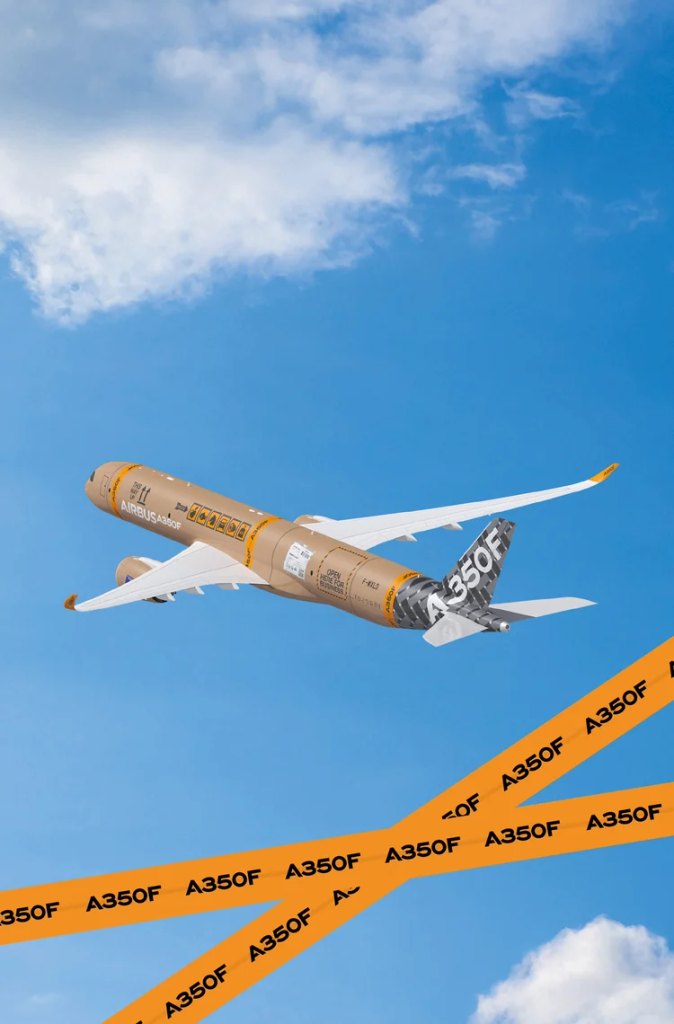
For decades, Boeing has dominated the large freighter segment.
The 747F and 777F have carried the bulk of the world’s long haul air cargo, and Airbus has had no direct answer at the top end.
The A350F changes that.
Boeing’s response is the 777-8F, based on its delayed 777X family.
The two aircraft offer similar headline capability, with comparable payloads and ranges.
However, the A350F now holds a clear timing advantage.
With first flight complete, Airbus stands firmly ahead of a Boeing freighter that must wait for the wider 777X programme to reach service first.
Regulation adds further pressure.
A new ICAO CO2 standard takes effect for aircraft in production from 2028. That rule threatens the production future of older designs such as the current 777F.
As a result, operators planning fleet renewal need a compliant large freighter, and the A350F offers one on a firmer timeline.
A Strong Order Book Before the A350F Flew
Airbus has already sold the A350F well. The programme had secured 115 firm orders by August 2026, spread across 14 confirmed customers.
That total gave the Airbus freighter a lead of 34 orders over the 777-8F as of July, according to Air Data News.
Atlas Air leads the customer list with 20 aircraft.
Air China Cargo has ordered ten, while Cathay Pacific holds eight. An unidentified customer also added eight aircraft on 31 August.
These are serious operators.
Atlas Air in particular has long flown Boeing widebody freighters, so its commitment signals real confidence in the new Airbus product.
What Comes Next for the A350F Test Campaign
Today’s sortie opens a demanding certification programme.
Two aircraft will fly around 400 hours of testing over roughly ten months.
Each flight turns the A350F into a flying laboratory that records thousands of parameters in real time.
Engineers will explore the edges of the flight envelope, test systems under failure conditions and validate performance data.
Airbus targets both EASA and FAA certification in 2027.
Hamilton made the purpose plain.
Flight testing, he said, “is an essential part of getting the aeroplane into service, certificated, and ready to fly for the 14 confirmed customers.”
The shared A350 heritage should help.
The passenger variants have flown commercially for more than a decade, so many systems already carry a proven record.
Even so, the freighter introduces new structures, a large cargo door and different weights, and each demands thorough validation.
What the Aircraft’s First Flight Means for Air Cargo
The significance reaches beyond Toulouse.
Air freight demand continues to grow, driven by ecommerce, pharmaceuticals and time sensitive goods.
Meanwhile, much of the global large freighter fleet is ageing and burns far more fuel than modern designs.
The A350F gives cargo airlines a genuine choice at the top of the market for the first time.
Competition should sharpen pricing, speed up innovation and give operators more leverage in fleet negotiations.
For Boeing, it removes a comfortable monopoly that has lasted for decades.
For Airbus, the stakes are equally high. Freighters generate steady, long term demand and strong customer loyalty.
Winning cargo operators now could shape fleet decisions well into the 2050s.
Overall…
Today’s first flight is the most important moment yet for the A350F.
It proves that the aircraft flies, and it hands Airbus a real head start over the 777-8F.
The order book is healthy, the efficiency case is strong and the regulatory timing works in its favour.
Challenges remain.
Airbus must complete certification on schedule and avoid further delays to its 2027 delivery target.
If it succeeds, the A350F could end Boeing’s long grip on the large freighter market.
The Aviation Hub will follow the test campaign closely as it unfolds.
Advertise with us Your brand, in front of an aviation audience Home page and in-article placements, sold directly, one advertiser per slot. From £250 a year. See the rates