An American Airlines Boeing 737 bound for Philadelphia declared an emergency shortly after leaving Punta Cana on Sunday evening. The crew diverted to Santiago in the Dominican Republic after a reported odour in the cabin. Here is what we know about the Philadelphia flight, the aircraft and what happens next.

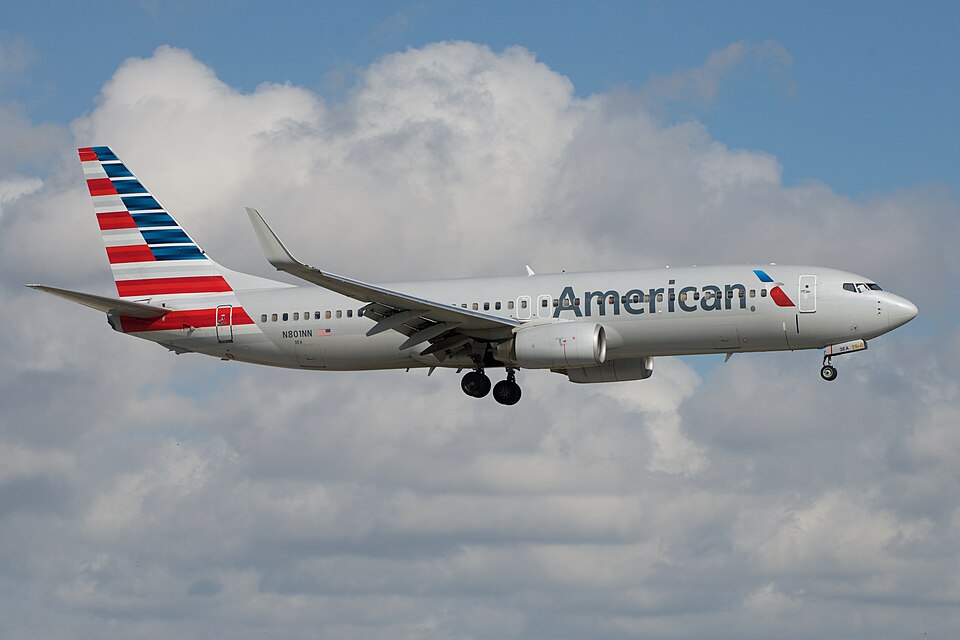
An American Airlines flight from Punta Cana to Philadelphia declared an emergency and diverted to Santiago on Sunday 22 November. Flight AA2471, a Boeing 737-800, squawked 7700 while climbing out of the Dominican Republic, according to flight tracking data posted by Flight Emergency by AirNav Radar.
Soon after, the account reported that the Philadelphia flight had diverted to Santiago because of a strange odour in the cabin. There are no reports of injuries.
How the Philadelphia-bound Flight Unfolded
The flight’s scheduled departure from Punta Cana was 17:21 local time. However, it departed late, pushing back from gate B20 at 19:03, Travel And Tour World reports.
As the aircraft climbed north towards Philadelphia, the crew set the emergency code 7700. At that point, AirNav Radar’s tracking image showed the 737 at 21,000 feet near San Francisco de Macorís in the north of the country.
Instead of continuing to Philadelphia, the crew turned towards Cibao International Airport in Santiago de los Caballeros. The aircraft then landed safely at 20:20 local time, about 1 hour and 17 minutes after departure.
What Caused the Emergency
Officials have not yet confirmed the cause. According to AirNav Radar’s Flight Emergency account, the crew diverted because of a strange odour in the cabin.
Meanwhile, Travel And Tour World reports that American Airlines described the diversion as technical. It also says the airline agreed with Dominican air traffic control that Santiago was the safest immediate option, and that the aircraft reportedly stayed on the ground for maintenance checks.
Why Crews Divert for Cabin Odours
Crews take unusual smells seriously. In flight, crews often cannot tell whether an odour comes from a galley oven, an electrical fault or fumes from the air system. For this reason, procedures usually call for a landing at the nearest suitable airport.
In fact, this is not the first Philadelphia bound American flight to divert this year after an odour. In July, American Airlines flight 719 from Rome to Philadelphia diverted to Dublin, and the airline later traced the smell to an oven, NewsStreetDaily reported.
What Squawk 7700 Means
Squawk 7700 is the universal transponder code for a general emergency. As soon as a crew selects it, the aircraft stands out on air traffic control screens, and controllers give it priority.
As a result, emergency flights often appear quickly on public tracking apps, as AA2471 did. You can follow more cases like this on our Squawk 7700 desk.
The Aircraft Flying to Philadelphia
The aircraft was N956NN, a Boeing 737-800 built at Boeing’s Renton factory in Washington State, according to Planespotters. It joined American Airlines in August 2014 and is about 12 years old.
On delivery, the jet flew from Boeing Field in Seattle to Tulsa on 7 August 2014. It now carries 16 first class and 156 main cabin seats, and two CFM engines power the jet.
What Happens Next for Philadelphia Passengers
It is not yet clear how passengers completed their journey to Philadelphia. Typically, airlines send a replacement aircraft or rebook travellers on later flights when a jet needs checks.
Meanwhile, engineers will inspect the 737 before it returns to service. Any finding on the source of the odour would then shape whether investigators look at the event further.
The Bottom Line
American Airlines flight AA2471 from Punta Cana to Philadelphia declared an emergency on Sunday evening and diverted safely to Santiago. Reports point to an odour in the cabin, while the airline has described the issue as technical.
Overall, the crew followed standard practice by landing at the nearest suitable airport. We will update this story as more details on the Philadelphia flight emerge.
Continue to follow The Aviation Hub for more analysis and insight.
Advertise with us Your brand, in front of an aviation audience Home page and in-article placements, sold directly, one advertiser per slot. From £250 a year. See the rates