
Wizz Air is preparing to return to the United Arab Emirates in a significant way this winter, more than a year after the Hungarian low-cost carrier shut down its local operation in Abu Dhabi.
From October 25, 2026, Wizz Air will reestablish eight routes connecting seven European cities with Abu Dhabi and Dubai.
The move represents an important change in strategy for the airline.
Rather than attempting to rebuild Wizz Air Abu Dhabi as a standalone subsidiary, the carrier will serve the United Arab Emirates directly from its European network.
The decision raises an obvious question: is Wizz Air effectively giving Abu Dhabi another go?
The answer is yes, although this time the airline appears to be approaching the market on very different terms.
Wizz Air Is Returning to the UAE
Wizz Air’s winter 2026-27 schedule will include 32 weekly flights to the United Arab Emirates, split between Abu Dhabi and Dubai.
Abu Dhabi will receive the larger share of the operation, with six routes accounting for 20 flights every week. Dubai, meanwhile, will receive two routes with a combined 12 weekly frequencies.
The routes will be operated by Wizz Air’s European airlines rather than Wizz Air Abu Dhabi.
This distinction is particularly important because the airline’s previous presence in the UAE was built around a locally based subsidiary.
The eight returning routes are spread across several of Wizz Air’s major Central and Eastern European markets.
Four routes will restart on October 25, coinciding with the beginning of the 2026-27 winter schedule.
Budapest-Abu Dhabi will operate four times per week, while Katowice-Abu Dhabi will operate five times per week.
At the same time, Wizz Air will restore Budapest-Dubai with five weekly flights and Bucharest-Dubai with a daily service.
Four further Abu Dhabi routes will return two days later, on October 27.
Larnaca will receive three weekly flights, as will Sofia and Krakow, while Cluj-Napoca will be connected to Abu Dhabi twice per week.
The result is a surprisingly broad European network into Abu Dhabi, despite Wizz Air having closed its local operation just over a year earlier.
Budapest Becomes Particularly Important
One of the most interesting aspects of the new schedule is the position of Budapest.
Hungary’s capital will be connected to both Abu Dhabi and Dubai, giving passengers a combined nine weekly flights to the two major UAE airports.
That gives Wizz Air a substantial presence between Budapest and the Emirates without requiring an aircraft base in the UAE itself.
For Wizz Air, this is arguably one of the biggest advantages of the new model.
The airline can use aircraft and crews associated with its European network while avoiding many of the complexities that came with maintaining a separate local operation.
Budapest is already a major part of Wizz Air’s network, meaning the UAE services can be integrated into an existing European operation.
Bucharest is also set to play an important role, with a daily flight to Dubai.
The remaining Abu Dhabi services provide connections from Poland, Cyprus, Bulgaria and Romania, giving the UAE capital access to several markets where Wizz Air has a strong customer base.
What Happened to Wizz Air Abu Dhabi?
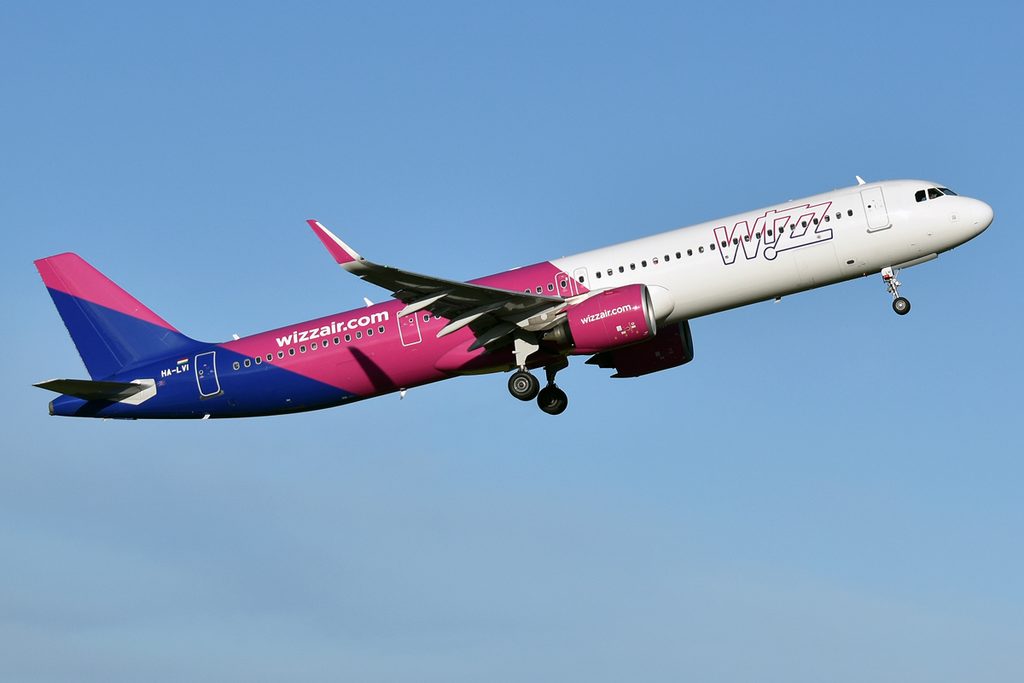
To understand why this return is significant, it is necessary to look at what happened the first time Wizz Air entered the Abu Dhabi market.
Wizz Air launched Wizz Air Abu Dhabi in 2020 as a joint venture with Abu Dhabi investment company ADQ.
The airline was intended to become a major low-cost carrier based in the emirate, linking Abu Dhabi with destinations across Europe, the Middle East, Central Asia and Africa.
On paper, the concept made considerable sense.
Abu Dhabi wanted to develop its aviation sector and strengthen its position as an international travel hub, while Wizz Air had an enormous European customer base and a business model built around stimulating demand with low fares.
However, operating a low-cost airline in the Gulf presents challenges that do not necessarily exist in Europe.
Wizz Air announced in July 2025 that it would cease the local operation, citing operational constraints, geopolitical instability and difficulties associated with engine reliability in the region’s extremely hot climate.
The closure became effective on September 1, 2025.
That made Wizz Air’s subsequent decision to return particularly interesting.
The airline has not changed its mind about the UAE market altogether. Instead, it has changed how it wants to serve it.
A Different Wizz Air Strategy In Abu Dhabi & Beyond…
The distinction between the old and new models could prove crucial.
Wizz Air Abu Dhabi was a locally based airline.
The new operation will effectively treat Abu Dhabi and Dubai as destinations within Wizz Air’s wider European network.
That means Wizz Air can retain access to the UAE without recreating the infrastructure and operational exposure associated with its former subsidiary.
It is a much more flexible approach.
If demand from a particular European market proves strong, Wizz Air can potentially increase capacity.
If demand weakens, frequencies can be adjusted without having to maintain an entire local operation around the route network.
The strategy also gives Wizz Air access to Dubai, something that makes commercial sense given the enormous international demand for the city.
Dubai and it’s neighbour are geographically close, but they occupy somewhat different positions in the aviation market.
Dubai is one of the world’s biggest international aviation hubs, while it’s neighbour has increasingly developed its own identity as a major business, tourism and leisure destination.
For a low-cost airline, having access to both markets provides an opportunity to capture different types of demand.
The Middle East Is Becoming Important Again
The UAE routes are also part of something much larger.
For winter 2026-27, Wizz Air plans to restore 12 routes and 49 weekly frequencies connecting nine European cities with Abu Dhabi, Dubai, Jeddah in Saudi Arabia and Amman in Jordan.
The UAE accounts for 32 of those weekly flights, making it by far the largest component of the renewed Middle Eastern network.
Jeddah and Amman will add further options for passengers travelling between Europe and the Middle East, with services particularly involving cities such as Budapest, Milan and Rome.
This suggests that Wizz Air’s decision is not simply about one airport or one market.
The airline appears to be reassessing the role that the wider Middle East can play within its European network.
That could be significant for Wizz Air’s future growth strategy.
Is This Really a Comeback for Abu Dhabi?
In some respects, yes.
Wizz Air is returning to it’s previous base with 20 weekly flights and six routes, which is substantial considering the airline’s local subsidiary disappeared only a little over a year ago.
However, it would be misleading to describe this as a resurrection of Wizz Air Abu Dhabi.
It is something different.
The airline is effectively testing the UAE market again while limiting its exposure to the problems that contributed to the closure of the local subsidiary.
Instead of basing aircraft in the destination and building a regional network around them, Wizz Air can connect the Emirates with cities where it already has substantial demand.
That makes the new strategy less ambitious, but potentially more sustainable.
It also provides passengers with something that disappeared when Wizz Air Abu Dhabi closed: another low-cost option for travelling between Europe and the UAE.
Wizz Air Is Taking Another Chance
Wizz Air’s return to the United Arab Emirates is therefore less about rebuilding what it previously had and more about finding a better way to make the market work.
The airline clearly still sees demand between Europe and the UAE.
What changed was its willingness to operate a dedicated local carrier in where it used to operate.
From October 2026, Wizz Air will instead use its European network to reconnect with the region, bringing back eight routes and 32 weekly flights to Abu Dhabi and Dubai.
Whether the strategy succeeds will ultimately depend on demand, operating costs, aircraft availability and the wider geopolitical environment.
The issues that caused Wizz Air Abu Dhabi to close have not necessarily disappeared.
But this time, Wizz Air is playing a different game.
Rather than asking Abu Dhabi to support a Wizz Air airline, the Hungarian low-cost carrier is asking whether its European passengers still want to fly to the UAE.
If the answer is yes, Wizz Air could have found a much less risky way of giving Abu Dhabi another go.
Continue to follow The Aviation Hub for more analysis and insight!