Update, 19 October 2026, 14:05
The key outstanding question from the original investigation, the outcome of the search of OE-LZE, has now been answered. Aviation24.be reports that following the security checks in Sofia, the aircraft was cleared and continued to Vienna with all its passengers aboard. No suspicious device was reported found.
Aviation24.be also confirms the identity of the fighter escort as a Bulgarian Air Force MiG-29, adding a detail that had not appeared in earlier reporting. The same source uses the OS82 designation, consistent with Austrian Airlines' own statement, rather than OS83 as shown in tracking data and cited by other outlets. The discrepancy between the two flight numbers remains unresolved publicly.
The article's previous note that the airline had confirmed rebooking plans but the search outcome was unknown can now be updated: the aircraft was released by Bulgarian authorities and resumed its journey to Vienna (VIE), indicating that the search produced no finding that required the aircraft to be detained further.
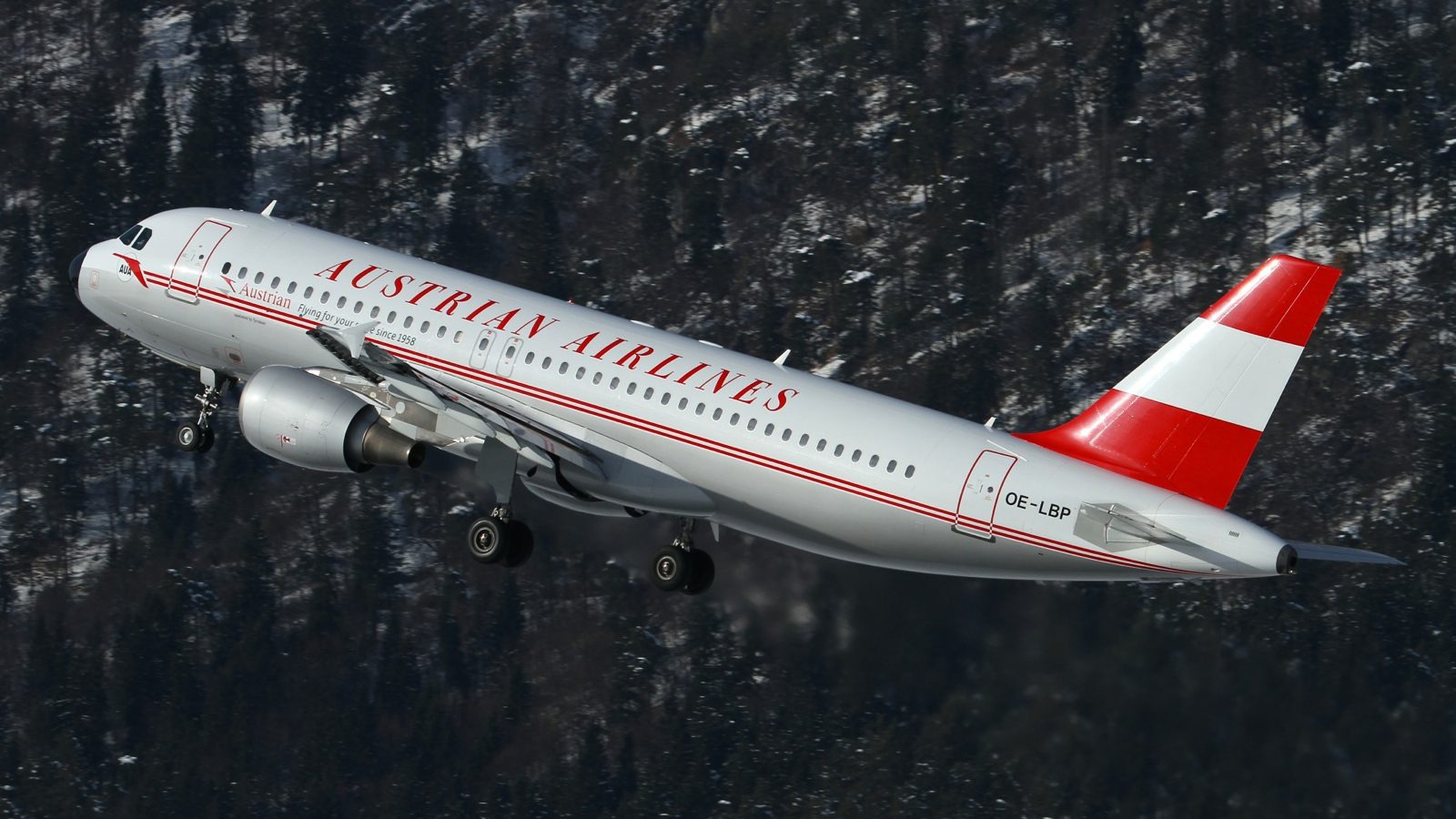
Austrian Airlines OS83, a flight operating as an Airbus A320 registered OE-LZE, made an emergency landing at Sofia Airport (SOF) on Sunday evening after a bomb threat was received during the flight from Tel Aviv (TLV) to Vienna (VIE). As we reported when the story first broke, the flight declared a general emergency before diverting to the Bulgarian capital. All 51 passengers and six crew members were evacuated safely.

The incident is now moving from the immediate emergency response phase into investigation. That shift raises a different set of questions: about the procedures that were followed, the information that has and has not been disclosed, and what regulators and the airline will need to account for next.
Why Austrian Airlines OS83 Matters Beyond the Headlines
Bomb threats against commercial flights are not rare, but they trigger one of the most demanding response chains in aviation. Every stakeholder, from the airline and air traffic control to military assets and airport emergency services, must act quickly on information that may prove false but cannot be treated as such.
In this case, the chain worked as designed. Bulgaria's Ministry of Transport and Communications confirmed that the crew reported a "bomb threat signal" while the aircraft was near the Romanian border, and that it landed in Sofia approximately 30 minutes later. A Bulgarian Air Force fighter jet was scrambled and accompanied the A320 to the airport. The aircraft landed, the passengers were evacuated, and a search of the aircraft began.
That sequence matters because it demonstrates that international coordination between an Austrian carrier, Romanian airspace controllers, Bulgarian military aviation and Sofia Airport can be executed under pressure, in real time.
What the Tracking Data Shows
Two pieces of objective data anchor the public record of this incident. According to Flightradar24 data cited by the Daily Mail, OE-LZE entered Romanian airspace at around 9.10pm local time before turning south back towards Bulgaria. That track is consistent with the crew deciding to divert once the threat was received and heading for the nearest suitable airport.
Separately, ADS-B Exchange data indicates the aircraft was transmitting squawk 7700, the universal general emergency transponder code, at around the same time. You can follow incidents involving that code through our Squawk 7700 hub, which tracks live emergencies and maintains an incident archive.
Squawk 7700 does not distinguish between a mechanical emergency and a security threat. Its activation confirms that the crew considered the situation serious enough to alert air traffic control through the standard emergency signal, but it tells us nothing about the nature or credibility of the threat itself.
What Austrian Airlines Has and Has Not Said
Austrian Airlines confirmed the core facts in a statement reported by the Daily Mail. The airline said a threat was made against the flight, that the aircraft landed safely at 20:42 CEST, and that the A320 was being searched. It added that passengers would be rebooked onto an alternative flight once the search was complete.
One discrepancy in the airline's statement is worth noting. Austrian Airlines referred to the flight as OS82 in its own confirmation, while tracking data and other sources consistently identify it as OS83. AP News and The Mirror do not resolve this. It may reflect an internal reference or a typographic error in the statement, but it has not been clarified publicly.
The airline has not commented on the origin or nature of the threat, which is typical at this stage. Law enforcement and security authorities lead such investigations, and airlines rarely elaborate publicly until those processes are complete.
What the Bulgarian Response Tells Us
The Bulgarian government's response provides useful detail about how the diversion was managed on the ground. The Ministry of Transport and Communications stated that a crisis response team was formed and that "the responsible institutions have started an inspection," according to the Daily Mail. A ministry spokesperson confirmed the fighter escort and the evacuation of passengers.
The formation of a formal headquarters and the involvement of multiple institutions is standard procedure for a credible airborne security threat. It also means that any findings from the search of OE-LZE, and any conclusions about the source of the threat, will be the property of Bulgarian authorities rather than the airline.
That creates a practical information gap. The airline controls its own statement; the investigation is controlled by a sovereign government. Public disclosure of findings will depend entirely on what Bulgarian authorities choose to release and when.
What Remains Unknown
Several material facts are not yet in the public domain. The source of the bomb threat, whether it was communicated to the crew directly, received at the airline's operations centre, or transmitted through another channel, has not been disclosed. The outcome of the search of OE-LZE has not been confirmed publicly. It is not known whether any individual has been identified or detained in connection with the threat.
The Times of India notes that the crew received a "bomb threat signal during the journey," but does not specify its form. No source has reported on what, if anything, was found during the aircraft search.
For readers who want to track the aircraft involved in this and other incidents, our Aircraft Search tool allows you to look up OE-LZE and other airframes by registration.
What to Watch Next
The immediate operational question, how Austrian Airlines reaccommodated 51 passengers diverted to a city that was not their destination, appears to have been addressed. The airline confirmed rebooking plans in its statement.
The longer-term questions are regulatory and investigative. Bulgarian authorities have opened an investigation, and any credible finding about the origin of the threat will carry implications for security screening on routes originating in or transiting through Israel, a topic that European carriers and regulators monitor closely.
The flight's routing through Romanian airspace before the diversion also means that at least two national aviation authorities are likely to have records relevant to the incident, even if Bulgaria leads the formal investigation.
We will update our coverage of Austrian Airlines OS83 if the airline or Bulgarian investigators release further information about the search of OE-LZE or the source of the threat.
Continue to follow The Aviation Hub for more analysis and insight.
Advertise with us Your brand, in front of an aviation audience Home page and in-article placements, sold directly, one advertiser per slot. From £250 a year. See the rates