Barcelona El Prat Airport Expansion: Will the Protests Stop This?
 By The Aviation Hub
7 min read
Updated September 20, 2026
By The Aviation Hub
7 min read
Updated September 20, 2026 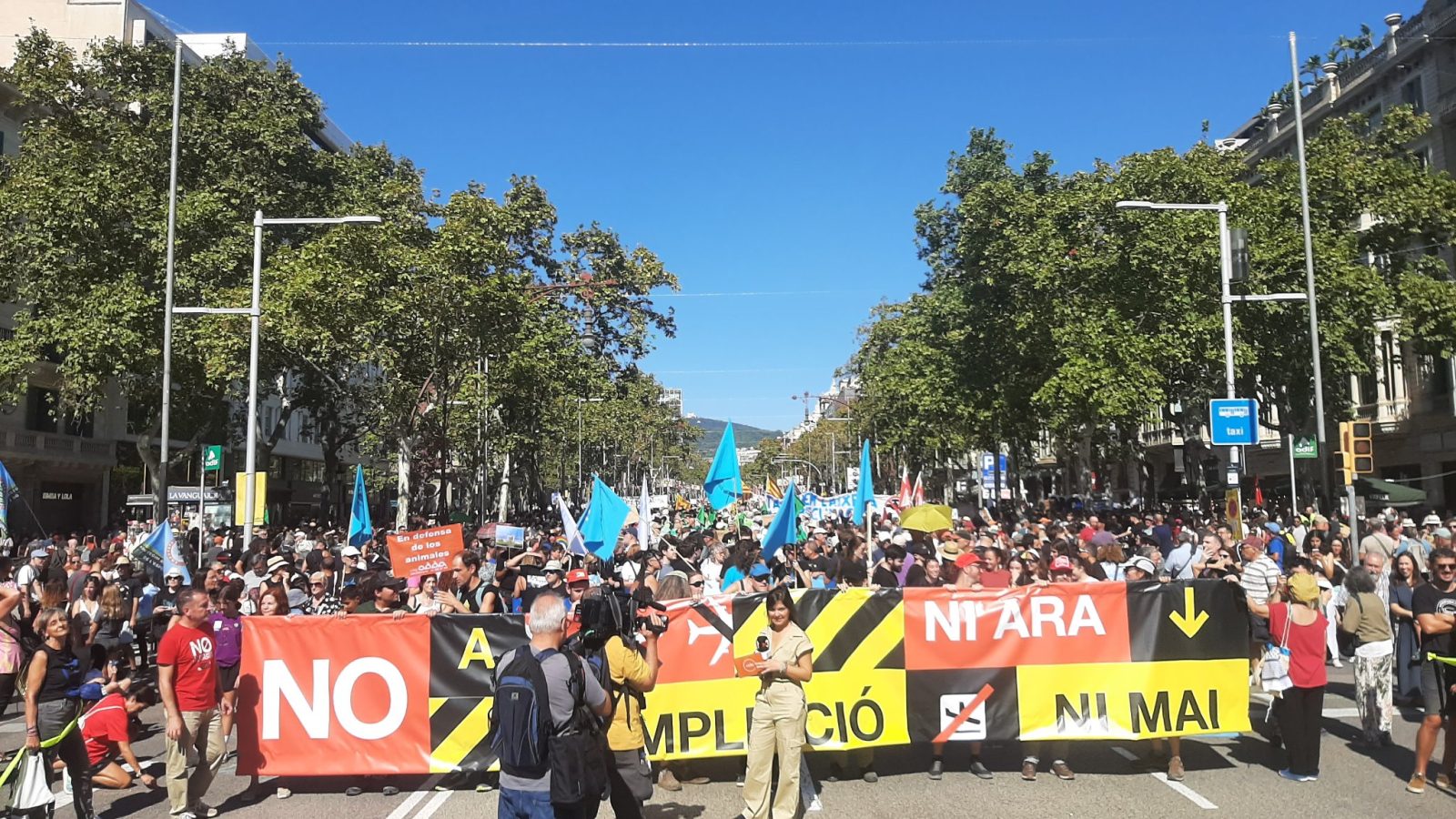
Barcelona has become the latest European city to find itself split over the future of its main airport.
On Sunday, thousands of people marched through the centre of Barcelona to oppose the growth of Josep Tarradellas Barcelona-El Prat Airport, just as a €1.765 billion investment package for the site has reignited a debate that many thought had been settled in 2021.
Barcelona’s municipal police counted between 5,000 and 5,500 people, although the organisers claimed a higher figure.
The bigger question is whether any of it will change the outcome.
Our view at The Aviation Hub is that the protests will shape how the project is delivered, but they are unlikely to kill it outright.
Thousands March Through Barcelona Against El Prat Expansion
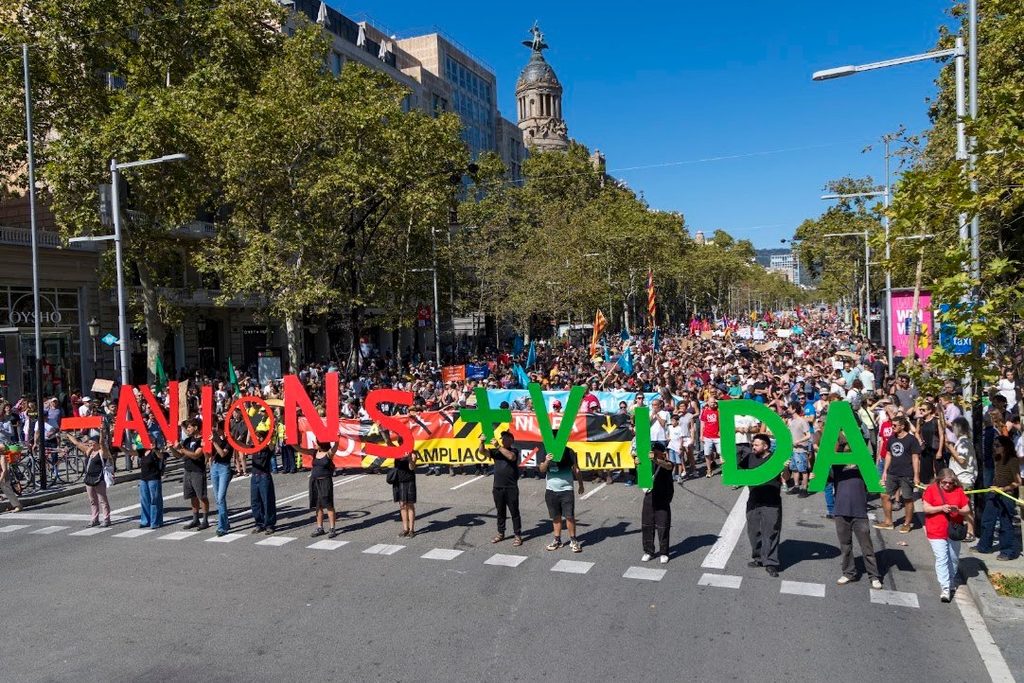
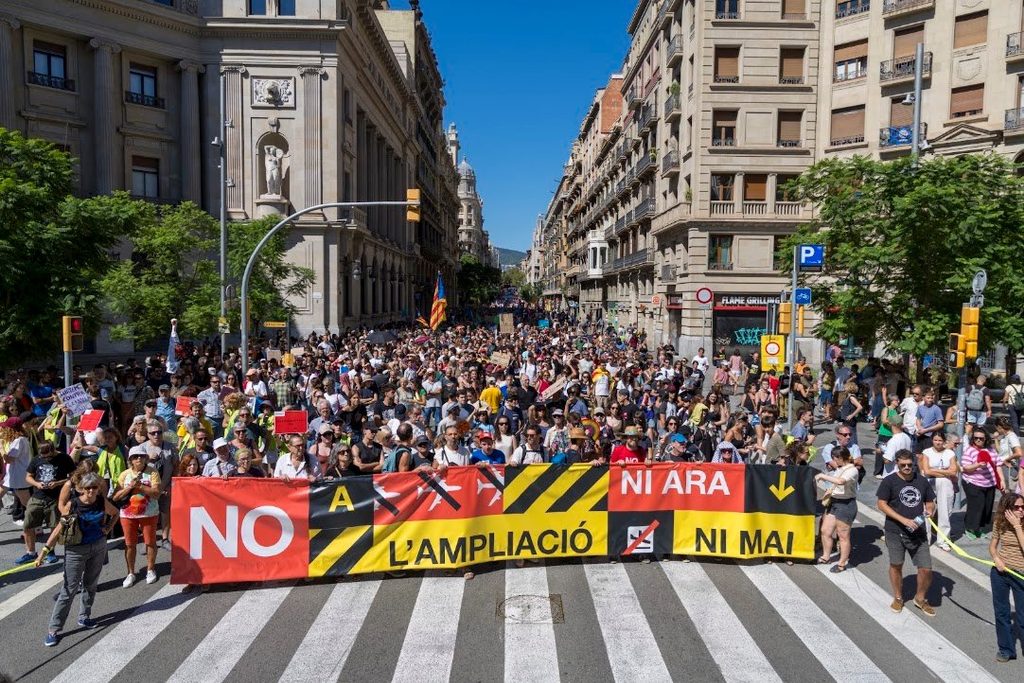
The demonstration was organised by the Zeroport platform under the slogan “No to the expansion, not now nor ever”.
It brought together environmental, neighbourhood, social, agricultural and trade-union groups, and the march remained peaceful throughout.
It set off around noon from Passeig de Gràcia and Carrer d’Aragó and made its way through central Barcelona towards Plaça de Sant Jaume.
The imagery was striking. Cyclists rode alongside tractors from the farmland of the Llobregat area, which is a reminder that the opposition in Barcelona is not simply a group of urban activists.
Many of the placards called for more investment in rail and for less dependence on flying.
That message is now familiar across Europe, but it carries extra weight in Barcelona, a city that has spent years wrestling with the pressures of mass tourism.
What the €1.765 Billion for Barcelona Actually Pays For
The headline figure needs careful reading, because it is not the runway money that many people assume it to be.
Spain’s Council of Ministers approved the third Airport Regulation Document, known as DORA III, which sets out roughly €13 billion of investment across Aena’s Spanish network for 2027 to 2031.
Of that total, El Prat receives €1.765 billion, and it is earmarked for modernisation rather than for a new runway.
The breakdown shows where the priorities lie.
Some €459 million is set aside for reconfiguring Terminal 1, while Terminal 2 receives €91 million.
A further €158 million will go towards airfield and apron improvements, and €91 million is allocated to safety and facilities.
In other words, this is an airport being brought up to date rather than one being dramatically enlarged.
There is one detail that campaigners are right to watch closely.
An additional €191.25 million has been allocated for preparatory work linked to a future expansion, including environmental compensation measures and potential satellite terminal work.
That money is contingent on environmental approvals, but it keeps the door open. Anyone who reads DORA III as a rejection of expansion in Barcelona is missing the point.
The Runway Extension Barcelona’s Airport Wants
The centrepiece of the controversy is the sea-side runway, 06R/24L. Aena’s 2025 proposal recommended extending it by around 500 metres, taking it to roughly 3,160 metres.
The purpose is straightforward: a longer runway would allow heavier aircraft to operate at full payload on longer routes, which would support more long-haul and intercontinental services from Barcelona.
Transport Minister Óscar Puente has confirmed that the runway extension is not included in the current DORA III funding.
That pushes any major construction beyond the 2027 to 2031 window.
Business organisation Foment del Treball has criticised that decision and wants the real expansion works included in a subsequent investment period.
For the business lobby, Barcelona risks being left behind if it cannot secure the direct long-haul links that rival European hubs already offer.
The Environmental Fight Over the Llobregat Delta
The strongest argument against expansion is the location.
The airport sits within the Llobregat Delta, and the area around it includes protected land such as La Ricarda. Any extension will need a demanding environmental assessment under European Natura 2000 rules, and that process is far more likely to determine the outcome than any march.
Zeroport argues that expansion would bring more aviation emissions and more pressure on housing, public spaces and tourism infrastructure.
The group claims growth could bring an extra 10 to 15 million tourists a year and increase airport emissions by 40%.
It is worth being clear that these figures are the organisation’s own assessments and not independent government forecasts.
They should be treated as one side’s estimate, though the underlying concern about visitor pressure on Barcelona is one that the city’s own residents have voiced repeatedly.
Barcelona’s Traffic Numbers Show Why Aena Wants Growth
Aena’s case rests on a strong operational record.
El Prat handled 57,483,036 passengers in 2025, which was a 4.4% increase on 2024.
International traffic accounted for around 43.26 million of those passengers, against 14.13 million domestic travellers.
The airport also recorded 360,786 aircraft movements and moved more than 200,000 tonnes of cargo.
Those figures explain the commercial logic.
A large share of Barcelona’s traffic is international, and that is exactly the segment where a longer runway and additional terminal capacity would deliver the most benefit.
At the same time, Aena argues that short-term growth can continue without a new runway by making better use of off-peak hours and spreading traffic more evenly through the day.
That is a sensible argument, and it is also a convenient one, because it lets the operator show restraint while it waits for the politics to settle.
Work is already under way.
Since March 2026, Aena has been carrying out runway pavement rehabilitation, installing LED lighting and building taxiway Juliet along with a new aircraft parking apron.
The regulator AESA has opened environmental review processes for these works, and the aim is efficiency rather than extra capacity.
A Terminal 2 transformation announced in July, worth more than €153 million, will improve passenger areas, technology and facilities.
All of this is quietly strengthening El Prat’s position ahead of the bigger decision.
Lessons From the 2021 Barcelona Expansion Plan
Barcelona has been here before. A proposal in 2021 also centred on a 500-metre runway extension and a satellite terminal.
Around 10,000 people demonstrated against it, according to Barcelona’s Guardia Urbana, and the plan was ultimately shelved amid disagreements over environmental impact and political difficulties.
That history cuts both ways.
Opponents can say that public pressure has worked before, and they would be right. Yet the plan did not disappear.
In June 2025, a technical committee that included the Spanish Ministry of Transport and the Generalitat de Catalunya approved a revised expansion concept with an estimated investment of €3.2 billion, designed to reduce the impact on La Ricarda.
The project was reworked and returned, which tells us a great deal about how persistent the case for expansion is.
It is also notable that Sunday’s turnout of roughly 5,000 to 5,500 was smaller than the 10,000 recorded in 2021, although the two counts are not a perfect comparison.
Will the Barcelona Expansion Go Ahead Despite the Protests?
This is where we need to be candid about probabilities.
In our assessment, some form of expansion at Barcelona is more likely than not, but it will arrive later, in a smaller form, and with more conditions attached than Aena originally wanted.
There are several reasons for that view.
First, the institutional support is real.
The Ministry of Transport and the Catalan government have both been part of the technical process, and the €191.25 million of preparatory funding shows that Madrid has no intention of closing the file. Second, the business case is strong.
With international passengers making up the vast majority of traffic, the pressure to secure more long-haul capacity will not fade.
Third, the delay is doing useful work for the project. By keeping the runway out of DORA III, the government avoids a fight now while preserving the option later.
However, the obstacles are considerable.
The Natura 2000 assessment is a genuine legal barrier, and the Llobregat Delta is exactly the kind of location where an unfavourable ruling can derail a scheme for years. Politics is also unpredictable.
Expansion has been shelved before, and a change in the political balance in Barcelona or in Madrid could easily do so again.
The protests themselves are most important as a signal.
A march of several thousand people does not decide airport policy, but it raises the political cost of every step that follows and it strengthens the hand of those who want tougher environmental conditions.
Expect the most realistic outcome to be a compromise, which might involve a shorter or redesigned extension, bigger environmental compensation and firmer commitments on emissions.
Final Thoughts on Barcelona and El Prat
The debate over Barcelona’s airport is really three arguments happening at once: capacity and connectivity, environmental protection, and the economic model that the city wants for its future.
DORA III has bought time for everyone, but it has not resolved any of them.
For now, the sensible reading is that the protests have not stopped the expansion, and neither have they been ignored.
The real decisions will come through the Master Plan for Barcelona-El Prat, the environmental assessments and the approvals that follow.
The key technical question is whether Barcelona can secure the long-haul capacity it wants while meeting some of the toughest environmental requirements in Europe.
If the answer is yes, expect the project to return, and to keep returning, until it is built. The Aviation Hub will continue to follow developments at Barcelona closely.