
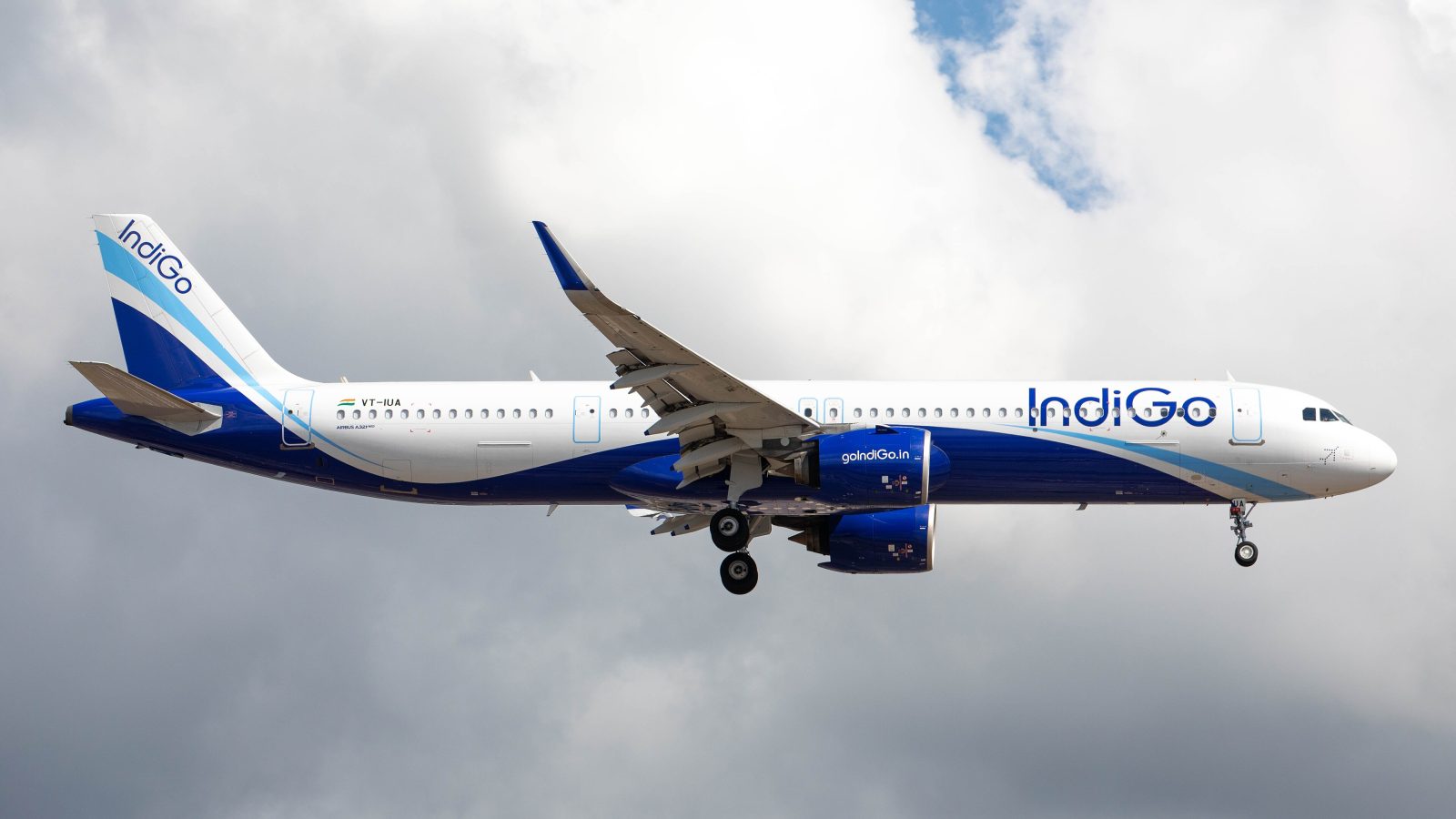
An IndiGo Airbus A321neo suffered a tail strike during a go around at Kempegowda International Airport in Bengaluru on Sunday 27 September 2026.
Flight 6E 6542 from Guwahati landed safely on its second attempt, and all passengers and crew disembarked without injury.
The airline has confirmed the incident and attributed it to gusty weather in Bengaluru.
The aircraft has been grounded for maintenance checks, and the Directorate General of Civil Aviation (DGCA) has opened an investigation.
What Happened on Approach to Bengaluru
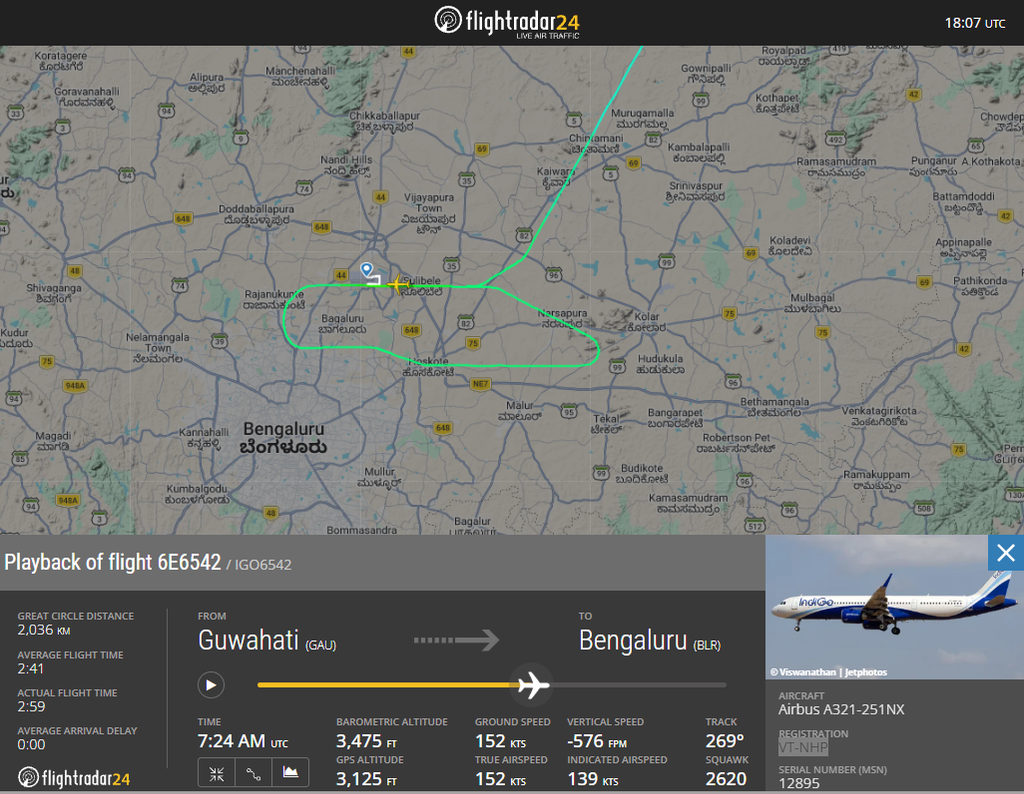
Sources told NDTV that the tail of the aircraft made contact with the runway as the crew executed a go around at Bengaluru.
The pilots then positioned the aircraft for a second approach and landed safely.
Data from Flightradar24 shows that 6E 6542 departed Guwahati at 10:15 local time, 85 minutes behind its scheduled 08:50 departure.
The aircraft touched down in Bengaluru at 13:14 local time after a flight time of two hours and 59 minutes.
That is longer than any flight time recorded on the route across the previous six days, consistent with the crew flying a missed approach and returning for a second landing.
IndiGo Confirms Abnormal Runway Contact in Bengaluru
In a press statement issued on Sunday, IndiGo described the event as an “Abnormal Runway Contact” rather than a tail strike.
“An IndiGo aircraft operating flight 6E 6542 from Guwahati to Bengaluru, experienced an ‘Abnormal Runway Contact’ while landing during gusty weather at Kempegowda International Airport, Bengaluru,” a spokesperson for the airline said.
The airline confirmed that all customers and crew were safe and had disembarked the aircraft.
“In line with standard operating procedures, all relevant authorities were informed and the aircraft is undergoing maintenance checks. It will resume operations after securing necessary clearances,” the statement added.
The Aircraft Involved
The aircraft operating the service was VT-NHP, an Airbus A321-251NX powered by CFM LEAP-1A engines.
The airframe carries manufacturer serial number 12895 and was delivered to IndiGo on 20 December 2025, making it less than a year old.
VT-NHP is configured with 232 seats and remains on the ground in Bengaluru while engineers carry out inspections.
DGCA Investigation Into Repeat Tail Strikes
The Bengaluru incident has drawn the attention of the DGCA, which has launched an investigation amid what sources described as “concerns over repeat 6E A321 tail strikes.”
Second Incident in Two Months
The event in Bengaluru comes just a month after a similar incident involving another IndiGo flight.
Flight 6E 2381 from Delhi to Gorakhpur was on approach when the flight crew decided to abandon the landing and perform a precautionary go around.
During a routine inspection after the flight, maintenance crews found minor scratches near the Auxiliary Power Unit (APU) inlet at the tail of the aircraft.
The aircraft was temporarily grounded and placed under maintenance for inspection and repair.
Why Tail Strikes Matter
The A321neo is the longest member of the A320neo family, which leaves less clearance between the tail and the runway at high pitch angles than on shorter variants.
A go around close to the ground is particularly demanding, because the aircraft can continue to sink briefly as the pilots raise the nose and apply thrust.
Gusty conditions add further risk by causing sudden changes in airspeed and height during the final stages of an approach.
Even a light contact can damage the lower rear fuselage and the aft pressure bulkhead, which is why airlines ground aircraft for detailed structural checks after any tail strike.
The Aviation Hub will continue to follow the DGCA investigation and will provide updates as more information emerges from Bengaluru.
Advertise with us Your brand, in front of an aviation audience Home page and in-article placements, sold directly, one advertiser per slot. From £250 a year. See the rates