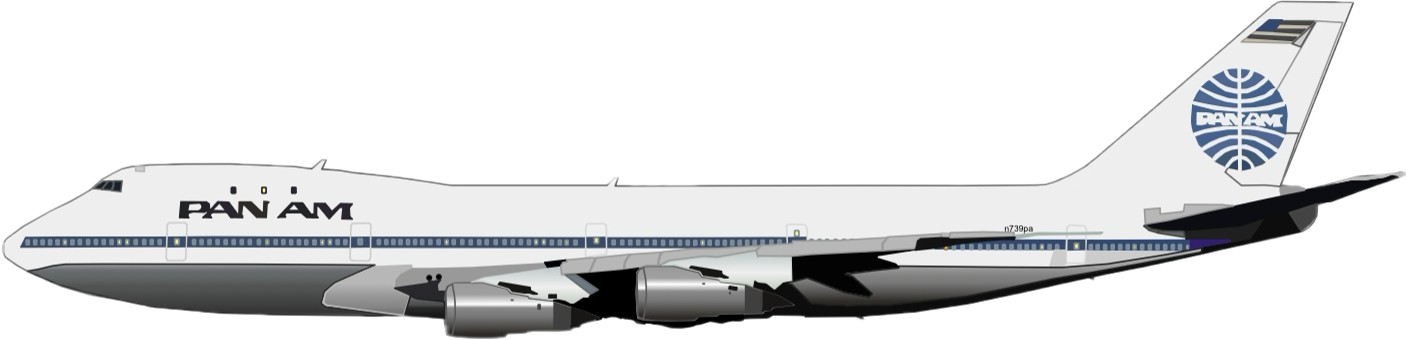
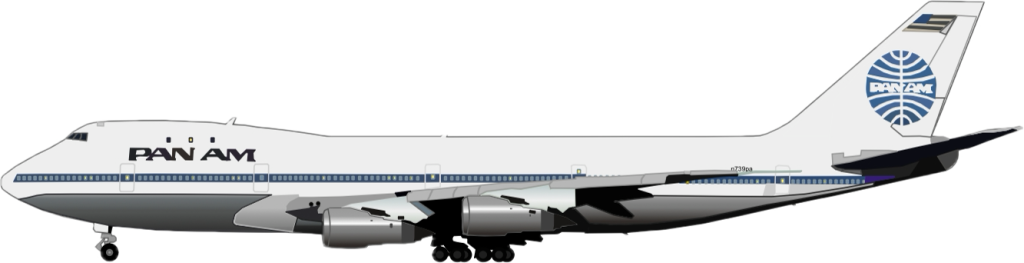
On 22 January 1970, a Boeing 747 named Clipper Young America lifted off from New York JFK bound for London Heathrow, carrying 335 passengers and 20 crew. That single departure, as Northwestern University records, was the moment mass transatlantic travel became an economic possibility rather than a privilege. The Boeing 747 did not merely introduce a larger aircraft; it forced fares down, compelled airports to rebuild and permanently altered who could afford to cross an ocean.
If you want to research the type's full production history, our Aircraft Search tool lets you explore individual airframes and variants.
A Bet Worth $550 Million
The 747's origins were commercial as much as engineering. Pan Am asked Boeing for a jet roughly 2.5 times the size of the 707, with the explicit aim of cutting per-seat costs by 30 per cent, according to Boeing's records as cited by Wikipedia. The airline placed its order for 25 Boeing 747-100 aircraft in April 1966, at $20 million per airframe, making the total commitment $550 million, as both Northwestern University and HistoryLink.org note.
That figure was a gamble that dwarfed Pan Am's annual revenues. Yesterday's Airlines reports that Pan Am posted a profit of $65.7 million on revenues of $950 million for 1967, though even then profits had already fallen 21.5 per cent year on year. By the first half of 1969, Yesterday's Airlines reports, the airline had swung to a loss of $12.7 million. Pan Am was ordering an aircraft whose full costs it could not yet absorb, in the hope that volume would vindicate the bet. Juan Trippe, the architect of the 747 order, stepped down as Pan Am's chief executive and chairman on 7 May 1968, Yesterday's Airlines reports, before the aircraft had even flown.
Yesterday's Airlines also reports that Pan Am ultimately increased its order from 25 to 33 aircraft, a sign that the commercial logic held even as the finances were stretched.
Building Something New
The engineering challenge was without precedent. Joe Sutter led the 747 design team after leaving the 737 programme in 1965, according to Wikipedia and HistoryLink.org. Pratt and Whitney agreed to develop the JT9D high-bypass turbofan engine specifically for the aircraft in late 1966, Wikipedia notes, because nothing powerful enough yet existed. At the project's peak in 1968, Northwestern University reports, around 20,000 Boeing employees were working on the 747.
The first aircraft rolled out of Boeing's Everett plant on 30 September 1968, Wikipedia records. The maiden flight followed on 9 February 1969, confirmed by Wikipedia, Northwestern University and HistoryLink.org. The FAA certified the 747 for commercial passenger service on 30 December 1969, Wikipedia states, leaving just over three weeks before Pan Am's inaugural revenue service began.
What the Boeing 747 Did to Fares and Airports
The 30 per cent reduction in seat costs that Pan Am had targeted was not an aspiration plucked from thin air. It was the structural consequence of spreading fixed costs across a cabin that the Hawaii Department of Transportation notes could carry between 397 and 490 passengers. When an operator fills a 747 to a comparable load factor to a 707, the arithmetic drives the ticket price down. Transatlantic fares fell by around 40 per cent in the years after the 747 entered service, a shift that opened intercontinental travel to passengers who had previously been priced out entirely.
The aircraft's sheer size created infrastructure obligations that rippled well beyond Boeing and Pan Am. The Hawaii Department of Transportation records that Honolulu International opened its Diamond Head Gull Wing Terminal on 3 March 1970 specifically to handle 747 operations, the same day Pan Am initiated 747 service into Honolulu with one daily flight. Airports that wanted 747 traffic had to invest in gates, jetbridges, baggage systems and taxiways designed around a fuselage wider than many terminals had been built to serve. That pattern, one new aircraft type forcing capital expenditure across an entire network, is precisely what the industry faces whenever a new generation of widebody arrives.
United Airlines captured the aircraft's paradox in a 747 launch pamphlet cited by Northwestern University: "For all its size, it's intimate." The marketing acknowledged what the engineers had done. A wide twin-aisle cabin with a split upper deck felt different from anything passengers had flown before, even at scale.
The 54-Year Production Run and What It Tells Us
Wikipedia, drawing on Boeing and FAA records, puts the total number of 747s built at 1,574 across a 54-year production run. The final aircraft was delivered to Atlas Air in January 2023, Wikipedia states. The 747-400, introduced in 1989 with a two-crew glass cockpit, became the most common variant, Wikipedia records, and remained the benchmark widebody on long-haul routes for two decades.
A production run of 54 years is not a record that accumulates by accident. It reflects the degree to which the basic economic proposition, a very large twin-aisle aircraft whose per-seat costs undercut anything smaller, remained valid across successive generations of operators, engine technology and route networks.
Why the Economics Still Matter Today
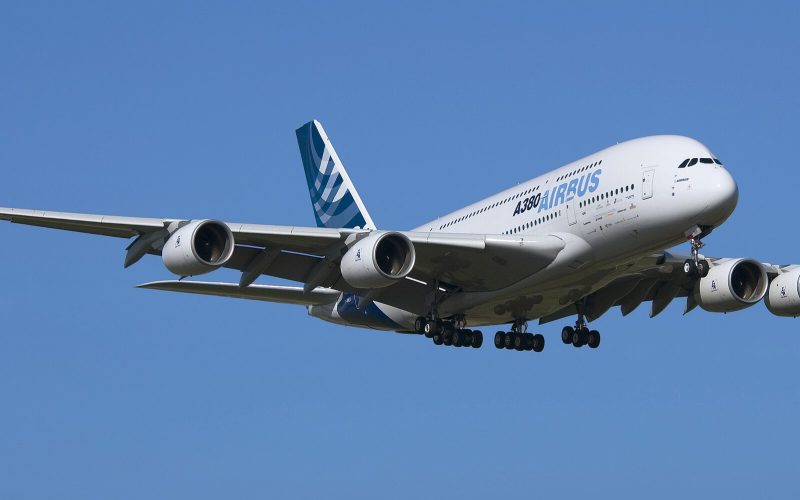
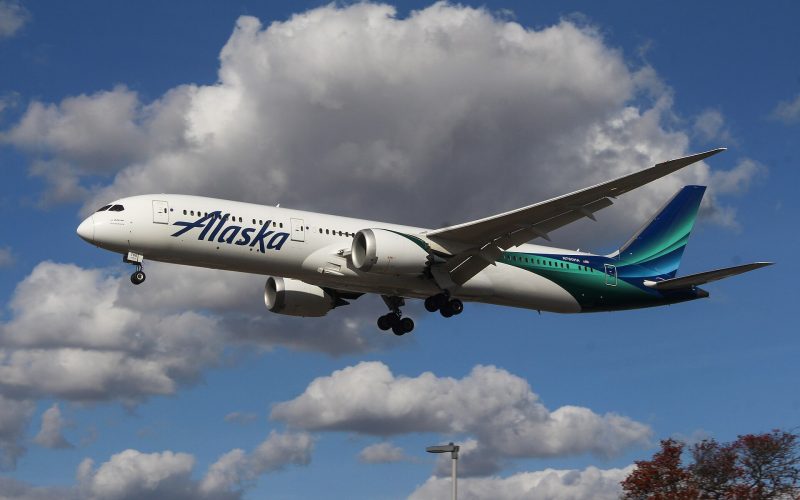
Every widebody aircraft flying transatlantic routes today traces its commercial logic to the case Pan Am put to Boeing in the mid-1960s: build it larger, fill it, and the seat cost falls to a price the market will clear. The Airbus A380 tested whether that logic could be extended to a double-deck configuration. The Boeing 787 and Airbus A350 tested whether two engines could achieve what four previously required. Neither argument would have been made had the 747 not proved the underlying principle.
The 40 per cent reduction in transatlantic fares that the 747 drove is not a historical curiosity. It set the reference point against which every subsequent widebody has had to justify itself. When airlines evaluate a new type, the question is always whether the seat economics improve on the aircraft it replaces. The 747 is what made that question central to commercial aviation rather than incidental to it.
The Bottom Line
The Boeing 747's entry into service on 22 January 1970 was an economic event as much as an aviation one. It forced fares down to a level that made transatlantic travel genuinely accessible, compelled airports worldwide to rebuild for a new scale of operation and established the per-seat cost discipline that still governs every widebody procurement decision made today. With 1,574 aircraft delivered over 54 years and a farewell to service that only completed in January 2023, its influence on the structure of the industry is not theoretical. It is measurable in every ticket price quoted on a transatlantic route.
This article draws on information from Wikipedia (citing Boeing, FAA, and primary airline records) and Hawaii Department of Transportation – Airports Division (official) and reporting by Northwestern University, Yesterday's Airlines and HistoryLink.org.
Continue to follow The Aviation Hub for more analysis and insight.
Advertise with us Your brand, in front of an aviation audience Home page and in-article placements, sold directly, one advertiser per slot. From £250 a year. See the rates