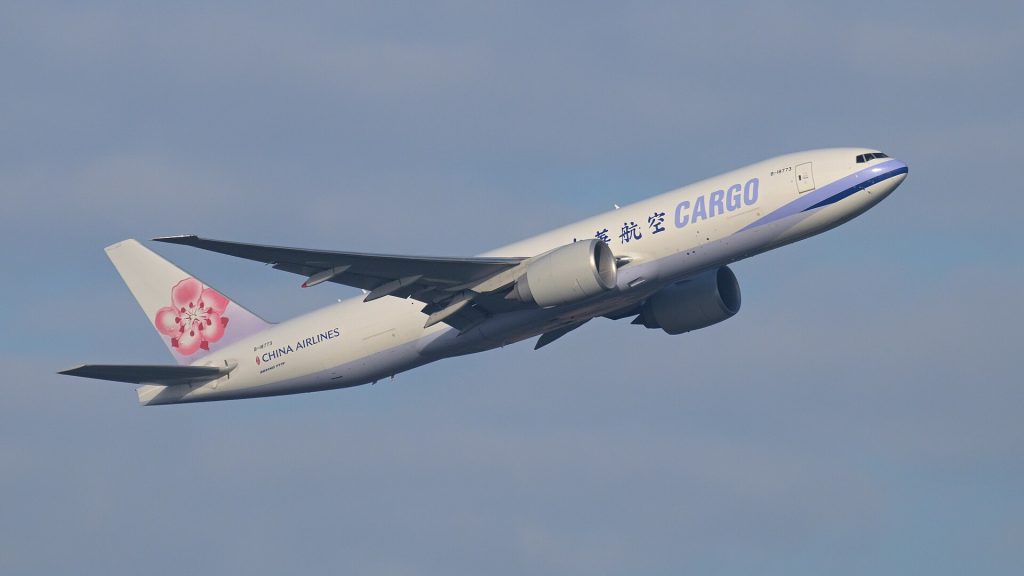
Thirty-five aircraft. That is the precise number at the heart of the 777F emissions exemption, and it is a figure worth sitting with before drawing any conclusions about what Boeing has actually secured. The FAA's decision, published on 16 September 2026 according to Air Cargo News, permits Boeing to continue delivering its current 777F freighter into a regulatory environment that would otherwise shut those deliveries down. The question for cargo operators and the broader freight market is whether 35 aeroplanes, spread across three years, is a bridge or merely a pause before a steeper drop.
What the FAA Actually Decided
The exemption's scope is tightly drawn. The FAA's decision document states: "This exemption goes into effect on January 1, 2028, and applies to issuance of the first certificates of airworthiness for up to thirty-five 777F airplanes through January 1, 2031, unless sooner superseded or rescinded." Underpinning all of this is an ICAO-based emissions framework that blocks newly certificated large aircraft which fall short of prescribed fuel-efficiency and CO2 thresholds from obtaining first airworthiness certificates after 1 January 2028. Because the current 777F falls short of those thresholds, every delivery after that date would have been blocked had the exemption not been granted.
Boeing filed its exemption request in December 2025, giving the FAA roughly nine months to reach a decision before the rules took effect. FreightWaves reports that GE Aerospace, the Aerospace Industries Association, the California Manufacturers and Technology Association, the National Association of Manufacturers, and the U.S. Chamber of Commerce all filed in support of the application. FreightWaves also reports that EASA did not object to the exemption, which matters given that European operators are among the 777F's customer base.
The Backlog Behind the Numbers
To understand what 35 exempted deliveries represent, the existing order book provides essential context. Air Data News reports that Boeing had 38 unfilled 777F orders as of the end of August 2026, and that Boeing had delivered 312 777Fs through that same point. The exemption's ceiling of 35 aircraft sits just three short of that late-August backlog figure, which at first glance suggests an almost exact match between what is permitted and what customers are waiting for.
The picture is complicated, however, by what Air Data News reports about six of those 38 orders: they are attributed to Russia's Volga-Dnepr, whose aircraft remain on Boeing's books despite sanctions. Those six aircraft cannot realistically be treated as deliverable under current conditions, which means the effective addressable backlog may be closer to 32 unfilled orders from other customers. That figure falls within the 35-unit ceiling, suggesting the exemption is sized to cover the genuinely deliverable portion of the current backlog with a small margin.
The backlog has not remained fixed in the meantime. As Stat Times reports, Boeing's 777F order backlog stood at 38 as of 30 September 2026, unchanged despite two deliveries that month, because Ethiopian Airlines Cargo placed two new orders and offset them exactly. Stat Times reports that the two September deliveries went to Air China Cargo and FedEx, one aircraft each. In a separate development, Stat Times reports that Ethiopian Airlines signed for two 777Fs and eight 777-8Fs on 30 September, with options on eight further aircraft, a single agreement that takes in both the current freighter and its next-generation successor.
FreightWaves reports that China Airlines and China Southern Airlines placed orders for two classic 777 freighters apiece, while Saudia ordered four, a cluster of commitments that shows demand for the type held firm even as the exemption deadline drew closer.
The Production Rate and the Three-Year Window
Across all of 2025, Boeing handed over 35 777Fs, and a further 18 were delivered through the first eight months of 2026. Taken together, those numbers point to a production tempo that could consume the entire 35-unit exemption ceiling well ahead of the 1 January 2031 deadline if it is maintained. At the 2025 annual rate, the allocation would be exhausted within a single year. The pace implied by the 2026 figures, if spread more evenly across the period, would stretch the runway a little further, yet the exemption's three-year window looks comfortable against current output only if throughput stays comfortably below last year's level.
Demand is not something the exemption can guarantee; what it does is remove the regulatory obstacle on the supply side. Commercially, the window to 2031 carries real weight if Boeing can work through the remaining orders and secure new ones within the 35-unit ceiling. The financial stakes are made plain by FreightWaves' report that Boeing's own estimate puts the export sales it would forfeit without the exemption at more than $15 billion.
For readers who want to explore the broader Boeing product line, our Aircraft Search covers current types and their specifications.
Does the 777F Emissions Exemption Bridge the Gap to the 777-8F?
The facts frame the central question sharply. A 2027 entry into service was the original target for the 777-8F, but Boeing announced in October 2024 that the date had slipped to 2028 or beyond. The current Boeing target places 777-8F service entry at around 2029, roughly two years on from the first 777-9 delivery. The exemption window opens on 1 January 2028 and closes on 1 January 2031.
If the 777-8F enters service in 2029, there is a potential overlap of roughly two years during which both the exempted 777F and the new freighter could be in delivery simultaneously. That overlap matters because it means the transition need not be a cliff: operators placing firm orders today could conceivably take an exempted 777F as an interim aircraft while their 777-8F slot matures. The Ethiopian Airlines deal, spanning both types in a single agreement, illustrates precisely that logic.
The risk is that "around 2029" is not a firm commitment, and that the 35-unit ceiling is fixed. If 777-8F certification slips further and the exempted allocation is consumed faster than expected, there is a gap. The ceiling does not flex; the timeline might.
The Bottom Line
The 777F emissions exemption is a precisely delimited tool. It keeps Boeing's ability to clear its deliverable backlog intact, shields a revenue stream that FreightWaves reports Boeing values at more than $15 billion in export sales, and establishes a legal runway to 2031 that, judged against current production rates, looks adequate to cover what genuinely remains in the queue once the Volga-Dnepr orders are set to one side. Whether the exemption truly serves as a bridge to the 777-8F hinges entirely on Boeing holding to its 2029 service-entry target. The exemption purchases time. It falls to the 777-8F programme to make use of it.
This article draws on reporting by Air Data News, Stat Times, FreightWaves and Air Cargo News.
Continue to follow The Aviation Hub for more analysis and insight.
Advertise with us Your brand, in front of an aviation audience Home page and in-article placements, sold directly, one advertiser per slot. From £250 a year. See the rates