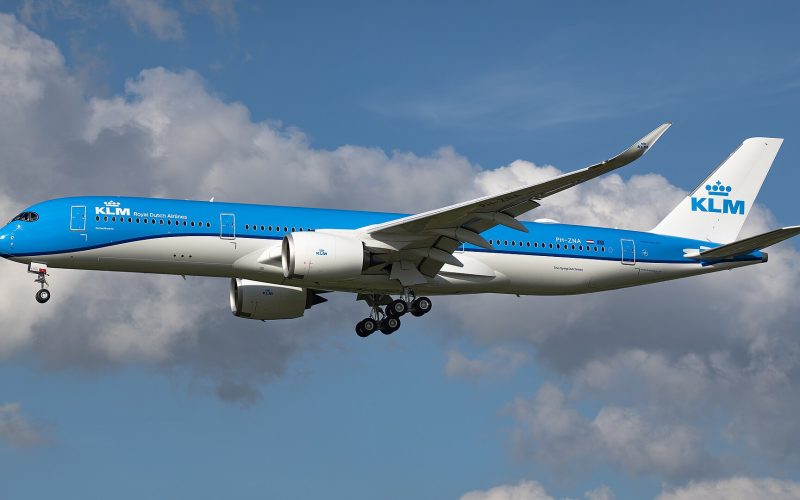

Scott Kirby, the chief executive of United Airlines, has put the most uncomfortable question in commercial aviation into plain language: are Boeing and Airbus, between them, choosing not to build the next generation of jets? His answer, stated publicly, is yes, and the structural logic behind his accusation is difficult to dismiss.
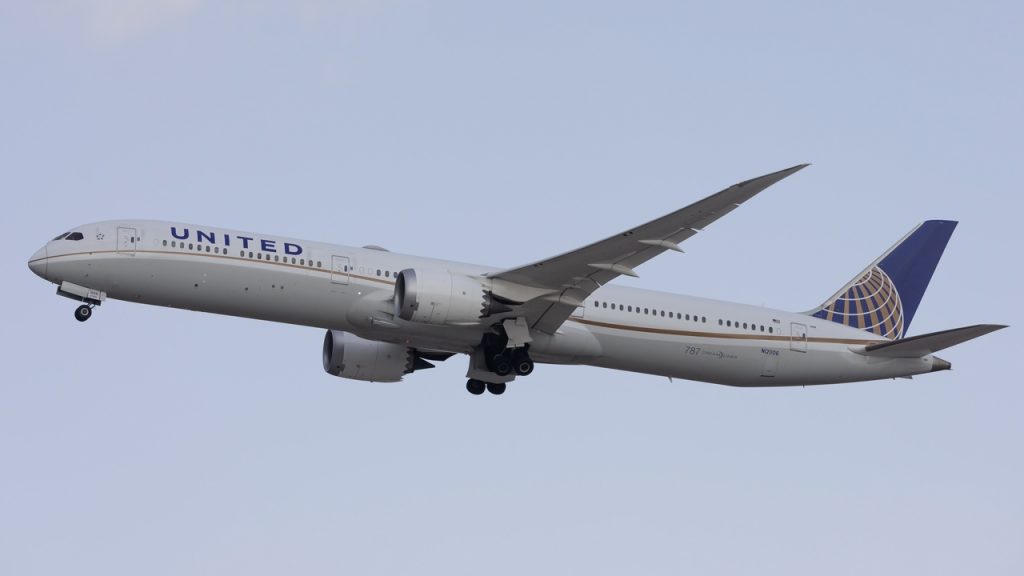
According to Aviation A2Z, Kirby put the issue in stark terms: "I think the fundamental problem is Boeing and Airbus have a global duopoly, and they have quietly, not officially agreed, but they have quietly agreed: 'Neither one of us will invest in new airframes.'"
The Gap Nobody Is Filling
The mid-market gap is the sharpest illustration of Kirby's case. Boeing's 757 line closed in 2004, as View from the Wing notes, and no replacement aircraft from the manufacturer has ever followed it. That absence has now stretched across more than two decades of production history.
Boeing did attempt to fill that void for a period. The New Midsize Airplane programme was placed on hold in January 2020 for a clean-sheet reevaluation, and in June 2022 Boeing confirmed it would not proceed with the NMA until new engines and development tools had reached maturity, Wikipedia reports. The proposed aircraft, sometimes referred to as the 797, would have come in two variants: a 225-seat version with a 5,000 nautical mile range and a 275-seat version with a 4,500 nautical mile range, representing a genuine answer to the thinning of long-haul twin-aisle routes, Wikipedia also reports. No such aircraft exists today, and no firm launch date has been set.
This is not a new grievance for Kirby. "I've been begging them both for 20-something years to build a 757 replacement," he is quoted by Aviation A2Z as saying. "Begging them, and they just won't do it."
What Boeing and Airbus Are Actually Saying
Neither manufacturer has pushed back against the suggestion that new programmes are some way off. At the ISTAT conference in Prague in October 2025, executives from both Boeing and Airbus acknowledged that no next-generation commercial aircraft are planned for the near term, ePlane AI reports. Boeing's marketing chief Darren Hulst was among those present, and he told the conference that a replacement for the 737 remains many years away, ePlane AI reports.
Boeing's chief executive Kelly Ortberg has given the financial rationale directly. He told CNBC that the company needs another couple of years to get its finances in order before launching a new aircraft programme. "The market's got to be ready," he told CNBC. "Right now, the customers are telling me, 'focus on your existing product line, we really want to see better maturity of the existing product line before we move to a new airplane.'"
On the question of engine architecture, The Irish Times reports that Ortberg has indicated Boeing's baseline preference for any future narrowbody leans towards a conventional enclosed engine over CFM International's open-fan design, a sign that fundamental decisions remain at the evaluation stage rather than settled policy.
Airbus has advanced its thinking further, even if firm commitments remain absent. CEO Guillaume Faury has indicated that Airbus is aiming to launch a next-generation single-aisle programme around 2030, with first deliveries expected in the second half of the 2030s, according to The Irish Times and CNBC. On even the most optimistic reading, airlines are looking at the better part of fifteen years before those aircraft arrive.
The Backlog That Makes Delay Rational
The order books explain, in large part, why both manufacturers are content to move slowly. The Irish Times reports that Boeing is sitting on a backlog of almost 7,000 unfulfilled orders. Airbus, meanwhile, has more than 9,000 aircraft yet to deliver, CNBC reports. On current product lines alone, both manufacturers are committed for years ahead.
Output from both manufacturers is on the rise. Boeing handed over 171 aircraft in the second quarter, a figure 12 per cent ahead of the prior year, and logged 121 gross orders in June against 116 in the equivalent month a year before, The Irish Times reports. Airbus, for its part, delivered 190 A320 family aircraft in the second quarter and recorded 51 A320neo orders in June, CNBC reports. Boeing has also opened a fourth 737 MAX production line in Everett, Washington, committing approximately one billion dollars to its existing narrowbody rather than channelling investment towards whatever comes next, CNBC also reports.
ePlane AI reports that the Airbus A320 family has surpassed the Boeing 737 to become the most-delivered aircraft type in history. Both manufacturers are, in short, selling everything they can build, and building more of what they already have.
The economic logic is straightforward from where both boardrooms sit. Launching a clean-sheet aircraft programme costs tens of billions of dollars, takes the better part of a decade, and introduces enormous execution risk. When your existing lines have order books stretching deep into the next decade, the incentive to shoulder that risk is limited, whatever the airlines might want.
You can explore both manufacturers' current lineups using our Manufacturer Search tool.
What This Means for Airlines and Passengers
The absence of new programmes has tangible consequences for the industry. Airlines seeking to replace ageing mid-market fleets, or to open thinner long-haul routes that neither the A321XLR nor a widebody serves efficiently, have limited options. They can wait, pay more for a less optimal aircraft, or keep flying older jets longer.
Kirby went further than criticising the two manufacturers, explicitly arguing that a new entrant is needed to break the Boeing-Airbus grip on the market, as View from the Wing reports. "We need a third aircraft manufacturer, to be blunt," Aviation A2Z quotes him as saying. Whether such an ambition is achievable is a separate question entirely: mounting the industrial, regulatory and financial challenge required to take on two deeply entrenched manufacturers is a generational undertaking, and no credible candidate has yet announced any intention to try.
For passengers, the medium-term effect is likely to be a slower pace of cabin improvement and fuel efficiency gain than would come from all-new designs. Current narrowbodies and widebodies are more efficient than their predecessors, but a clean-sheet design using the latest materials and propulsion would deliver step-change gains that incremental upgrades cannot match.
What to Watch
The most important variable is Boeing's financial recovery. If Ortberg stabilises the company's balance sheet within the timescale he has described, the question of whether to launch a new programme moves from theoretical to urgent. Airbus's 2030 target for a launch decision is the other marker to track: a firm programme announcement from Airbus would almost certainly accelerate Boeing's hand.
Kirby's accusation, whether or not the word collusion is technically accurate, has named something the industry has danced around for years. Whether competitive or financial pressure eventually breaks the current equilibrium is the central question for commercial aviation over the next decade.
This article draws on reporting by Aviation A2Z, View from the Wing, The Irish Times, CNBC, Wikipedia and ePlane AI.
Continue to follow The Aviation Hub for more analysis and insight.
Advertise with us Your brand, in front of an aviation audience Home page and in-article placements, sold directly, one advertiser per slot. From £250 a year. See the rates