Boeing Lands 150 737 MAX Turkish Deal: A Win For Both Sides?
 By The Aviation Hub
8 min read
Updated September 24, 2026
By The Aviation Hub
8 min read
Updated September 24, 2026 
Boeing has finally closed one of the most drawn out single aisle campaigns of recent years.
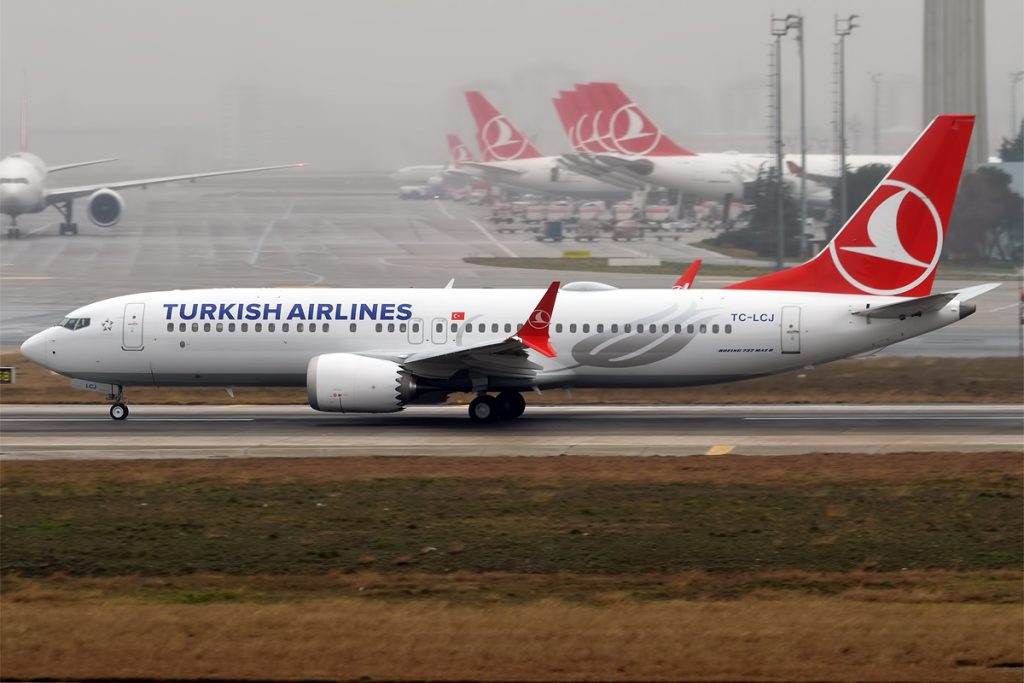
On 23 September 2026, the manufacturer and Turkish Airlines confirmed an order for up to 150 737 MAX aircraft, made up of 100 firm 737-8s and options on 50 more.
The deal was signed in New York in the presence of Turkish President Recep Tayyip Erdoğan, and it brings to a close negotiations that first surfaced in 2025.
It is the largest Boeing single aisle order in the history of Turkish Airlines.
It also arrives at a moment when Boeing badly needs proof that its most important product line has regained the confidence of the world’s biggest airlines.
This analysis looks at what the order means for Turkish Airlines, how the carrier is likely to use the aircraft, and what it signals for Boeing after several turbulent years in the sales market.
A Deal That Took Boeing a Year to Land
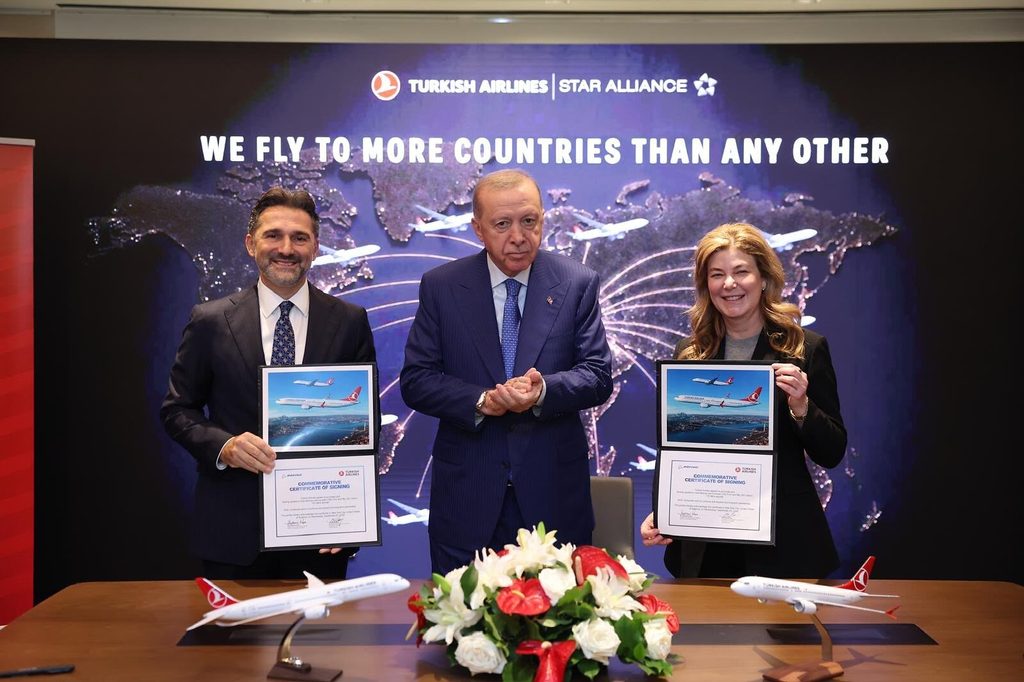
The headline numbers first appeared in September 2025, when Turkish Airlines signalled its intention to order up to 150 737 MAX jets alongside a firm commitment for up to 75 787 Dreamliners.
The widebody part moved quickly. The narrowbody part did not.
The sticking point was never the airframe.
It was the engine.
The 737 MAX is offered with only one powerplant, the CFM International LEAP-1B, which leaves airlines with no alternative supplier to play off against the engine maker.
Turkish Airlines spent months pushing CFM for better terms on pricing and maintenance, and it sought a greater role in supporting its own growing fleet of LEAP powered aircraft, including ambitions for a dedicated maintenance facility in Türkiye.
The airline made little secret of its leverage. Executives openly discussed shifting more narrowbody business to Airbus, which already holds a substantial Turkish Airlines order placed in 2023.
That pressure appears to have worked.
The final terms with CFM have not been disclosed, but the fact that the order is now firm tells us Turkish Airlines secured enough of what it wanted.
For Boeing, the delay was frustrating but not fatal.
The manufacturer could do little to break the impasse directly, since the dispute sat between the airline and its engine supplier.
Its reward for patience is a firm order for 100 aircraft that could easily have gone the other way.
Why Turkish Airlines Needs These Aircraft
Turkish Airlines is one of the most ambitious carriers in the world.
It already flies to more countries than any other airline, with a network of more than 130 countries radiating from Istanbul Airport.
The group operates a fleet of more than 500 passenger and cargo aircraft and carried more than 92 million passengers in 2025.
That growth is part of a long term plan.
The carrier is targeting a fleet of around 800 aircraft by 2033, the year the airline celebrates its centenary.
Reaching that figure requires a steady stream of new aircraft across every category, and the Boeing order fills a major part of the narrowbody requirement.
The 737-8 is a natural fit.
Turkish Airlines and its low cost subsidiary AJet already operate the type, so crews, engineers and spare parts are all in place.
Adding a further 100 aircraft allows the group to scale its existing Boeing operation rather than introduce anything new.
According to reports, deliveries are scheduled to run between 2033 and 2037.
That timeline matters. It shows this order is less about immediate growth and more about securing production slots for the next decade, at a time when both Boeing and Airbus have backlogs stretching well into the 2030s.
How the 737 MAX Will Be Deployed
Istanbul sits at the centre of a vast catchment.
Within a narrowbody range of the hub lie Europe, the Middle East, North Africa, Central Asia and the Caucasus.
Much of the Turkish Airlines network is built on connecting passengers from these markets onto long haul flights, and single aisle aircraft do the heavy lifting on those feeder routes.
The 737-8 gives Turkish Airlines the range and payload flexibility to serve thinner routes that cannot justify a widebody, while still reaching destinations up to around six hours from Istanbul.
Expect the new Boeing jets to add frequencies on high demand European trunk routes, open new secondary city pairs, and replace older 737 Next Generation aircraft as they reach retirement age.
AJet is likely to be a major beneficiary.
The subsidiary operates largely from Istanbul Sabiha Gökçen and serves domestic and short haul international leisure markets where low unit costs are essential.
The fuel efficiency of the 737 MAX, which Boeing says delivers a 20% reduction in fuel use and emissions against the aircraft it replaces, fits squarely with the low cost model.
The substitution rights for the 737-10 add a further layer of flexibility.
The largest member of the family can carry more passengers on busy routes where slots at Istanbul or destination airports are constrained.
Certification of the 737-10 has been a drawn out process, with the engine anti ice system the last major hurdle.
By securing conversion rights rather than committing firmly to the variant, Turkish Airlines protects itself against further delays while keeping the option to upgauge later.
Balancing Boeing and Airbus
One of the most striking features of the Turkish Airlines fleet strategy is its deliberate balance between the two major manufacturers.
The airline placed a large order with Airbus in 2023 covering A321neo and A350 aircraft.
It has now matched that with major commitments to Boeing on both widebody and narrowbody types.
There are good reasons for a dual supplier approach.
It spreads delivery risk at a time when both manufacturers face supply chain constraints.
It also protects the airline against problems specific to one engine family.
Turkish Airlines has seen part of its A320neo family fleet affected by Pratt & Whitney GTF inspections in recent years, and having a significant Boeing narrowbody fleet powered by a different engine offers valuable resilience.
Commercially, the split also keeps both manufacturers competing for future business.
The CFM negotiations showed that Turkish Airlines is prepared to use that competition as leverage, and it is unlikely to stop now.
Strengthening a Global Hub
This order is not simply about more aircraft.
It is about cementing Istanbul as one of the three or four most important connecting hubs in the world.
The Gulf carriers built their success on geography, sitting between Europe and Asia.
Istanbul enjoys a similar advantage, with the added benefit of reaching much of Europe with narrowbody aircraft.
That gives Turkish Airlines a structural cost edge on feeder flights that Emirates and Qatar Airways, with their predominantly widebody fleets, cannot easily replicate.
Combined with up to 75 787 Dreamliners, the new Boeing narrowbodies give Turkish Airlines the tools to grow both ends of its network simultaneously.
More feeder capacity brings more connecting passengers to Istanbul, and more widebody capacity carries them onward to Asia, Africa and the Americas.
The two orders work as a single strategy.
The industrial participation element also deserves attention.
Boeing has committed to continued support for the Turkish aviation ecosystem, which is likely to include work for domestic suppliers and maintenance providers.
For a government keen to build a stronger national aerospace sector, that is as important as the aircraft themselves.
What This Means for Boeing
For Boeing, this order carries weight well beyond its list value.
The past few years have been among the most difficult in the company’s history.
The Alaska Airlines door plug incident in January 2024 triggered intense regulatory scrutiny and an FAA cap of 38 737 aircraft per month.
A machinists’ strike later that year halted production at its main commercial plants for several weeks.
Deliveries slumped, customers faced long delays, and Airbus pulled clearly ahead in both orders and deliveries.
Recovery has been steady rather than spectacular.
The FAA raised the 737 production cap to 42 per month in October 2025, and Boeing has since moved towards 47 per month,
with a fourth production line in preparation. Deliveries in 2026 are running ahead of last year’s pace.
Yet Airbus still holds a sizeable lead in gross orders this year, and the 737-7 and 737-10 remain uncertified.
Against that backdrop, a firm order for 100 737-8s from one of the fastest growing airlines in the world is a meaningful vote of confidence. It shows that major carriers are once again willing to commit to the 737 MAX over the long term, and it denies Airbus a deal it was clearly positioned to win.
Politics and the Order Book

It would be naïve to ignore the political dimension.
Like several large Boeing orders over the past two years, this one was finalised alongside high level diplomatic engagement between Washington and a partner government.
President Trump publicly welcomed the deal as a win for American manufacturing.
That pattern has helped Boeing rebuild its order book, but it also raises questions about how much of the recent momentum reflects pure commercial preference.
In this case, the prolonged engine talks suggest Turkish Airlines drove a hard bargain on its own terms.
The politics may have smoothed the final signature, but the business case clearly had to stand up first.
The Verdict
This is a significant win for Boeing and a smart move by Turkish Airlines.
The airline secures long term narrowbody capacity, deepens a fleet it already knows well, and keeps its options open through the 737-10 conversion rights and the continued Airbus relationship.
For Boeing, the order is another step on the road to recovery.
It will not erase the damage of recent years on its own, but it shows the 737 MAX can still win major campaigns against strong competition.
The next test is execution.
With deliveries set for the 2030s, Boeing has time to prove that its production system and certification programme are ready for the demand it is winning back.
Continue to follow The Aviation Hub for more analysis and insight!
Advertise with us Your brand, in front of an aviation audience Home page and in-article placements, sold directly, one advertiser per slot. From £250 a year. See the rates