Boeing’s share price has fallen by a quarter since January, hit by a disappointing set of results, delays to the 777X and now a rocket failure. Here is why Boeing shares have struggled in 2026, what the company needs to deliver and what analysts expect next.
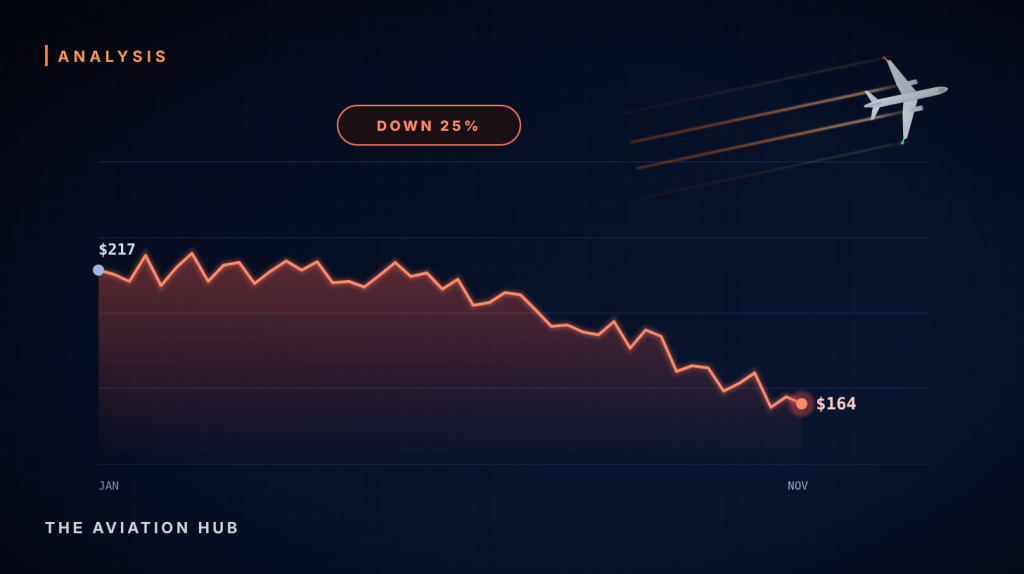
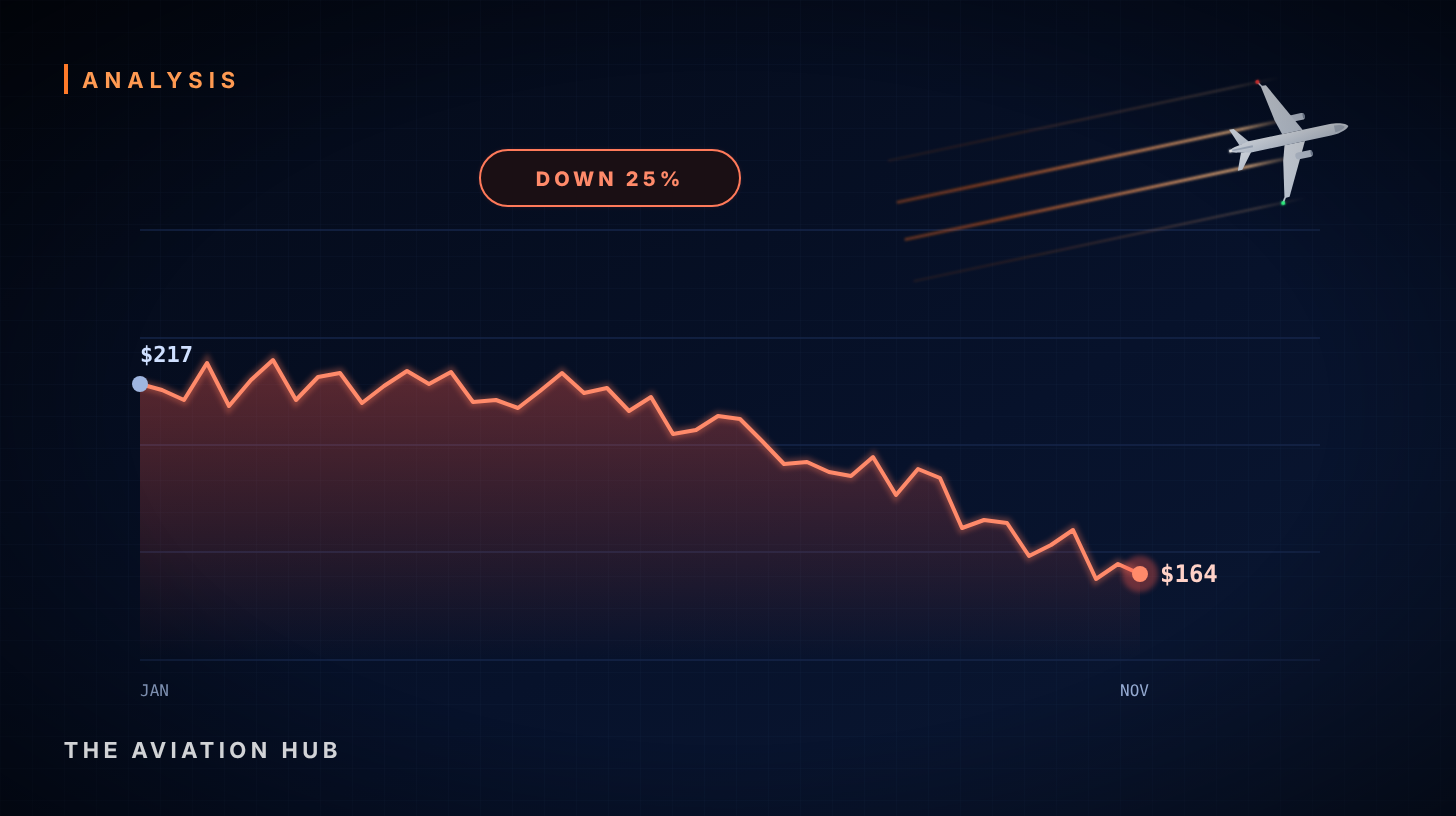
Boeing shares have had a difficult 2026. The stock traded at $163.76 on 17 November, down 25% from $217.12 at the start of the year and well below its 52 week high of $254.35, according to 24/7 Wall St.
The fall reflects a series of setbacks, from weaker than expected results to delays on its largest new airliner. The question for investors is whether the recovery has simply been pushed back or is at risk altogether.
A Disappointing Third Quarter
The latest blow came with Boeing’s third quarter results. It reported an adjusted loss of $0.34 a share, wider than the $0.20 loss analysts had expected, on revenue of $24.19 billion, slightly below forecasts.
Its Commercial Airplanes division made a negative operating margin of 6.5%, which Boeing attributed to changes in production rates and higher supply chain costs.
Cash Flow Targets Pushed Back
More damaging for the share price, Boeing pushed its free cash flow targets back by about a year. It now aims for $3 billion in 2027 and $10 billion in 2029, 24/7 Wall St reports.
That matters because Boeing carries $45.9 billion of debt. Investors want to see cash coming in to pay it down, and every delay pushes that further into the future.
The 777X Delay
Boeing’s next widebody remains the biggest single source of uncertainty. Certification of the 777X is now expected only in 2027, and chief executive Kelly Ortberg has said Boeing is “getting ready to start deliveries next year,” according to One Mile at a Time.
The programme has reportedly run up around $15 billion in overruns. Emirates, with 270 on order, is the largest customer, and British Airways, Lufthansa and Qatar Airways are among the airlines waiting for the aircraft to renew their fleets.
Production and a Rocket Failure
Production of the 737 is stabilising at 47 aircraft a month, with a target of 52 a month in the second half of 2027. Boeing is expected to fall short of its 500 delivery target this year.
Ortberg has stressed caution. “It is more important that we do this ramp right than in what particular month we achieve a rate break,” he said.
Then, on 16 November, a Vulcan rocket operated by United Launch Alliance, Boeing’s joint venture with Lockheed Martin, failed, destroying the Amazon satellites it was carrying. The cause has not yet been identified.
What Analysts Expect
Despite the fall, analysts remain more positive than the market. The consensus price target is $233.35, well above the current share price, according to 24/7 Wall St.
The catalysts are clear. Investors will watch whether 737 production holds steady into 2027, whether the 777X is certified by the middle of next year and whether the Commercial Airplanes division reaches breakeven in early 2028 as planned.
Why It Matters Beyond Wall Street
Boeing’s problems affect airlines and passengers too. Delays to new aircraft force airlines to keep older jets flying longer, limit how quickly they can grow and can mean cancelled or changed routes.
For British Airways and other airlines waiting for the 777X, every month of delay means more time flying older, less efficient aircraft.
The Bottom Line
Boeing shares are down 25% this year because the recovery is taking longer than investors hoped, with weaker results, a later cash flow target, 777X delays and now a rocket failure.
The long term case rests on steady 737 production and getting the 777X certified. Until Boeing proves it can deliver both, the shares may remain under pressure.
This article is for information only and is not investment advice.
Continue to follow The Aviation Hub for more analysis and insight.
Advertise with us Your brand, in front of an aviation audience Home page and in-article placements, sold directly, one advertiser per slot. From £250 a year. See the rates