
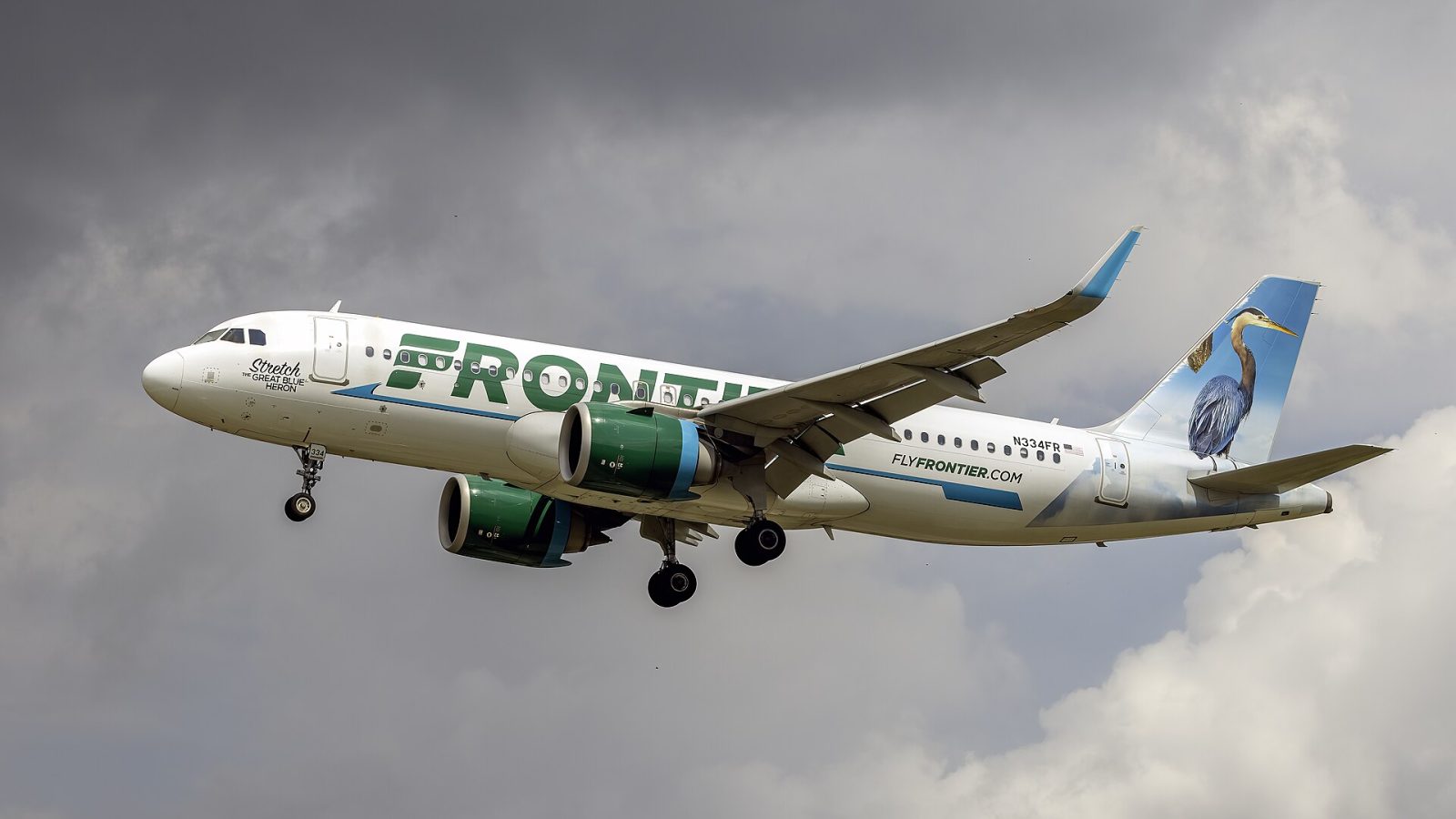
The narrowbody engine decision that will shape commercial aviation for decades is becoming concrete. GE Aerospace reports that full-scale Open Fan hardware is now in ground testing under the CFM RISE programme, while Pratt & Whitney is pressing ahead with an evolved geared turbofan architecture. Two fundamentally different answers to the same question are moving toward the point where Boeing and Airbus will have to choose.

What CFM RISE Has Achieved So Far
Structured as an equal partnership between GE Aerospace and Safran Aircraft Engines, the RISE programme launched in 2021 has since built up a substantial body of hardware evidence. According to GE Aerospace, upwards of 500 test campaigns have been run across RISE technologies since that year, encompassing in excess of 3,000 endurance cycles and over 2,000 dust ingestion cycles on next-generation high-pressure turbine airfoil technologies. The inaugural high-speed low-pressure turbine accumulated more than 1,000 hours of testing.
Wind tunnel aeroacoustics data from the Open Fan have surpassed the programme's technology maturation objectives, and preliminary design reviews covering the Open Fan and its outlet guide vane airfoils have now reached completion. At its Villaroche facility in France, Safran is readying a new eight-metre test cell in which a full-scale front module of the Open Fan will be put through its paces, while GE Aerospace reports having carried out two hybrid electric engine ground tests over the past year. Safran has separately introduced PHILEAS, a full-scale engine ground demonstrator fitted with two electric machines, at its Istres site.
Flight testing of the Open Fan engine aboard an A380 testbed is jointly planned by CFM and Airbus for 2028 or 2029, according to Aeronautics Magazine. Against current in-service engines, the programme is targeting a fuel burn improvement in excess of 20%, as GE Aerospace has stated.
Arjan Hegeman, GE Aerospace Vice President of Future of Flight Engineering, said: "While Open Fan is a new architecture, the technologies inside have been proven over decades of innovation. We're testing real, full-size Open Fan hardware, showing real progress and a renewed ambition from CFM to advance the RISE program."
Pratt & Whitney's Counter-Argument: The GTF Narrowbody Engine Path
Pratt & Whitney's case rests on taking an established architecture considerably further. The FAA awarded certification to the upgraded GTF Advantage engine in February 2025, as Aviation Week reported, cited by Aeronautics Magazine, with EASA following on 17 April by certifying the GTF Advantage-powered A320neo family, as RTX has confirmed. United Airlines accepted delivery of its first GTF Advantage-equipped aircraft, an Airbus A321XLR, on 24 September, Aviation Week also reported.
Rick Deurloo, President of Commercial Engines at Pratt & Whitney, said: "The GTF engine delivers the lowest fuel consumption for single-aisle aircraft. The GTF Advantage engine extends that lead, offering up to double the time on wing and enhancing aircraft capability, providing even greater value to operators of A320neo family aircraft."
Beyond the Advantage, Leeham News / AIN (Scott Hamilton) reports that Pratt & Whitney is developing a next-generation geared turbofan called NextGen2 GTF, extending the same fundamental architecture rather than abandoning it. That approach carries a lower certification risk and builds on a supply chain that already exists, though the GTF's history also carries baggage airlines have not forgotten.
The GTF's Durability Shadow
The GTF Advantage enters service at a time when airlines are still navigating the fallout from earlier difficulties. A defect in the powder metal manufacturing process affecting PW1100G engines built between 2015 and 2021 left certain high-pressure turbine and compressor disks vulnerable to premature cracking, according to Aeronautics Magazine. Those durability issues reached their worst point when roughly 650 GTF-powered A320neos were grounded at the same time, AIN Online (Aviation International News) reported. Rebuilding operator confidence after disruption on that scale represents a considerable challenge.
We covered the broader cost consequences of engine reliability problems in our analysis of engine prices and their impact on the freighter fleet. For narrowbody operators, the same dynamics apply: unplanned removals and extended shop visits destroy network reliability in ways that headline fuel-burn figures do not capture.
The Open Fan's Unresolved Questions
The open-fan architecture brings its own set of risks, rooted in structural rather than manufacturing concerns. Boeing harbours scepticism towards the open fan, with its reservations centring on the possibility of an unducted fan blade detaching during flight and breaching the passenger cabin, as Leeham News / AIN (Scott Hamilton) reports. GE has acknowledged that airframe fuselages will require reinforcement as a safeguard against blade separation, Leeham News / AIN (Scott Hamilton) also reports. That added structural weight and the associated cost eat into the efficiency gains the architecture would otherwise deliver.
There is also a supplier-lock question. The Royal Aeronautical Society (RAeS) reports that selecting an open-rotor engine for Airbus's next single-aisle aircraft would lock Airbus into a single engine supplier, because the airframe integration prevents swapping with a conventional turbofan. For an airframe manufacturer that has built its commercial model on engine competition, that is a significant strategic concession. We examined the preliminary shape of this question in our earlier piece on why the CFM RISE Open Fan may be ready before the plane.
A turbofan alternative to the Open Fan is also under development within GE Aerospace, as Leeham News / AIN (Scott Hamilton) reports, an indication that CFM is keeping the door open to a conventional engine architecture alongside its more radical proposition.
The Airbus Timeline and What Boeing Does Next
The Royal Aeronautical Society (RAeS) reports that the Airbus next-generation single-aisle programme is targeted for launch around 2030, with entry into service in the second half of the 2030s. Airbus Commercial CEO Lars Wagner said: "We have a plan that's working for a launch into notionally around the 2030 time frame." That schedule compresses the decision window considerably. CFM must demonstrate full-scale hardware performance convincingly enough, by around 2027 or 2028, to give Airbus confidence ahead of a programme launch.
Rolls-Royce is also competing, with the UltraFan geared turbofan aimed at the same market, according to Leeham News / AIN (Scott Hamilton) and Aeronautics Magazine. We covered Rolls-Royce's narrowbody engine ambitions separately in our analysis of the £2.5 billion UK government deal. Boeing's position on its own next narrowbody remains less defined, and its scepticism toward the open fan, as reported by Leeham News / AIN (Scott Hamilton), suggests it may favour conventional turbofan options if it launches a programme on a similar timeline.
You can track both manufacturers' programmes and updates through our Manufacturer Search.
What to Watch
The A380 flight test in 2028 or 2029 is the single most consequential near-term milestone. If full-scale Open Fan performance matches the wind tunnel results and the certification pathway for blade containment becomes clearer, the case for the architecture strengthens materially. If hardware testing reveals integration or noise challenges that the wind tunnel did not, Pratt & Whitney's evolutionary argument looks considerably stronger.
For airlines already operating the A320neo family, the stakes are immediate rather than abstract. The engine chosen for the next narrowbody will determine shop visit intervals, spare parts strategy and fleet transition costs for the 2040s and beyond. The efficiency promise of RISE is real and large. So is the uncertainty around an architecture that has never entered commercial service.
The industrial bet is being placed now, in test cells at Villaroche and Istres. The commercial verdict will follow at Airbus's programme launch, whenever that comes.
This article draws on information from GE Aerospace (CFM International parent / programme owner) and reporting by Royal Aeronautical Society (RAeS), Leeham News / AIN (Scott Hamilton), AIN Online (Aviation International News) and Aeronautics Magazine.
Continue to follow The Aviation Hub for more analysis and insight.
Advertise with us Your brand, in front of an aviation audience Home page and in-article placements, sold directly, one advertiser per slot. From £250 a year. See the rates